
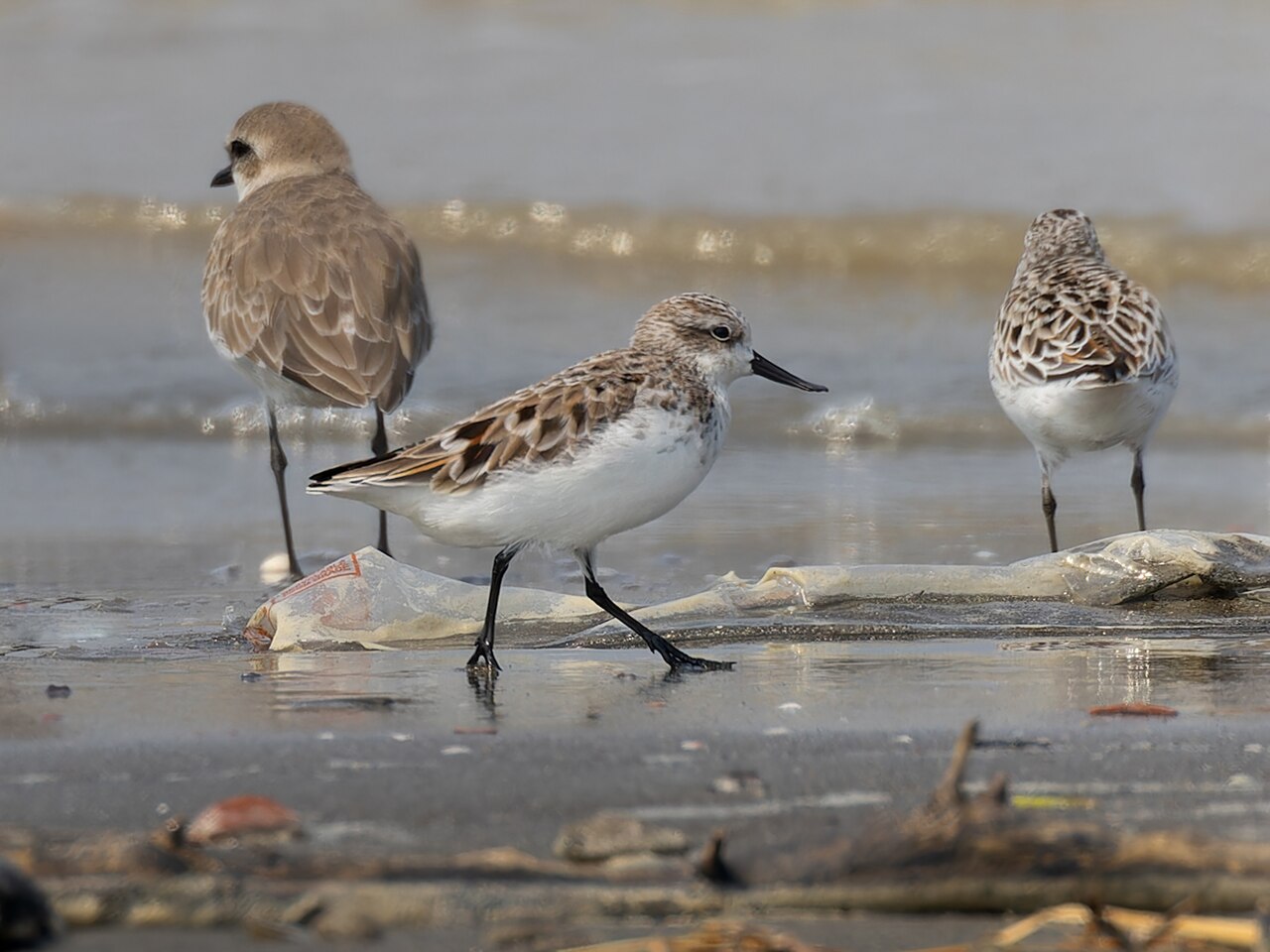
Three globally endangered migratory shorebirds that winter on Sonadia island in Cox's Bazar, the spoon-billed sandpiper, the great knot and Nordmann's greenshank, are declining fast. Birdwatcher Simanta Dipu, who has visited Sonadia regularly since 2006, writes in Prothom Alo that last winter it took him two days to find all three.
Sonadia still draws 7,000 to 10,000 migratory birds each winter. But a research paper by Sayam Chowdhury shows migratory shorebirds declining alarmingly on Sonadia and along the coast: of 20 species compared, 12 have fallen significantly.
The spoon-billed sandpiper has been hit hardest. Ten to fifteen years ago about 30 were seen on Sonadia on average; now it is fewer than ten, and last winter only three. In 2017 Dipu saw 12 together at Kaladia. The 30-gram bird breeds in Chukotka and Kamchatka in Russia, more than 8,000 km from Sonadia, and only 443 are left in the world.
The great knot is falling in Bangladesh by an average of 19.9 percent a year. About 500 were once seen on Sonadia's mudflats; that has halved, though last year's bird count found a few elsewhere on the coast. It is often confused with the red knot.
Nordmann's greenshank is in a worse state: it has barely been seen anywhere in the country except Sonadia lately, and it is declining by an average of 15.5 percent a year.
Over 20 years, the writer notes, human traffic on the island has grown and so have the mudflats, but not the birds on them; with its habitat damaged, the spoon-billed sandpiper hardly comes any more. Big development plans are often drawn up for Sonadia, and he fears these rare migrants will be lost to them.
Photo: Tisha Mukherjee / Wikimedia Commons (CC BY-SA 4.0); spoon-billed sandpiper at Bakkhali, West Bengal
Source: Prothom Alo




Comments
(0)