
Dhallywood actress Pori Moni drew wide attention on social media in April 2026 with a short video of herself cooking prawns. She posted the clip on her Facebook page on the night of Saturday, 18 April 2026. Jagonews24 reported it that night, and Jugantor, Desh Rupantor and Bangladesh Times carried reports on Sunday, 19 April. The video is 16 seconds long. It shows the actress in a modern kitchen, glasses on and hair tied back, with a spatula in her hand and prawns in the pan. When a song starts to play she breaks into a dance and keeps stirring the prawns to its beat.
Her caption was playful: "A shrimp-loving fairy, hehe" (in Bengali, "একজন চিংড়ি প্রিয় পরী, হিহি"). The clip spread quickly. According to the reports, many viewers wrote in the comments that they also dance to music while they cook, and the light-hearted moment was well received. The video itself is the whole of the news. It gave no recipe, no ingredient list and no word on which kind of prawn was in the pan, so this report does not guess at any of those. What it does do is turn to the food at the centre of the clip: chingri, as prawns and shrimps are called in Bengali, one of the best-loved foods in Bangladeshi kitchens and one of the country's most valuable farmed products.
What the video showed and how it was reported
Desh Rupantor, in its report published at 3:44 pm on 19 April 2026, said the actress shared the video on Facebook on Saturday night, 18 April, and that she danced to a popular Hindi song while cooking the prawns. Jagonews24's report, which ran under the headline "Cooking prawns while dancing: Pori Moni's video goes viral", described the kitchen, the spatula, the pan of prawns and the dance that began when the music started, and quoted the caption in full. Jugantor headlined its report with the caption itself, "A shrimp-loving fairy", and Bangladesh Times wrote that she had been absorbed in cooking prawns to the rhythm of a song.
None of the reports named the dish, the type of prawn or the way it was being cooked, and the 16-second clip is too short to show a full recipe. The reports agree on the essentials: the date and platform of the post, its length, the kitchen setting, the prawns in the pan, the dance and the caption. The rest of this article is background on the prawn itself, drawn from Bangladeshi and international reference works, official statistics published before April 2026 and newspaper reports of the same period.
Chingri in the Bengali kitchen
Banglapedia, the national encyclopedia of Bangladesh, describes prawns (chingri) as crustaceans related to crabs and lobsters, of the order Decapoda, found in all types of water bodies around the world. It notes that prawn is a popular food throughout the world, with good markets at home and abroad. In Bengali kitchens the word chingri covers everything from tiny river shrimp to large freshwater and tiger prawns, and the larger kinds in particular are treated as festive food.
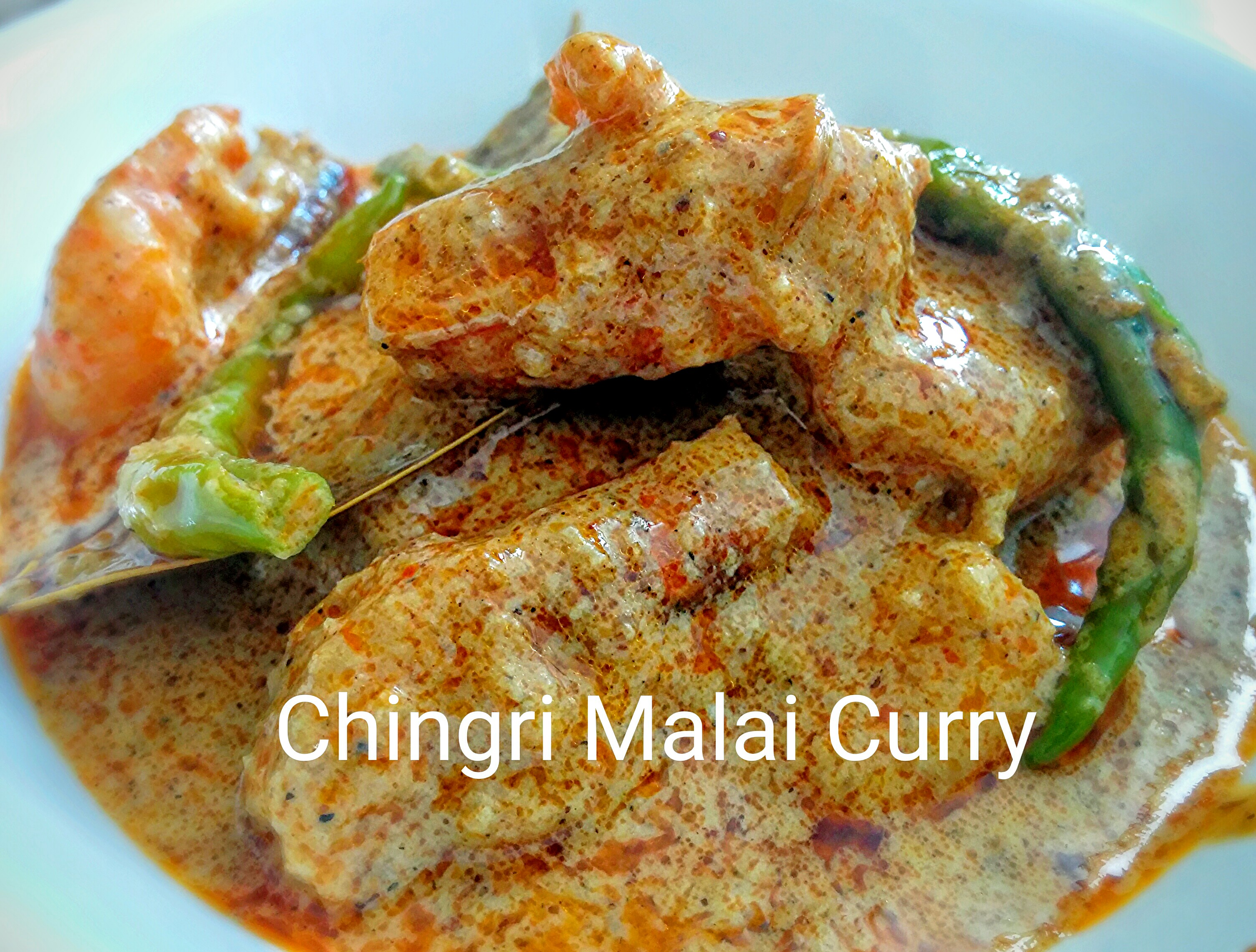
The best-known festive prawn dish is chingri malai curry, also called malai chingri or prawn malai curry. Encyclopedic references describe it as a Bengali curry made from tiger (bagda) and king prawns with coconut milk flavoured with spices. It is popular throughout Bengal and is served at weddings and celebrations or for guests, and it was also very popular among the British in Calcutta. The word malai is usually linked to the coconut milk used in the dish, though it is also traced to historical trade and culinary links with Southeast Asia.
A second celebrated dish is daab chingri, a prawn curry cooked and served in a green coconut shell. Its filling is made of large prawns, butter, ghee or mustard oil, onion, turmeric, chopped green chilli and garlic and ginger paste, with spices on top. The mixture is stuffed into a hollowed tender coconut, which is sealed, traditionally with dough or mud, and slow-cooked, and the dish is served in the shell it was cooked in. It is often cooked for Pohela Boishakh, the Bengali New Year, for Durga Puja and for other special occasions, and it is a feature of restaurant menus in Kolkata, Mumbai and Bangalore.
A classic recipe: golda chingri malaikari
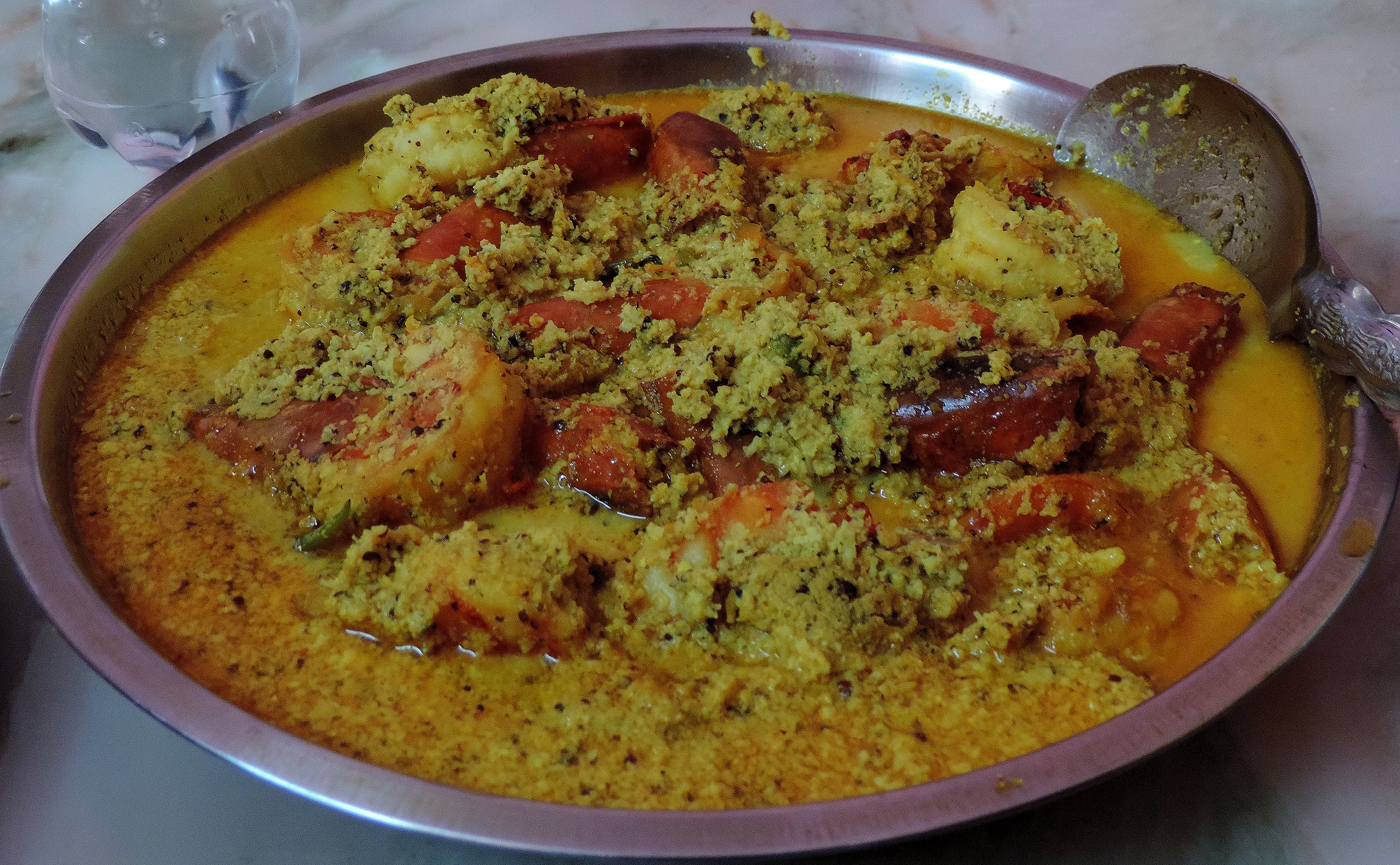
Because the video did not show what was being cooked, the recipe below is not the actress's. It is the traditional golda chingri malaikari recipe published by The Daily Star, Bangladesh's leading English-language daily, in its food pages. The paper's version uses freshly made coconut milk, as the traditional recipe does, and the ingredients for one dish are:
- 500 g golda chingri (giant freshwater prawns)
- Half a cup of thick coconut milk
- One cup of thin coconut milk
- One teaspoon of red chilli powder
- One teaspoon of turmeric powder
- Half a cup of onion paste
- Two cardamom pods
- Two pieces of cinnamon
- Five green chillies, slit halfway
- Half a cup of oil
- One teaspoon of sugar
- Salt to taste
The method, in the order The Daily Star gives it:
- Clean and wash the prawns, rub them with a little salt and turmeric powder and set them aside.
- Make a paste of the red chilli powder, turmeric powder and onion paste with one tablespoon of water.
- Heat the oil in a pan; when it begins to smoke, add the cardamom and cinnamon.
- Add the spice paste and stir it for a few minutes.
- Add the thin coconut milk, salt and green chillies and boil until the thin coconut milk has reduced by half.
- Add the prawns and the thick coconut milk, stir well, cover and cook for five minutes.
- Uncover, add the sugar and cook for two more minutes.
- Take the pan off the heat once oil floats on top of the gravy.
The recipe carries two tips. Prawns should not be overcooked, or they turn chewy, and they should be dipped head first into the gravy so that the heads cook in the oil first. The short cooking time for the prawns themselves, five minutes covered and two more uncovered, reflects how quickly prawn flesh firms up once it meets heat.
Golda and bagda: the two prawns on Bangladeshi plates
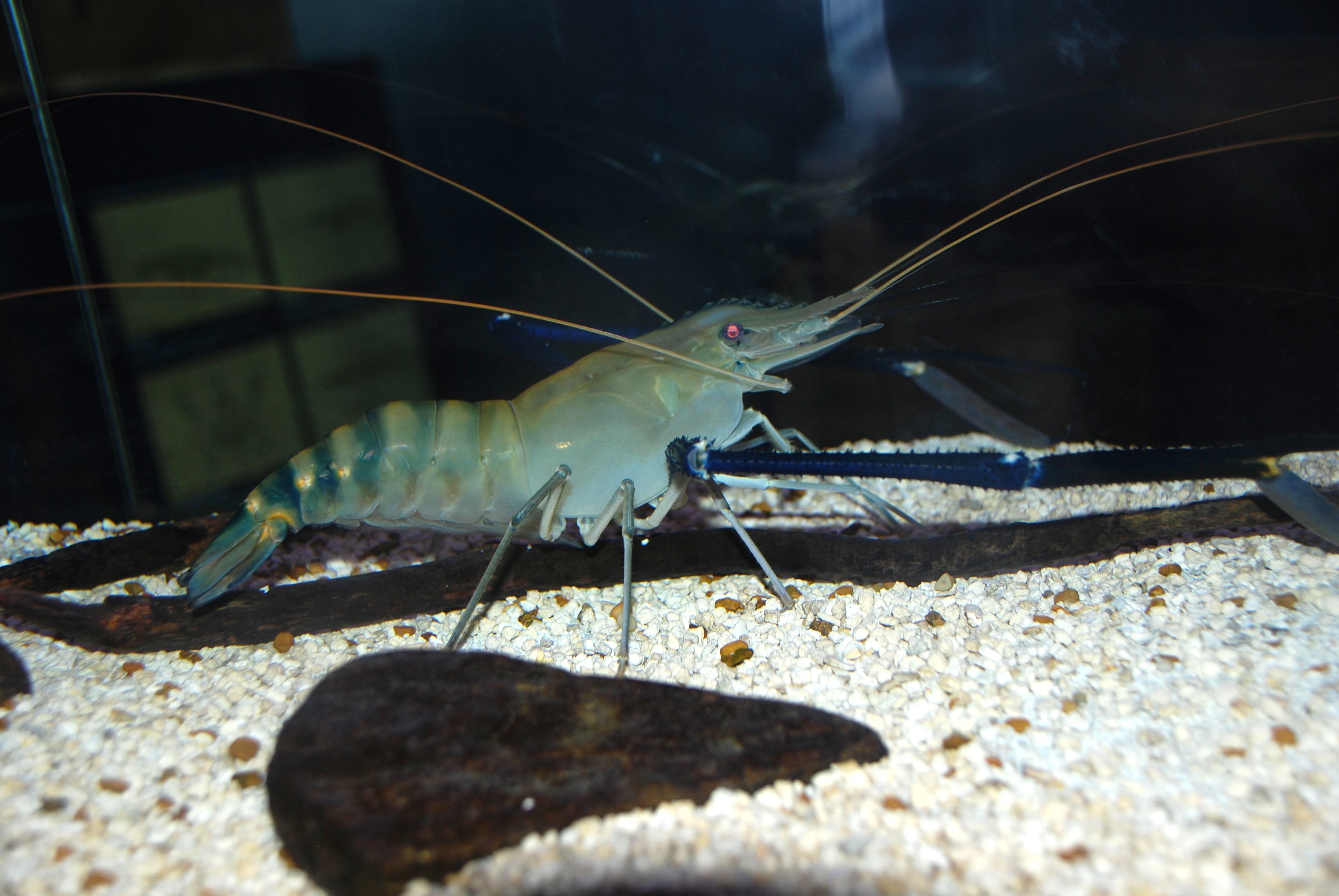
The two large prawns that dominate Bangladeshi markets, and the malai curry pot, are golda and bagda. Golda is the giant freshwater prawn, Macrobrachium rosenbergii, also called the giant river prawn or Malaysian prawn, and known locally as golda chingri in both Bangladesh and India. It is native to the tropical and subtropical Indo-Pacific, from India to Southeast Asia and northern Australia, and it is one of the biggest freshwater prawns in the world. Males can reach 34 cm in total length and females 26 cm. The second pair of walking legs carries the large claws, which in males can grow longer than the body. Banglapedia lists its habitat in Bangladesh as rivers, tributaries, canals and river mouths, and its breeding period as January to July.
Although golda is a freshwater animal, its larvae depend on brackish water. The females carry their fertilised eggs until they hatch, generally in less than three weeks, and they can lay 10,000 to 50,000 eggs up to five times a year. The larvae pass through several stages in brackish water and change into post-larvae about 32 to 35 days after hatching, at a length of about 7 to 10 mm, after which they move back into fresh water. The prawn lives up to three years.
Bagda is the giant tiger prawn, Penaeus monodon, also called the Asian tiger shrimp or black tiger shrimp. It is a marine crustacean whose carapace and abdomen are banded in alternating colours. Females typically grow to 25 to 30 cm and weigh 200 to 320 g, while males are slightly smaller at 20 to 25 cm and 100 to 170 g. In the wild the young live in sandy estuaries and mangroves and the adults move to deeper water. Banglapedia records the species in the Bay of Bengal and estuaries, breeding from November to March. Worldwide it is the second most widely farmed prawn after the whiteleg shrimp, known in the trade as vannamei. Farmers value it for its tolerance of salinity and its fast growth, but it is vulnerable to fungal, viral and bacterial infections, and white spot disease and yellowhead disease have caused heavy losses in shrimp industries around the world.
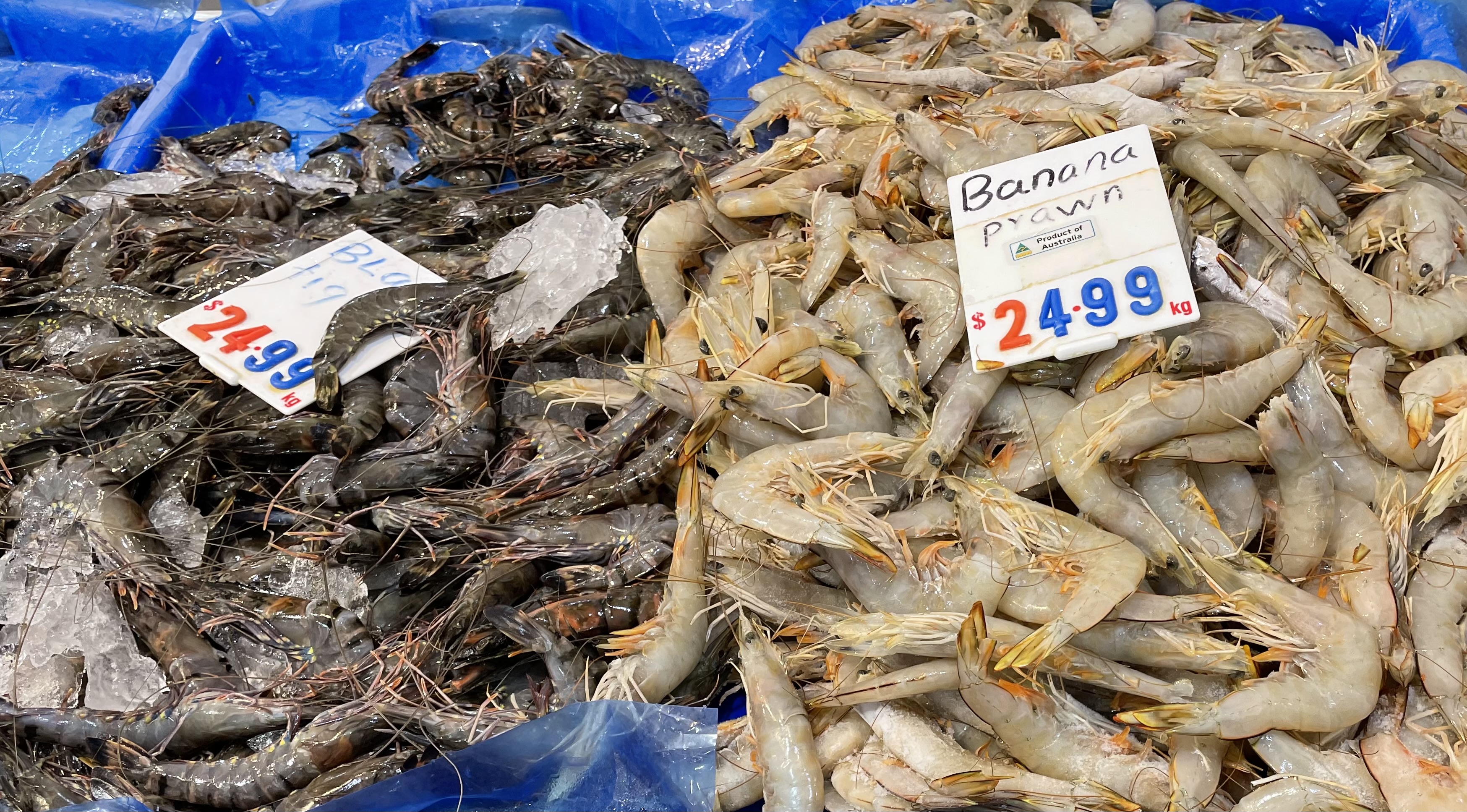
Bangladesh's waters hold far more than these two. Banglapedia reports a total of 56 prawn and shrimp species in the country's sea, estuaries and fresh water, 37 of them marine, 12 brackish-water and 7 freshwater, grouped in six families. The freshwater species belong to the family Palaemonidae. Among the commercially important species it lists are Macrobrachium malcolmsonii, which breeds throughout the year, the Indian white prawn Penaeus indicus and the banana prawn Penaeus merguiensis, recorded in the river mouths and estuaries of Khulna and Patuakhali.
How prawns are farmed in Bangladesh
Banglapedia's entry on prawn culture names the giant black tiger shrimp and the giant freshwater prawn as the most widely farmed species both globally and in Bangladesh. Farming systems range from traditional and extensive to semi-intensive, intensive and super-intensive, classed mainly by how densely the young prawns (post-larvae) are stocked and how the ponds are managed. Monoculture, polyculture and integrated culture with paddy, either in rotation or at the same time, and with finfish such as mullet, carp and tilapia are all practised. Shrimp farming starts in saline water and prawn farming mainly in fresh water, but both need saline water for hatching the eggs in the hatchery.
In Bangladesh, the encyclopedia says, extensive and improved extensive systems have worked best under local conditions. A semi-intensive attempt in the Cox's Bazar area in 1993 to 1995 failed because of poor management and outbreaks of bacterial and viral disease. The improved extensive calendar it describes runs as follows: the gher, a pond or area enclosed by dykes, is prepared from December to February; it is stocked with wild and hatchery fry in February and March; water exchange, liming and manuring follow when needed; and harvesting and restocking run from June to November. Golda culture is low-density and long, a cycle of five to eight months, raised alone, with fish or together with paddy, in ponds and in paddy fields.
The entry, which describes the sector around the turn of the century, put bagda farming at about 145,000 hectares of coastal and tidal land in Satkhira, Khulna, Bagerhat and Cox's Bazar (including Chakaria and Teknaf), and golda farming at about 30,000 hectares in about 60,000 ponds and paddy fields, mainly in Bagerhat, Khulna, Jessore, Patuakhali, Barisal, Chittagong, Lakshmipur, Feni, Gopalganj, Madaripur, Faridpur, Kishoreganj, Rajbari and Dhaka. It records farmed bagda and golda output in 1999 at 63,164 tonnes (head-on), and about 48 tiger shrimp hatcheries in the Cox's Bazar and Teknaf area producing about 4 billion fry a year. In the 1980s and 1990s most fry were collected from the wild in coastal and tidal waters. About 440,000 people, mostly women, children and the landless, were engaged in the work. Brackish-water shrimp ponds grew from less than 20,000 hectares in 1980 to about 70,000 hectares in 1985 and 115,000 hectares in 1989.
The same entry is frank about the costs. The diseases that cause mass deaths include white spot syndrome virus, vibriosis, soft shell, black gill and muscle necrosis, and it blames poor management of pond bottoms and water quality for many outbreaks. Screening of spawners and fry in hatcheries has been effective against viral infection, and integrated polyculture with paddy and fish has proved a more sustainable approach. In the south-east, it notes, more than half of the roughly 18,200 hectares of the Chakaria Sundarbans mangrove forest was cleared for shrimp ponds, and in the south-west the spread of saline ghers displaced rice farming and traditional local rice varieties in places such as Satkhira.
The shrimp sector in figures before April 2026
Official and industry figures on shrimp output have long differed. In December 2023 The Business Standard reported that the Ministry of Fisheries and Livestock's annual report put total fish production at 49.15 lakh tonnes in fiscal 2022-23, up from 47.59 lakh tonnes the year before, and total shrimp production at 2.61 lakh tonnes. A ministry document titled "Commercial Vannamei Farming in Bangladesh" gave bagda production as 72,809 tonnes. Industry stakeholders questioned the higher totals; a member of the Bangladesh Frozen Foods Exporters Association (BFFEA) told the paper that the country's shrimp production did not exceed 100,000 tonnes, and farmers and exporters estimated golda output at no more than a third of bagda's.
Exports tell a story of decline and partial recovery. A November 2025 report by the news agency UNB, carried by The Financial Express, said that an analysis of Export Promotion Bureau data showed shrimp exports earned $529 million in fiscal 2015-16, then fell sharply, and that although they rose 19 percent in fiscal 2024-25 they remained far below past levels, at under $300 million. BFFEA vice-president SK Kamrul Alam said India farms shrimp on 102,000 hectares and produces over one million tonnes, while Bangladesh cultivates more than 250,000 hectares and produces around 100,000 tonnes of bagda. He put bagda yields at about 500 kg per hectare against 12 to 15 tonnes for vannamei, which he said makes up 80 percent of the world's shrimp exports. BFFEA senior vice-president Tariqul Islam Zaheer said the 2024-25 rise largely reflected higher dollar prices rather than larger volumes, and that of about 100 companies once in shrimp exports, 70 had shut down for lack of raw material.
The same report traced the arrival of vannamei in Bangladesh: experimental farming began in 2021 at the research centre in Paikgacha, Khulna; eight companies received experimental permission in 2022 and four more were approved later; and, as the report put it in November 2025, commercial production had begun the previous year. Professor Asif Wares Newaz of the Department of Fishing and Post-Harvest Technology at Sher-e-Bangla Agricultural University linked the loss of markets such as Belgium to antibiotic use that falls short of international standards, white spot disease in bagda and improper drug use, and said most farmers remain outside monitoring.
Khulna is the centre of the trade. In September 2025 UNB reported, from Department of Fisheries figures, that the Khulna region produced 123,151 tonnes of shrimp in fiscal 2024-25 and exported 19,512 tonnes, earning Tk 2,499 crore, and that between fiscal 2020 and 2025 the region exported 102,339 tonnes of shrimp worth Tk 11,301 crore. The region once had 63 shrimp processing companies, the report said, and 33 of them had closed. Divisional fisheries inspection and quality control officer Lipton Sardar called for a dedicated policy framework for shrimp, including zoning of farming areas, and for capacity to diagnose and treat shrimp diseases. At sea the picture was also difficult: in a November 2025 report on Bay of Bengal fisheries, Prothom Alo cited the Department of Fisheries as saying shrimp production fell by almost 44 percent in 2023-24 compared with the year before, and a project official said licences for shrimp trawlers would not be renewed until 2028.
Buying, storing and cooking prawns safely
For home cooks, the U.S. Food and Drug Administration's consumer guidance on seafood gives simple checks. When buying, shrimp flesh should be clear with a pearl-like colour and little or no odour. Seafood to be used within two days should be kept in a clean refrigerator at 40°F or below; otherwise it should be wrapped tightly in plastic, foil or moisture-proof paper and frozen. Frozen seafood should be thawed gradually in the refrigerator overnight. To stop bacteria from raw seafood spreading, cutting boards, dishes, utensils and counter tops should be washed with soap and hot water between raw and ready-to-eat foods.
On cooking, the FDA says most seafood should reach an internal temperature of 145°F, and that shrimp and lobster are done when the flesh becomes firm, pearly and opaque. That fits the Daily Star recipe's warning against overcooking: prawns cook through within minutes, and longer cooking only toughens them.
Prawns are also a lean source of protein. The U.S. Department of Agriculture's FoodData Central lists 100 g of cooked shrimp at 99 kilocalories, with 24 g of protein, 0.28 g of fat, 189 mg of cholesterol, 111 mg of sodium and 1.64 mg of zinc. A rich malai curry adds the fat and energy of coconut milk and oil to that.
Shellfish are among the foods that most often cause allergies. The UK National Health Service lists shellfish such as prawns, crab and lobster among the most common allergenic foods, with symptoms that can include an itchy rash or hives, swelling of the lips, face and eyes, coughing, wheezing or breathlessness, stomach pain, vomiting and diarrhoea. A severe reaction, such as a tight throat or difficulty breathing or swallowing, is an emergency that needs immediate medical help. Anyone who suspects a prawn allergy, or who has been told to limit cholesterol or salt, should talk to a doctor before making prawns a regular part of the diet.
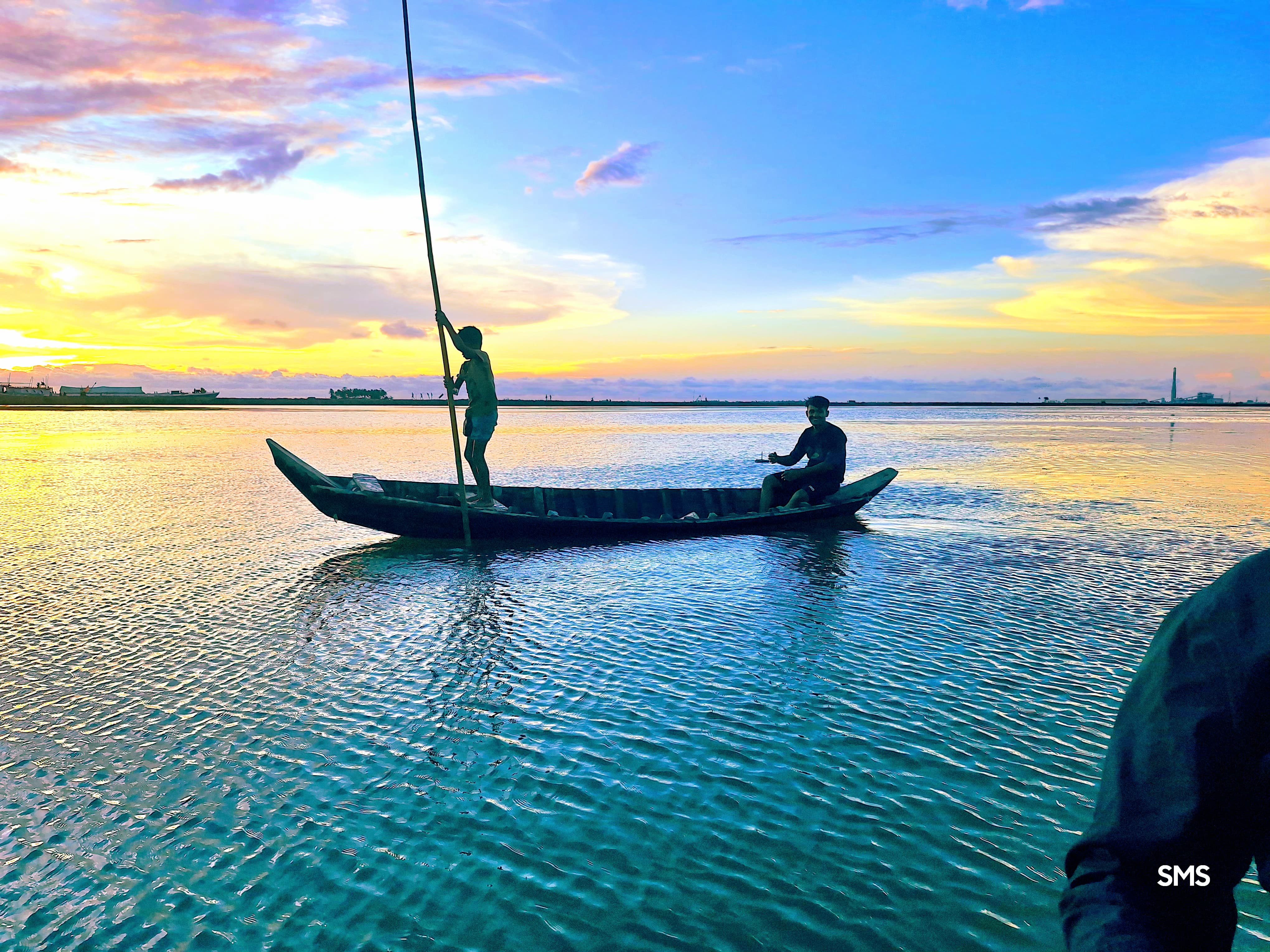
Photo: Rupak76 / Wikimedia Commons (CC BY-SA 4.0)
Sources: Jagonews24, Jugantor, Desh Rupantor, Bangladesh Times, Banglapedia (Asiatic Society of Bangladesh), The Daily Star, The Business Standard, UNB and The Financial Express, Prothom Alo, Wikipedia, U.S. Food and Drug Administration, USDA FoodData Central, NHS


Comments
(0)