
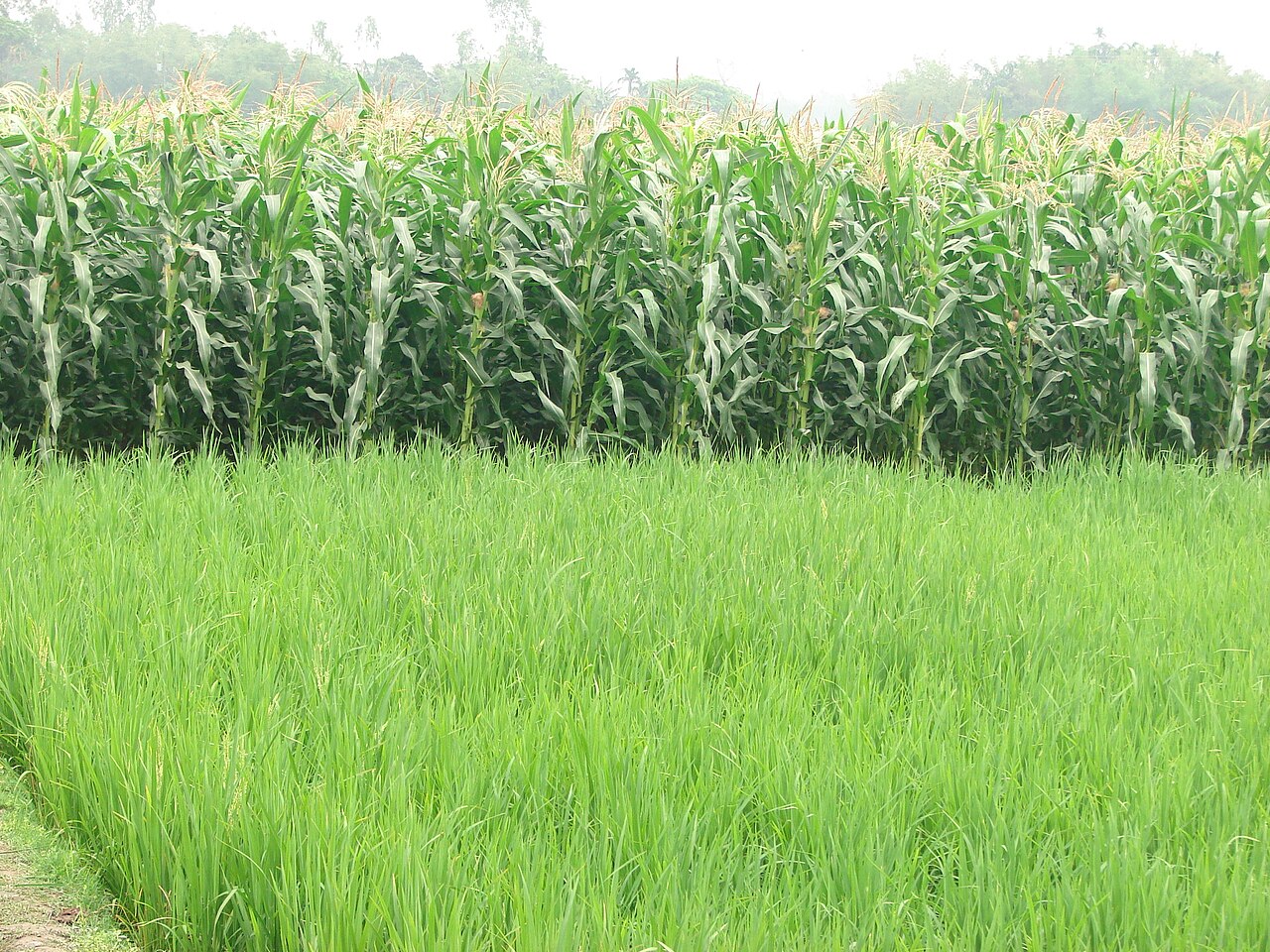
Maize is one of the world's great cereals and one of Bangladesh's most important crops — richer in nutrition than rice or wheat, and profitable from field to feed mill.
What it gives
About 11 per cent protein, with the essential amino acids tryptophan and lysine; carbohydrate for energy; vitamins A, B and E; magnesium, phosphorus and iron; and fibre. Its carbohydrate is quick energy, its fibre helps control cholesterol, its vitamin A is good for the eyes, and a low glycaemic index makes it a friend to diabetics. The grain feeds people; the plant and green leaves are excellent cattle fodder; and the grain is the backbone of poultry and fish feed.
Growing it
- Soil: sandy loam or loam that does not waterlog, pH 5.8–7.0; warm sunny weather, 20–30 °C.
- Sowing: the rabi season, October–November, in rows 60 cm apart with 20–25 cm between plants; 20–25 kg of seed per hectare.
- Seed: treat with a fungicide such as Vitavax-200 before sowing.
- Fertiliser: balanced doses, with nitrogen split into top-dressings.
- Harvest: when the cob husk turns straw-coloured and the leaves yellow; dry thoroughly before storage.
Varieties
BARI has bred a series of hybrids for Bangladesh's growing demand — among them BARI Hybrid Maize-5, a protein-rich high-yielder released in 2004.
The market
Demand runs all year — as food, as feed and in industry — and the price holds. Grown properly, maize is one of the surest incomes a farmer can plant.
Photo: A maize field at Chandipur, Sundarganj, Gaibandha — Khairuzzaman / Wikimedia Commons (CC BY-SA 3.0)

Comments
(0)