
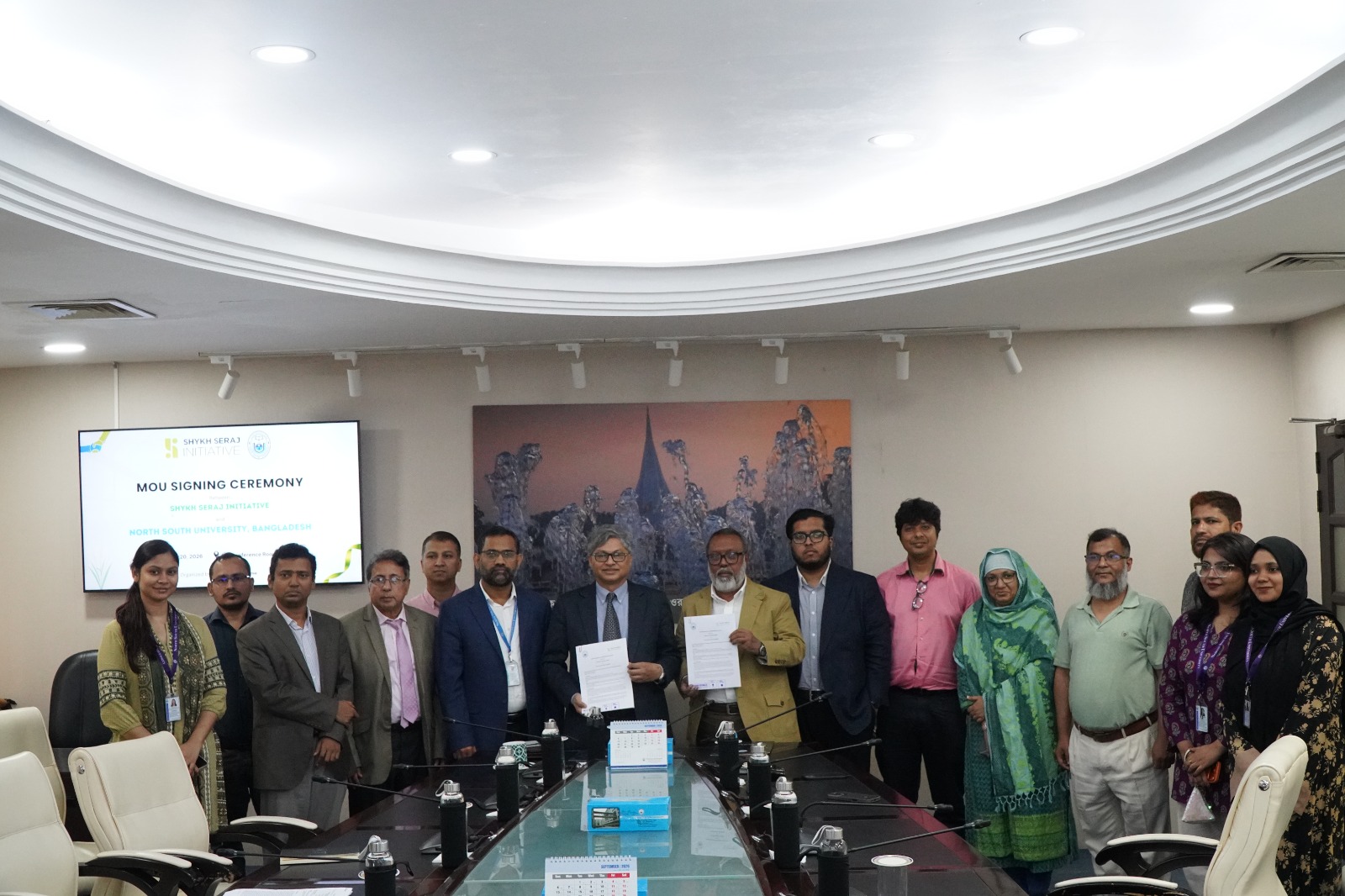
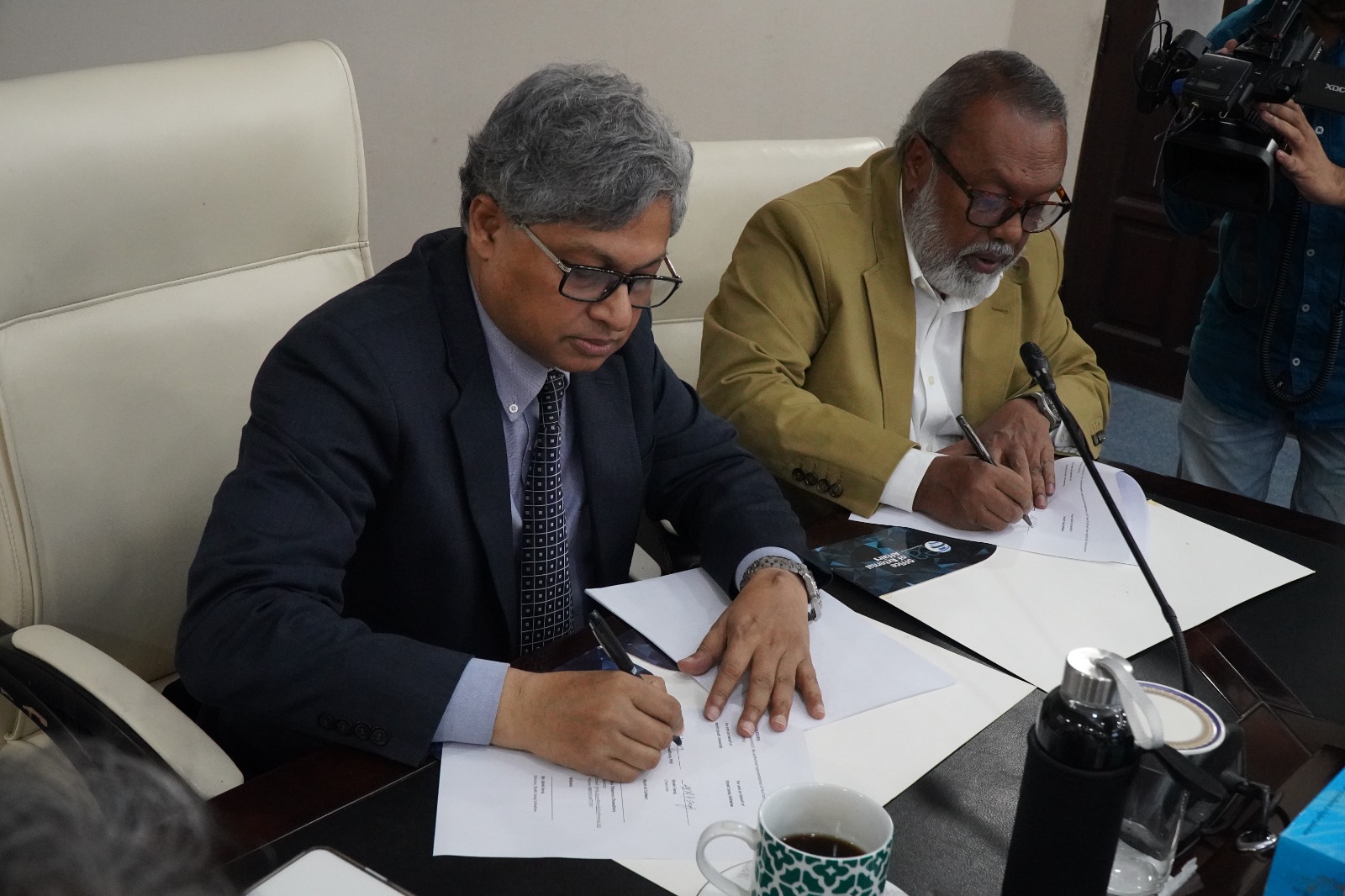
Which rice variety did a farmer plant? How much did she spend on fertiliser, when did she irrigate, what was the yield, and at what price did she sell? Every season, millions of fields in Bangladesh generate countless facts like these, and most of them vanish into a farmer's memory or the pages of a notebook. To turn that lost information into a research resource, North South University (NSU) and the Shykh Seraj Initiative (SSI) have joined forces. On 20 September 2026 the two institutions announced the launch of a collaborative initiative to strengthen agricultural and social research in Bangladesh through the systematic collection, preservation, analysis and use of field-level data.
What the data bank will hold
The initiative focuses on developing a structured and usable data bank that will bring together information collected from farmers, agricultural and production-related data, and other information relevant to research. The database is intended to give researchers and relevant stakeholders better access to organised, research-oriented data, supporting both research and evidence-based decision-making.
"Data bank" may sound like a complicated piece of technology, but the idea behind it is familiar. A library arranges books by subject so that the right one can be found; a data bank arranges information according to fixed rules. Which area the data came from, which season, which crop, how it was collected: all of it is recorded. A researcher can then set years of information side by side in the same framework and compare.
The words "structured" and "usable" both matter here. A great deal of information is gathered in Bangladesh by projects, agencies and studies, but it is often scattered, kept in different formats, sometimes in paper files. When a project ends, its data can no longer be found. A central, well-organised store can reduce that waste.
A farmer's plot size, the crop grown, the costs, the yield, even the number of people in the household: all of this is data. On their own these are ordinary numbers and words. Collected by the same rules from thousands of farmers and set side by side, they reveal trends, comparisons and clues to causes.
A small fact from a farmer's field, the basis of a big decision
A small piece of information collected from a farmer's field can sometimes become the foundation of an important research finding or decision. When such information is systematically collected, verified, preserved and analysed, it can contribute to a clearer understanding of agricultural realities and support evidence-based solutions to the challenges farmers face.
Consider an example. For several seasons running, farmers in one area report the same disease appearing in their rice at a particular time. One farmer's experience might look like coincidence. But put the reports of hundreds of farmers together and a pattern emerges: which weather, which variety, which farming practice goes with more disease. From that pattern a researcher can frame a question, and an extension worker can issue an early warning. That is how data turns experience into knowledge.
There is one condition: the data must be reliable. That is why the description of the initiative speaks of verification as well as collection. Research built on wrong or incomplete information can lead to wrong decisions, and in the end it is the farmer who pays for them.
The people behind the numbers
For SSI, agricultural data represents more than numbers and statistics. Each data point reflects the experience, work and challenges of a farmer, the livelihood and aspirations of a family, and an important part of Bangladesh's agricultural future.
That view is in keeping with the long career of the man whose name the initiative carries. For more than four decades Shykh Seraj has brought farmers' voices to television: through Mati O Manush on Bangladesh Television from the 1980s, and since 2004 through Hridoye Mati O Manush on Channel i, he has travelled to farmers' fields across the country and listened to their problems and successes. He received the Ekushey Padak in 1995 and the Independence Award in 2018 for his contribution to development journalism. In 2009 he also received the FAO's A.H. Boerma Award for journalism on food security and poverty reduction. Through his Krishi Budget Krishoker Budget (Farm Budget, Farmers' Budget) dialogues before national budgets, farmers from different regions have for years voiced their problems directly. The Shykh Seraj Initiative's website introduces the organisation with the aim of transforming agricultural data into food security.
What a television camera brings before viewers, a data bank can hold in a lasting, comparable and analysable form. A report grows old in a few days; well-kept data can serve research for years.
A bridge between the university and the field
The initiative aims to establish a stronger connection between field-level realities and academic research by making reliable agricultural and social data more accessible to researchers, so that data can be used more effectively in research and decision-making.
North South University was founded in 1992 and is known as the first private university in Bangladesh. As of 2020 it had around 26,000 students. In 2017 it opened the NSU Genome Research Institute, described as the first genomic research institute in Bangladesh. Its campus is in the Bashundhara residential area of Dhaka. The university has four schools: business and economics; engineering and physical sciences; humanities and social sciences; and health and life sciences. It also houses research bodies such as the Institute of Development, Environment and Strategic Studies. For researchers in economics, the social sciences, environment and public health, field-level agricultural and social data is essential raw material.
A report by Channel i Online noted that one of the main obstacles to research in the country is the lack of adequate, accurate and up-to-date data. According to that report, through this partnership researchers working in agriculture and the social sciences at the university will gain access to reliable data. The Daily NSU news page on Facebook described the collaboration as NSU signing a memorandum of understanding with SSI to advance agricultural research.
University researchers usually collect their own data through small surveys, which take much time, money and manpower and yield limited samples. Those who have worked in the field for years, meanwhile, have direct contact with farmers and practical knowledge of conditions on the ground. When the two come together, research questions can grow out of field realities, and research findings can find their way back to the field.
The data gap: an old problem
The shortage of agricultural data in Bangladesh is not a new concern. According to the Agriculture Census 2019 of the Bangladesh Bureau of Statistics (BBS), the country has 16.8 million farm households, 11 per cent more than the roughly 15 million counted in 2008. But an analysis in The Daily Star pointed out that the census counted households rather than farmers themselves, leaving a gap in the data needed to frame policy.
The final results, released on 28 December 2022, showed more. There were 9.2 million agricultural labour households. Net cultivable land stood at 18.6 million acres, down about 2 per cent, or 416,000 acres, from 19 million acres in 2008. Farm households are rising while farmland is shrinking, and understanding that squeeze takes more than household counts.
The same report noted that the census gathered no data on commercial poultry farming or commercial livestock production. The economist Professor Abdul Bayes remarked that finding out the number of farmers would have taken no more than one extra question on the questionnaire, and called the missing data on commercial production "not acceptable". When the country's largest farm survey has such gaps, the need for regular, detailed field-level data becomes all the clearer.
Agriculture remains the country's largest employer. According to the BBS Labour Force Survey 2022, 45.33 per cent of employed people work in agriculture. Decisions about the lives and livelihoods of so many people need detailed, regular and reliable information.
Nor is that share fixed. In the 2016-17 survey it was 40.6 per cent; by 2022 it had risen, and press analyses linked part of the rise to people returning from cities to villages and farm work during the pandemic. Understanding such swings also requires regularly updated data.
Take the example of import decisions. By BBS figures, rice production crossed 40 million tonnes for the first time in fiscal 2023-24, reaching 41 million tonnes, and no rice was imported that year, against 1.056 million tonnes the year before. A production estimate that is off by a few hundred thousand tonnes can change the decision on whether to import. The accuracy of data is therefore tied directly to markets and to consumers' pockets.
Crop production figures have also been questioned at times. Differences between the Department of Agricultural Extension's and the BBS's estimates for the same crop have been discussed in the press more than once. When production figures are off, decisions on imports, stock planning and market price management all carry a greater risk of error. Verified data collected directly from the field can help reduce that uncertainty.
The problem is not Bangladesh's alone. Since 2019 the Food and Agriculture Organization of the United Nations (FAO), the International Fund for Agricultural Development (IFAD) and the World Bank have run the 50x2030 Initiative, which aims to close the agricultural data gap in 50 low- and lower-middle-income countries in Africa, Asia, the Middle East and Latin America by 2030. As the initiative explains, governments in these countries invest heavily in agriculture, often without good evidence to guide them, and the result is lost productivity, shortfalls in farm income and, ultimately, more hunger and poverty.
Its work is organised in three linked parts: producing data, developing methods and tools, and using data. Counting donor and national resources, it is costed at about 500 million US dollars over ten years. Internationally, in other words, making sure data actually informs decisions gets as much weight as collecting it, and the stated aims of the NSU and SSI initiative likewise pair collection with use.
Where Bangladesh's farm data comes from today
At present the main official source of agricultural data is the Bangladesh Bureau of Statistics, which publishes a Yearbook of Agricultural Statistics each year covering crop area, production, yields and more. An agriculture census takes place roughly once a decade, the latest in 2019. The Department of Agricultural Extension, through its field staff, also estimates crop area and production every season.
Technology has opened new sources as well. Every day farmers ring the Agriculture Information Service's farm call centre (16123) for advice on crop diseases, fertiliser or seed. The Department of Agricultural Extension's Bangladesh Agro-Meteorological Information System (BAMIS) issues advice to farmers based on weather forecasts. The information these services generate is also valuable for understanding the direction of farming.
Official statistics mostly give the big picture: total output and total area by district or nationally. The details of an individual farmer's costs, risks, decisions and experience, which research needs, often do not show up in them. Field-level data collected directly from farmers can complement official statistics here.
Questions such data could help answer
It is possible to imagine the kinds of questions researchers could pursue with reliable field-level data. These are not part of the announcement, but illustrations of how a data store of this kind might be used:
- Adapting to climate change: which varieties and techniques farmers choose in the face of salinity, drought or early floods, and how their yields fare.
- Production costs: how spending on fertiliser, seed, irrigation, labour and machinery is changing, and how it compares with crop prices.
- Markets and prices: where the gap opens between what the farmer gets in the field and what the consumer pays in the city.
- Women and farming: how much of the work in the fields, the homestead and livestock care is done by women, and where that work is recognised.
- Technology adoption: which farmers take up new varieties, machines or digital advisory services, which are left behind, and why.
The answer to each of these matters for policy, and each needs data that no single-season survey can provide, only data gathered in an orderly way over years.
From field data to real change
The initiative seeks to create a pathway from field data to knowledge, from knowledge to informed decisions, and from informed decisions to practical action.
Each link in that chain matters. First comes field data: what farmers are doing, what they are getting, where they are stuck. Then knowledge: researchers analyse the data to find causes and connections. Then decisions: policymakers, institutions or entrepreneurs act on that knowledge. And finally real change, which returns to the farmer's field. If any link is weak, the whole chain weakens.
This also makes plain what evidence-based policy means: building policy on actual data from the field rather than on assumptions. Which region needs which kind of support, which crop's incentives would help farmers most, where irrigation or storage is most urgent: without data, these questions can only be answered by guesswork.
Questions for the months ahead
The announcement did not give details of how the data bank will be run, which areas data collection will start in, or on what terms researchers will be given access. For any data store of this kind, however, some issues matter the world over: how rigorous the collection methods are, whether the data is regularly updated, and how the privacy of the farmers who supply the information is protected.
Farmers' trust matters greatly too. A farmer will give accurate figures on land, loans, income or losses only if he or she believes the information will not be used against them and will serve some purpose. The familiarity and contact Shykh Seraj has built with farmers through years of field work could help build that trust, while an established university's research framework can bring methodological discipline to storing and analysing the data. Combining those strengths is where the promise of this partnership lies.
Another question is what farmers themselves gain from sharing their data. The cycle is complete only when research findings return to the farmers who were their source. The initiative's stated aim of finding effective solutions to farmers' challenges points in that direction.
A stronger footing for agricultural and social research
The collaboration between NSU and SSI is expected to contribute to a stronger data-driven foundation for agricultural research, social research and evidence-based policy development in Bangladesh.
The initiative reflects a broader effort to ensure that information generated at the grassroots level can be preserved as a valuable research resource and used to better understand the country's agricultural and social landscape.
Agriculture and society are not separate here. A farmer's yield depends not only on soil, seed and weather but on access to credit, the family's education and health, the road to market and even the labour of the women in the household. Being able to read agricultural data alongside social data gives a fuller picture of rural life, which is presumably why the initiative keeps agricultural and social research together.
Information that once disappeared at the end of each season, written in a farmer's notebook or held in memory, can be kept in order. Then the experience of a farmer today can help a researcher tomorrow find an answer. The joint initiative of the two institutions is a step in that direction.
Comments
(0)