
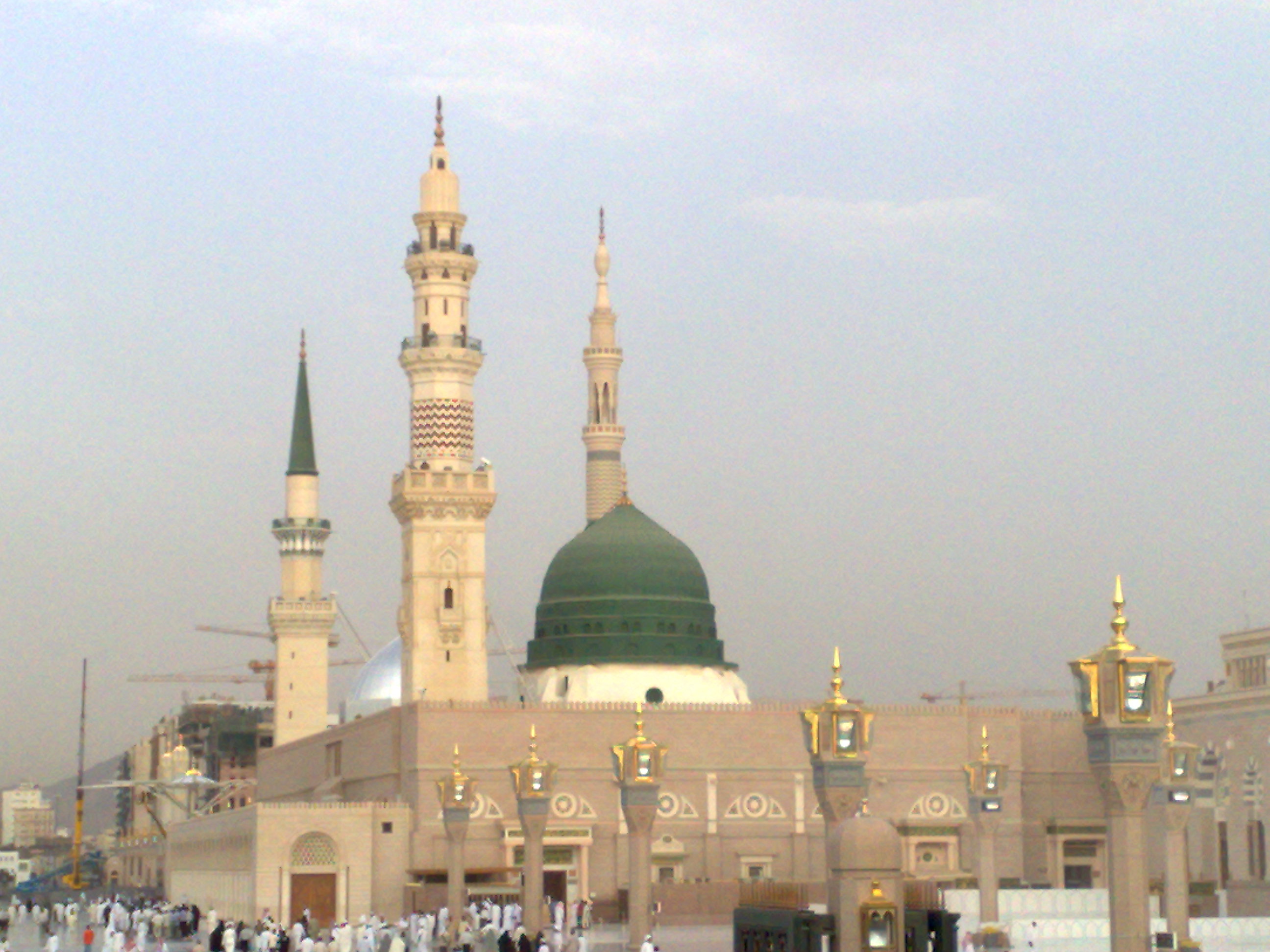
MADINAH, Saudi Arabia: In the heart of the holy city of Madinah stands Al-Masjid an-Nabawi, widely known as the Prophet's Mosque. Established by Prophet Muhammad (peace be upon him) after his migration from Makkah, the mosque is one of the most important religious and historical places in Islam.
The Prophet's Mosque is regarded as the second-holiest mosque in Islam after Masjid al-Haram in Makkah. It is a place where millions of Muslims come to offer prayers, send greetings of peace to the Prophet and learn about the early history of Islam.
The mosque has a special connection with the life of Prophet Muhammad, the migration to Madinah, the development of the first Muslim community and the spread of Islamic knowledge. Its historic chamber, the Rawdah, the pulpit and the famous Green Dome make it one of the most recognised religious landmarks in the world.
However, the importance of Al-Masjid an-Nabawi goes far beyond its buildings and architecture. It represents the beginning of a new chapter in Islamic history and remains a living centre of worship.

The Migration to Madinah and the Foundation of the Mosque
In 622 CE, Prophet Muhammad migrated from Makkah to Madinah. This event, known as the Hijrah, was a turning point in Islamic history. It allowed the early Muslim community to develop a more organised social and religious life in Madinah. The Islamic Hijri calendar also takes its starting point from this historic migration.
Before reaching central Madinah, the Prophet stayed in the area of Quba, where he established the Quba Mosque. He later continued towards the main settlement of Madinah.
According to Islamic historical accounts, the Prophet's camel stopped at a piece of land belonging to two orphan boys from the local community. The land was purchased for the construction of a mosque.
The Prophet himself took part in the building work alongside his companions. The original mosque was simple in design. Its walls were made of mud bricks, its roof was supported by palm-tree trunks, and palm branches were used for roofing.
There was no grand dome, elaborate decoration or large minaret. The mosque was built to serve the religious and social needs of the growing Muslim community.
Although the present building is very different from the original structure, its central purpose remains the same: worship, learning and service to the community.
More Than a Place of Prayer
During the early years of Islam, Al-Masjid an-Nabawi served many purposes.
It was the main place for daily prayers and religious gatherings. The Prophet taught the Qur'an, explained Islamic teachings and guided his companions there.
People also came to discuss community matters, seek advice and learn how to manage their personal and social responsibilities according to Islamic principles.
The mosque was also an important place for helping poor and vulnerable members of society.
A group of companions who had limited financial resources and no permanent homes stayed in a designated area of the mosque. They became known as Ashab al-Suffah. They spent much of their time learning about Islam and maintaining a close connection with the Prophet.
This history shows that the mosque was not simply a building for religious ceremonies. It was also a centre of education, social support and community development.
The Historical Change of the Qiblah
One of the important events connected with the history of Al-Masjid an-Nabawi is the change of the qiblah, the direction Muslims face during prayer.
After migrating to Madinah, Muslims initially prayed towards Bayt al-Maqdis, or Jerusalem. According to a narration in Sahih al-Bukhari, the Prophet continued praying in that direction for approximately sixteen or seventeen months after arriving in Madinah.
The direction was then changed through divine revelation.
In Surah Al-Baqarah, verse 144, the Qur'an instructs Prophet Muhammad to turn towards Al-Masjid al-Haram in Makkah. Muslims were also instructed to face that direction wherever they were when performing their prayers.
From that time, the Kaaba in Makkah became the permanent qiblah of Muslims.
This event is an important part of the history of the early Muslim community in Madinah. It also demonstrates the close historical connection between Al-Masjid an-Nabawi and Masjid al-Haram.
The Prophet's Chamber and His Final Resting Place
One of the most important historical areas within the Prophet's Mosque is the chamber where Prophet Muhammad lived with his wife Aisha (may Allah be pleased with her).
The Prophet passed away in Aisha's chamber and was buried there. Later, the first two caliphs, Abu Bakr and Umar (may Allah be pleased with them), were also buried in the same chamber.
The chamber is now enclosed within the expanded mosque complex. Visitors offer greetings of peace to the Prophet from designated areas, following the arrangements established by the mosque authorities.
An important historical detail is that the Prophet was not originally buried in the main prayer hall. He was buried in the room where he passed away. As the mosque expanded over later centuries, the chamber became part of the larger mosque complex.
This area holds deep historical and emotional significance for Muslims around the world.
Rawdah: A Special Place Between the House and the Pulpit
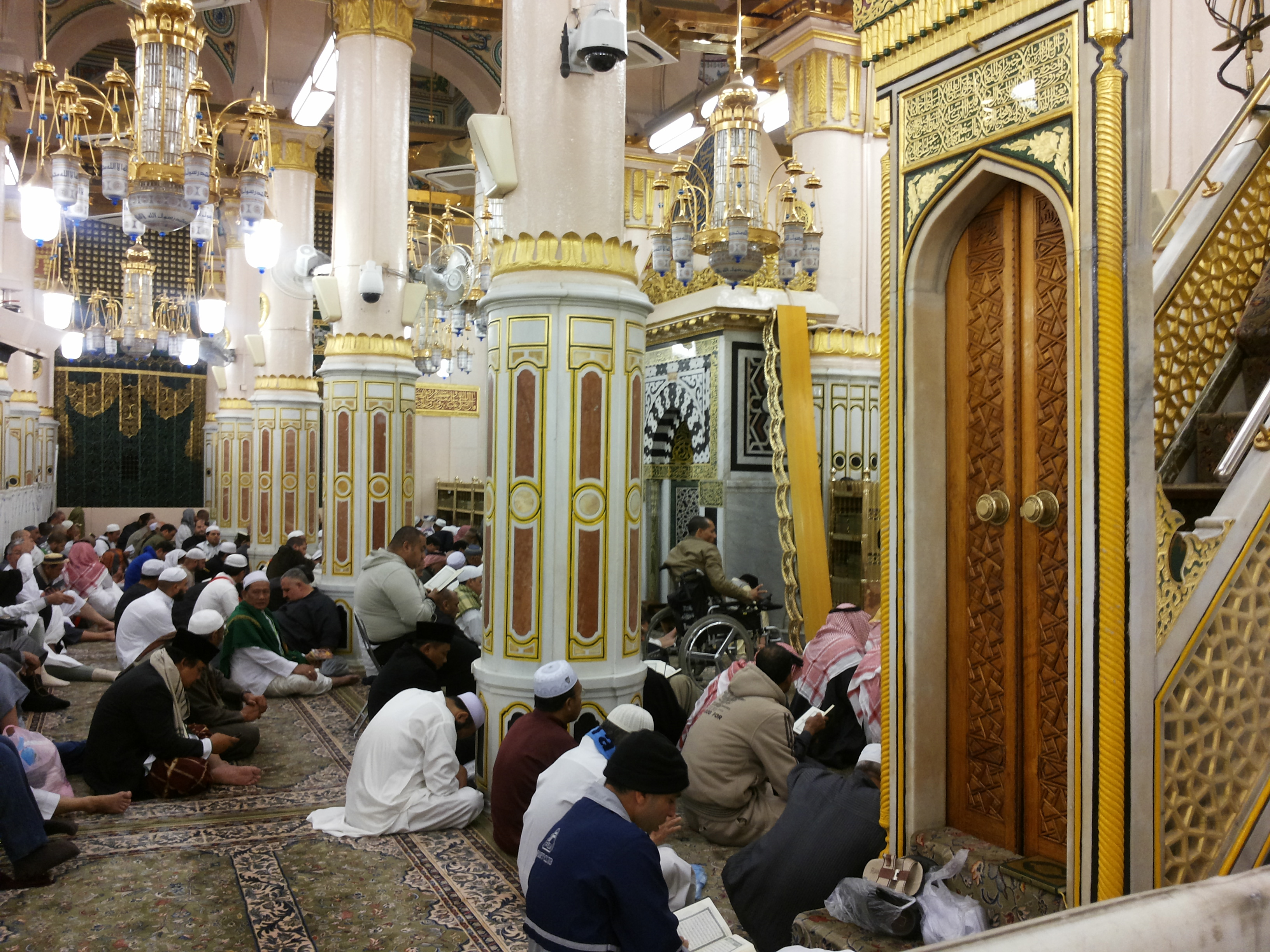
One of the most special areas inside Al-Masjid an-Nabawi is Al-Rawdah al-Sharifah, commonly called the Rawdah.
It is the area between the Prophet's house and his pulpit.
According to Sahih al-Bukhari, Prophet Muhammad said that the area between his house and his pulpit is a garden from the gardens of Paradise.
This statement gives the Rawdah its special religious significance.
The area is marked by green carpets, which distinguish it from other parts of the mosque. Muslims visiting Madinah often hope to offer prayers there.
Because the space is limited and the number of visitors is very large, access is managed through designated arrangements and time slots. Visitors are expected to follow the official instructions and avoid crowding.
The Green Dome: A Recognisable Symbol
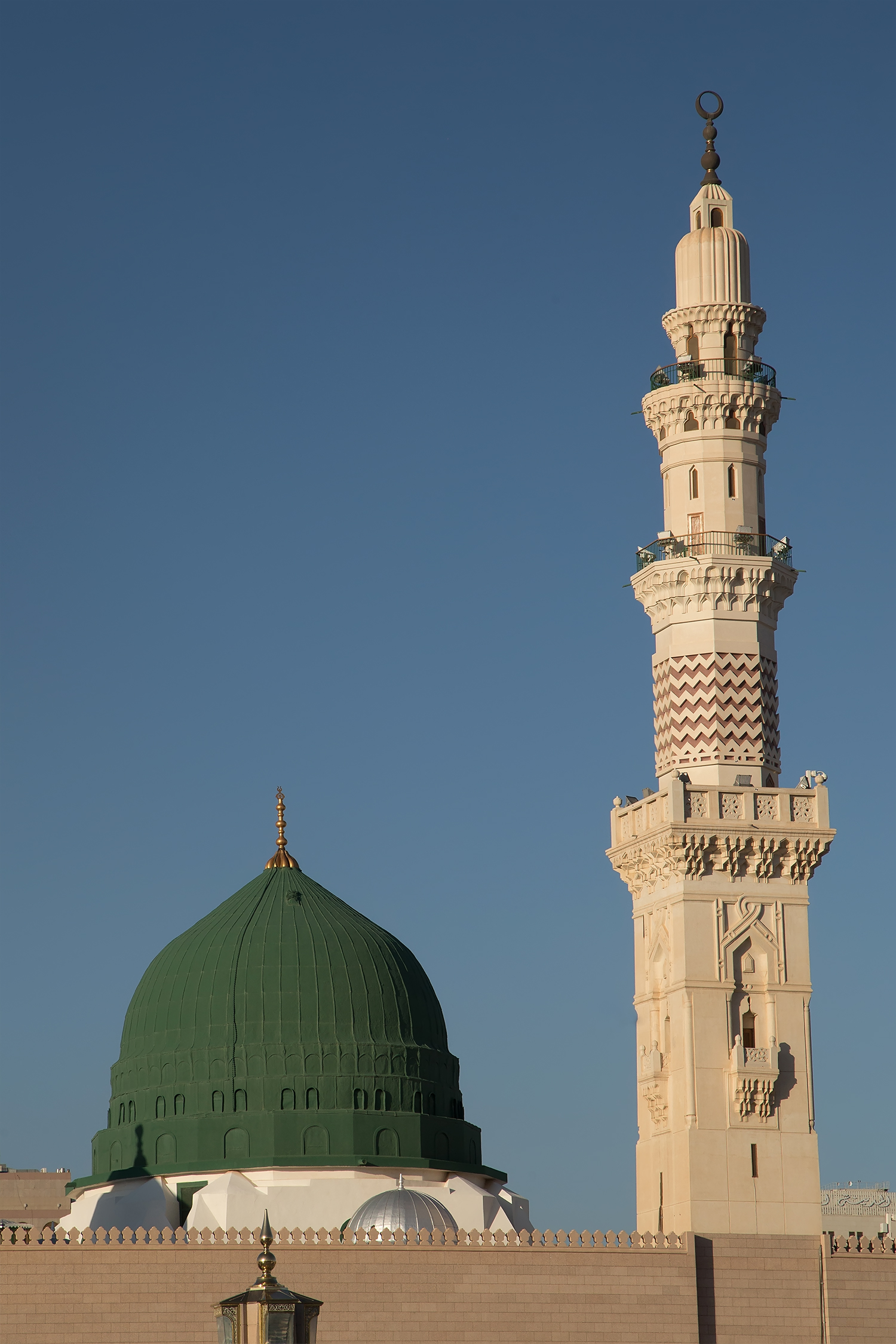
The Green Dome is one of the most famous features of Al-Masjid an-Nabawi.
It stands above the Prophet's Chamber, where Prophet Muhammad and the two early caliphs are buried.
However, the Green Dome was not built during the lifetime of the Prophet or his companions. Historical records show that a dome was first constructed over the chamber in 1279 CE, during the Mamluk period.
The dome underwent several repairs and changes over the centuries. It was painted green in 1837 during the Ottoman period, giving it the appearance and name by which it is widely known today.
The Green Dome has become a familiar image of Madinah and the Prophet's Mosque. It is important, however, to distinguish the historical importance of the Prophet's Chamber from the later architectural addition of the dome.
The Special Reward of Prayer in the Prophet's Mosque
Al-Masjid an-Nabawi holds a special position in Islamic teachings regarding the reward of prayer.
According to Sahih al-Bukhari, Hadith 1190, Prophet Muhammad said that one prayer in his mosque is better than one thousand prayers in any other mosque, except Al-Masjid al-Haram in Makkah.
This teaching explains why Muslims from different parts of the world make visiting the Prophet's Mosque an important part of their journey to Madinah.
For many visitors, offering prayers in the mosque is a deeply meaningful experience. They also spend time reading the Qur'an, making supplications and reflecting on the history of the Prophet and his companions.
The Prophet's Pulpit and Its Historical Importance
The pulpit, known as the Minbar, is another important historical feature of the mosque.
The Prophet used the minbar to address his companions, deliver religious teachings and guide the Muslim community.
Historical accounts describe how he initially gave sermons beside a palm-tree trunk. Later, a raised pulpit was made for him.
The minbar became an important place from which the Prophet addressed the community. His sermons covered faith, good character, social responsibilities and the practical guidance needed in everyday life.
The present structure has undergone changes over different periods. Therefore, it should not be confused with the original pulpit used during the Prophet's lifetime.
Expansion Through the Centuries
The original Prophet's Mosque was relatively small compared with the enormous complex seen today.
As the Muslim population increased and more people travelled to Madinah, additional space became necessary.
The Prophet himself expanded the mosque after returning from the campaign of Khaybar in 7 AH.
Further expansions took place during the leadership of the early Muslim caliphs Umar ibn al-Khattab and Uthman ibn Affan.
Later, the Umayyad, Abbasid and Mamluk periods also witnessed major renovation and expansion projects.
The Ottoman rulers made important contributions to the preservation and development of the mosque. One particularly significant restoration took place during the reign of Sultan Abdulmejid I.
Parts of the historic Ottoman structure remained important features of the mosque for many years, even as modern expansions changed the overall appearance of the complex.
Major Developments in the Modern Saudi Era
The establishment of the Kingdom of Saudi Arabia brought a new phase of development to Al-Masjid an-Nabawi.
During the reign of King Abdulaziz, an important expansion project was carried out in 1948.
Further major work took place between 1952 and 1955, adding more space for worshippers.
Another large expansion began in 1985 and was completed in 1994. It included the main mosque building, its roof and the surrounding courtyards.
These projects were designed to accommodate the increasing number of worshippers and visitors, especially during Ramadan, Hajj and other busy periods.
The aim was not simply to make the mosque larger but also to improve comfort, movement and safety.
Modern Architecture and Engineering
Today, the Prophet's Mosque combines traditional Islamic architectural features with modern engineering.
The complex includes large prayer halls, spacious courtyards, minarets, modern lighting, air-conditioning and facilities designed to support large numbers of visitors.
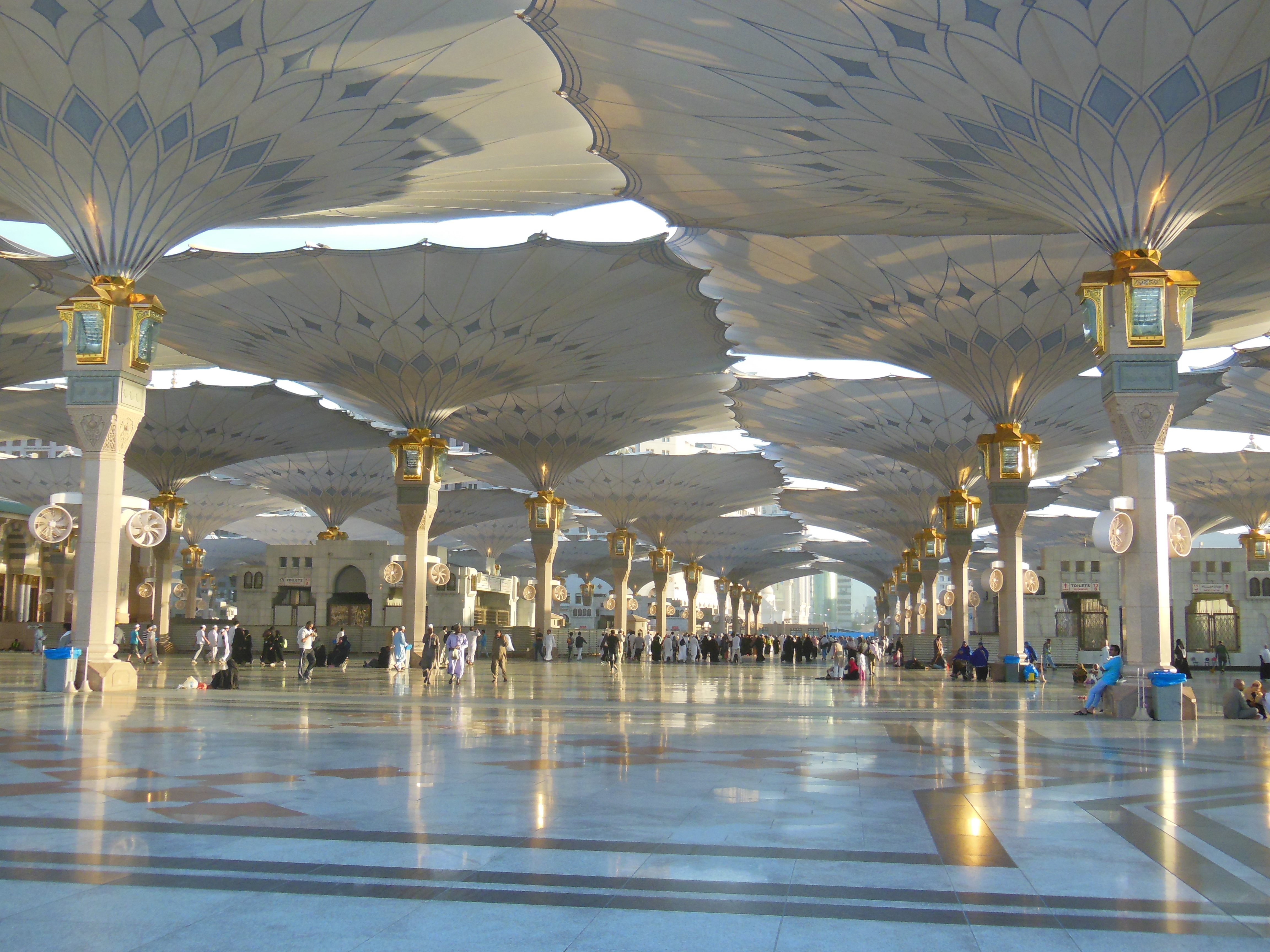
One of its most recognisable modern features is the system of large automatic umbrellas installed in the surrounding courtyards.
These umbrellas provide shade from the strong sun and help protect worshippers from the heat of Madinah. They can open and close automatically according to operating conditions.
The mosque also has improved entrances, walkways and other facilities to help visitors move around more comfortably.
The combination of historic structures and modern facilities makes the mosque an important example of large-scale religious architecture.
Services and Crowd Management
Millions of people visit Al-Masjid an-Nabawi throughout the year. The number increases during Ramadan, Hajj periods and other important religious occasions.
Managing such large gatherings requires careful planning.
The authorities must ensure cleanliness, drinking water, security, medical assistance, safe movement and facilities for elderly people and visitors with disabilities.
Modern communication systems, monitoring technology and organised service operations support these activities.
Visitors are also required to follow instructions regarding prayer areas, entry arrangements and access to the Rawdah.
These measures help maintain a safe and respectful environment for worshippers.
Madinah and Its Connection with the Muslim World
Madinah holds a special place in the hearts of Muslims around the world.
For Muslims in Bangladesh, Indonesia, Pakistan, India, Nigeria, Turkey, Europe and many other regions, visiting the Prophet's Mosque is a deeply meaningful religious experience.
Many pilgrims visit Madinah before or after performing Hajj in Makkah. Others include the city in their Umrah journeys.
A visit provides an opportunity to learn about the life of Prophet Muhammad, understand the early development of Islam and reflect on the history of the first Muslim community.
The relationship between Muslims and Madinah is therefore not limited to geography. It is based on faith, history and a shared religious tradition.
Quba Mosque and the Prophet's Mosque: Two Different Historic Sites
Madinah is also home to Quba Mosque, another important site in Islamic history.
The Prophet established Quba Mosque during the early part of his migration from Makkah, before reaching central Madinah.
Al-Masjid an-Nabawi was established later in the main settlement of Madinah.
Both mosques have important places in Islamic history, but they are separate buildings with different historical backgrounds.
Understanding this distinction helps visitors appreciate the different events connected with the Prophet's migration.
A Living Centre of History and Faith
Al-Masjid an-Nabawi is one of the most important religious and historical landmarks in the Muslim world.
Established in 622 CE by Prophet Muhammad after his migration to Madinah, it began as a simple structure built with mud bricks and palm materials. Over the centuries, it developed into a vast mosque complex while preserving its connection with the early history of Islam.
In its first years, the mosque served as a place of prayer, education, social support and community leadership. Later generations expanded and renovated it, and modern engineering has made it possible to serve millions of visitors.
The Prophet's Chamber, the Rawdah, the historic pulpit and the Green Dome are among its most recognised features. Each has its own history and significance.
Yet the greatest importance of Al-Masjid an-Nabawi lies in its connection with Prophet Muhammad and the early Muslim community.
It is not simply a historic monument or an architectural landmark. It remains an active place of worship where Muslims gather every day to pray, read the Qur'an and remember the life and teachings of the Prophet.
For millions of Muslims, Madinah represents peace, faith, learning and a deep connection with Islamic history. At the centre of that connection stands Al-Masjid an-Nabawi, the Prophet's Mosque.
Cover photo: Exterior of Al-Masjid an-Nabawi in Madinah with the Green Dome. Photo: Mondephile / Wikimedia Commons (CC BY-SA 3.0)
Comments
(0)