
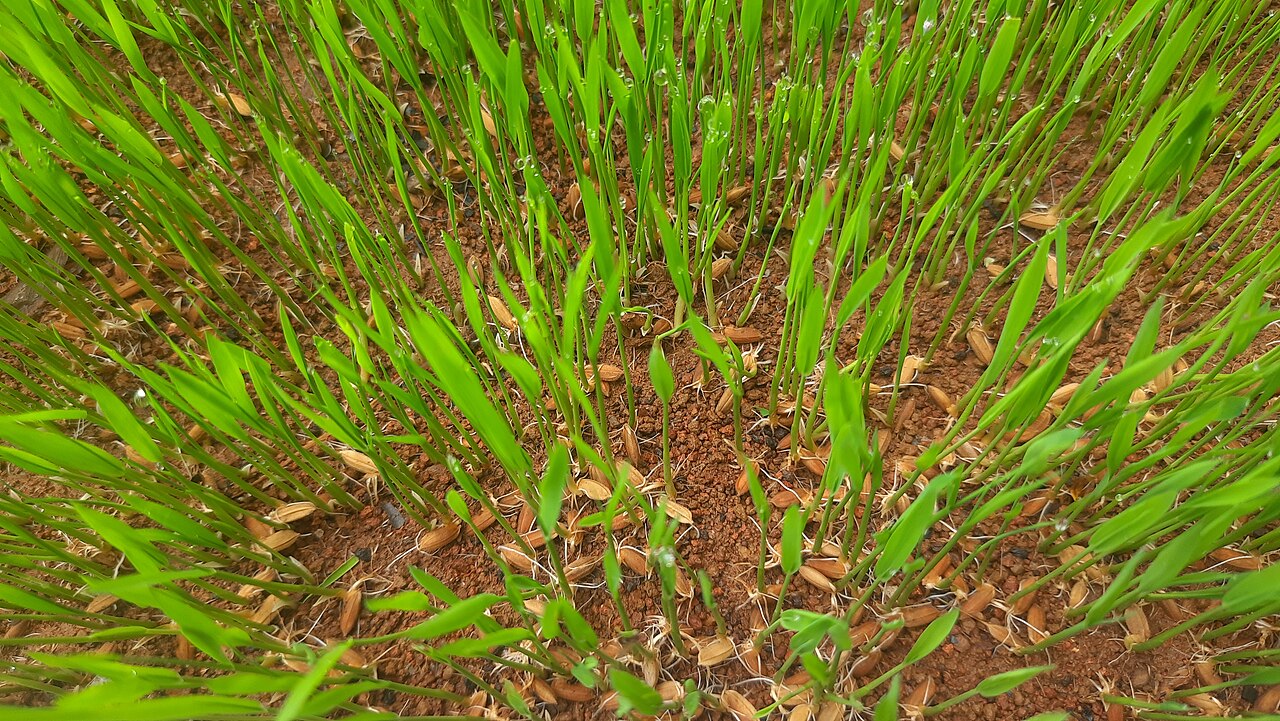
Seed is the life of agriculture. Cared for properly it germinates better, stands disease better and gives the harvest it promises.
The steps
- Choose good seed: disease-free, uniform, of a certified or tested variety.
- Treat it: a fungicide or insecticide — 2–3 g per kilo — or an organic treatment such as neem extract removes seed-borne disease and pests.
- Store it right: dry and cool, away from light and heat, in airtight containers.
- Test germination: wrap 100 seeds in a damp cloth and count how many sprout after a few days; buy fresh seed if the count is poor.
- Prepare it for sowing: soak 12–24 hours, keep at the right temperature, and sow at the right depth.
What treatment does
It protects the sprouting seed and seedling from soil- and seed-borne disease, raises germination, gives quick uniform growth, brings pulses into pod earlier, and evens out the crop in a wet or dry year — and it is easier to treat a kilo of seed than a hectare of soil.
Three methods
- Seed dressing — the commonest: seed mixed with a dry or liquid treatment or a slurry, in a metal dresser, a clay pot or a polythene bag.
- Seed coating — a layer of protective material, needing specialised equipment, used industrially.
- Seed pelleting — the most advanced, which changes the seed's shape and size for machine sowing.
Tips
Dry seed fully before storing; use neem oil or an organic insecticide against storage pests; sow fresh seed each season; combine a high-yielding variety with a local one.
A simple, cheap routine — and the first step to a bigger harvest.
Photo: Germinated paddy seed on trays — Prajna Prabhu / Wikimedia Commons (CC BY-SA 4.0)
Comments
(0)