
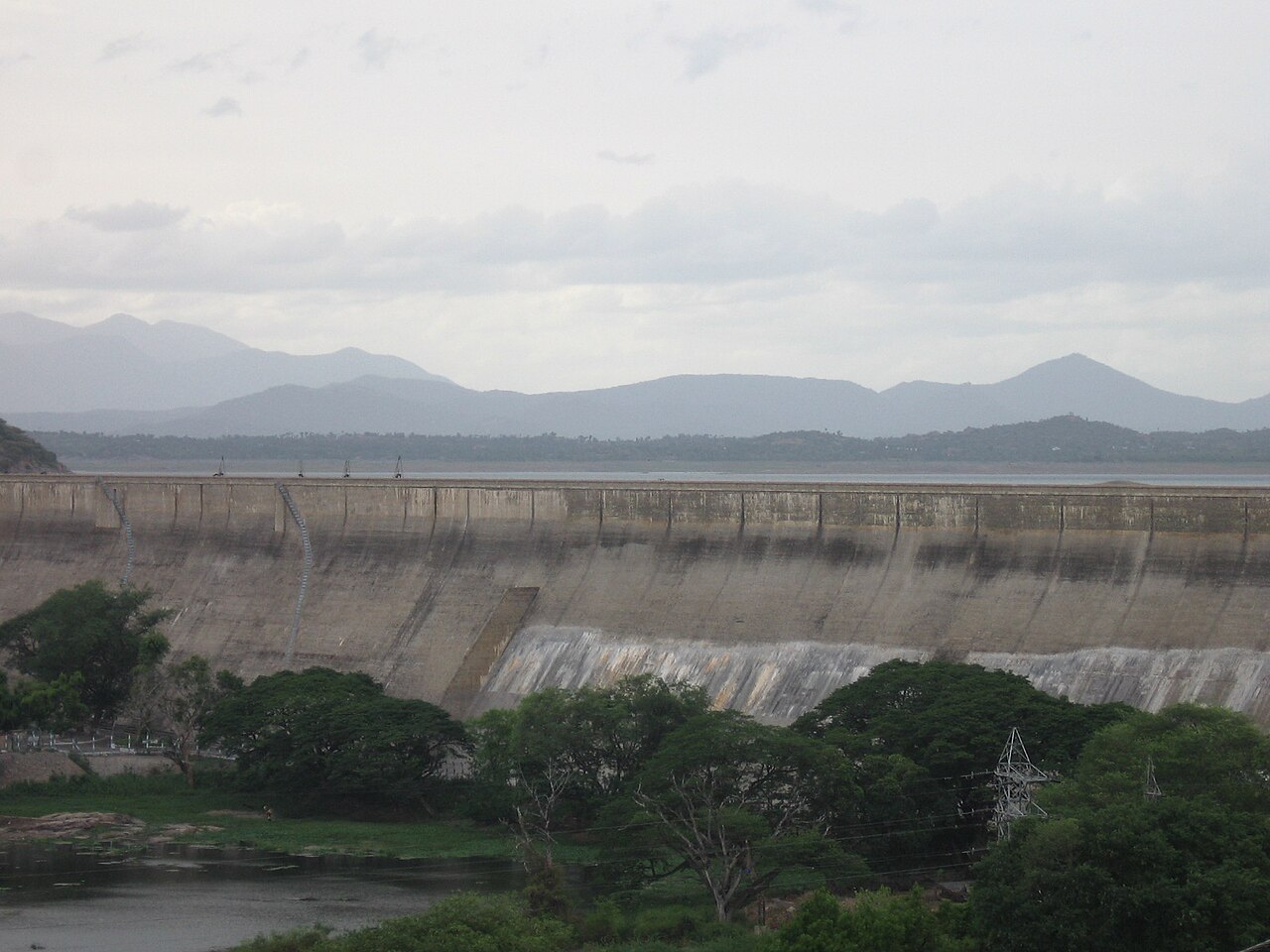
India's 178 major reservoirs have ended the 2026 monsoon about 31% below full capacity, raising concerns over water for irrigation, drinking and hydropower in the coming months, Down To Earth reported. The Central Water Commission's bulletin of 15 October put their storage at 126.717 billion cubic metres, 68.58% of usable capacity.
That is 41.193 billion cubic metres, or 24.53%, less than at the same time last year, and 16.44% below the ten-year normal. The 178 reservoirs hold about 71.67% of the country's total usable reservoir capacity of 257.812 billion cubic metres.
The shortfall is concentrated in the south and west. Tamil Nadu's Aliyar reservoir recorded no storage relative to normal, Mettur stood at 32.49% of normal and Kerala's Idukki at 10.62%. In Andhra Pradesh, Somasila held 22.05% of normal and Srisailam 33.64%. In Maharashtra, Jaikwadi held 15.55%, Ujani 10.62% and Manjra 12.45%; in Karnataka, Ghataprabha and Tungabhadra were each at about 22.5%.
By river basin, the Pennar was 72.32% below normal and the Cauvery 60.50% below, both rated highly deficient, while the Krishna was 32.59% and the Sabarmati 38.03% short. The Narmada (7.81% above normal), Mahanadi and Swarnarekha basins had surplus storage, and the Ganga, Godavari and Brahmaputra were close to normal.
Twelve of the 20 reservoirs linked to hydropower projects were at or below normal. For farmers in the deficient basins, low storage after the monsoon bears directly on water for rabi irrigation, as Maharashtra has already tightened water restrictions amid drought.
The report was written by Raju Sajwan.
Photo: Gopal Venkatesan / Wikimedia Commons (CC BY 2.0)
Source: Down To Earth


Comments
(0)