
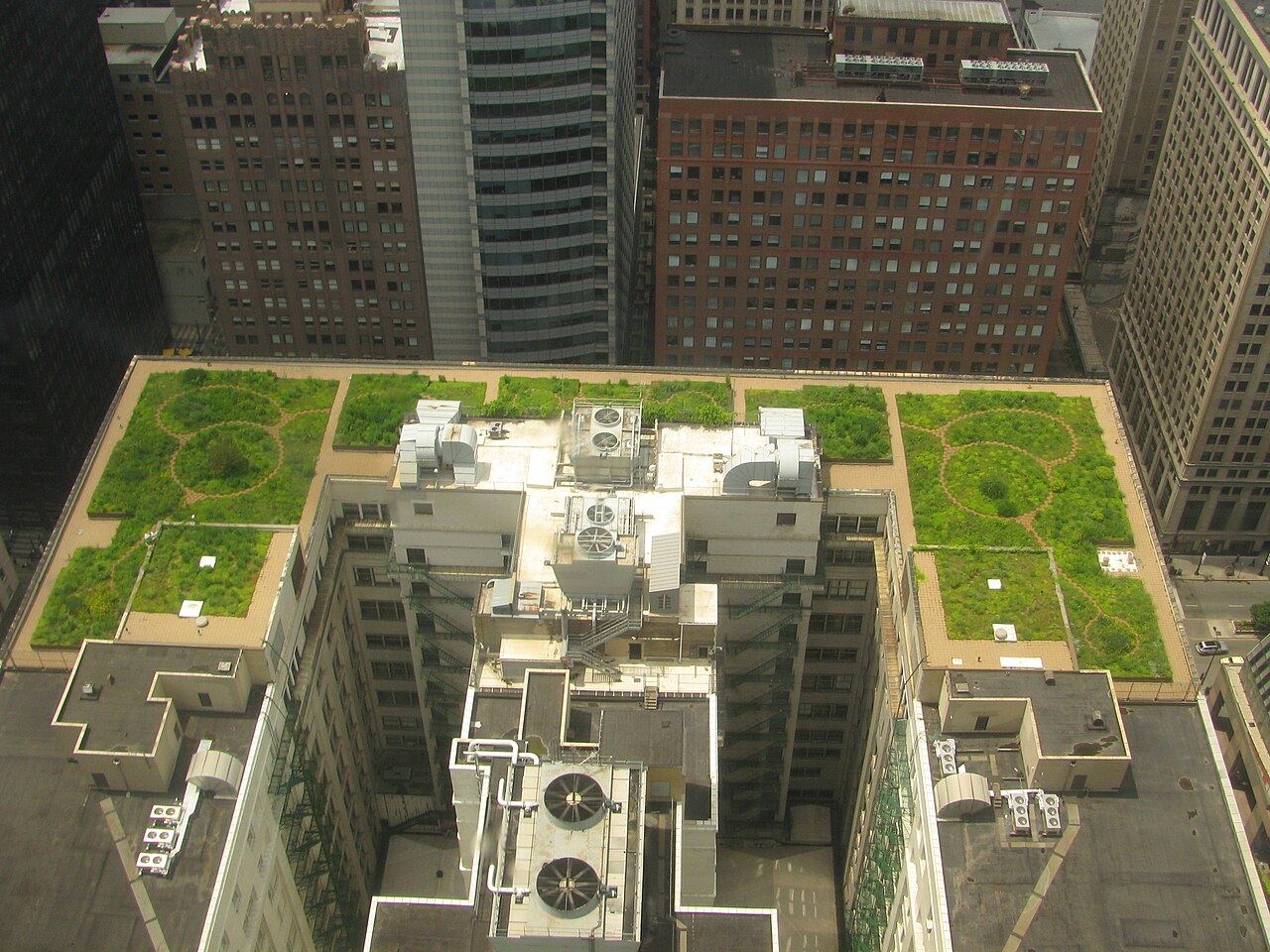
Seen from above, a modern city's roofs are usually grey: brick, asphalt, gravel and metal. A few cities are changing that, covering their roofs with grass, wild flowers and gardens that keep the city cooler, soak up excess rain and give nature a foothold among the concrete. Drawing on World Population Review data, Ajker Patrika looks at the cities that lead on green roofs.
Top of the list is Basel, a mid-sized Swiss city, with an average of 5.71 square metres of green roof per resident, the highest of any city in the world. Since 2002 its building law has required every new flat roof to be planted. Since 2006 it has added about 80,000 square metres of green roof a year; 23 percent of its flat roofs were green in 2006, and about 40 percent are now.
In Germany, large cities compete to add green roofs. Stuttgart, known as Europe's 'green roof capital', has 4.1 square metres per resident, nearly five times Berlin. Frankfurt has 1.9, Nuremberg and Hanover 1.6 and Düsseldorf 1.4. In 72 percent of Germany's large cities a green roof lowers a building's wastewater charges, an incentive for owners, and the country has about 120 million square metres of green roof in all.
Where land is scarce, roofs are the answer. Greater London has about 1.5 million square metres of green roof, with 1.21 square metres per resident in the dense central business zone; London first made green roofs a planning requirement in 2008. In tropical Singapore the green climbs the walls too: about 193 hectares of 'skyrise greenery', and some 40 percent of the city-state is covered in natural green.
Toronto became the first city in North America to require green roofs on new buildings in 2009, and between 2010 and 2024 more than a million square metres were built on over 1,000 buildings. In 2025, however, the Ontario provincial government scrapped the requirement, citing the need to build housing faster.
Per resident, Basel and Stuttgart lead; by total area, Munich and Singapore do. San Francisco requires 15 to 30 percent of a new building's roof to carry solar panels, plants or both, and Portland and Hamburg pay cash subsidies per square foot of green roof. The report's point is that green-roof cities do not happen by accident; they are made by planning and firm law.
Photo: TonyTheTiger / Wikimedia Commons (CC BY-SA 3.0); Chicago City Hall green roof, representative picture
Source: Ajker Patrika

Comments
(0)