
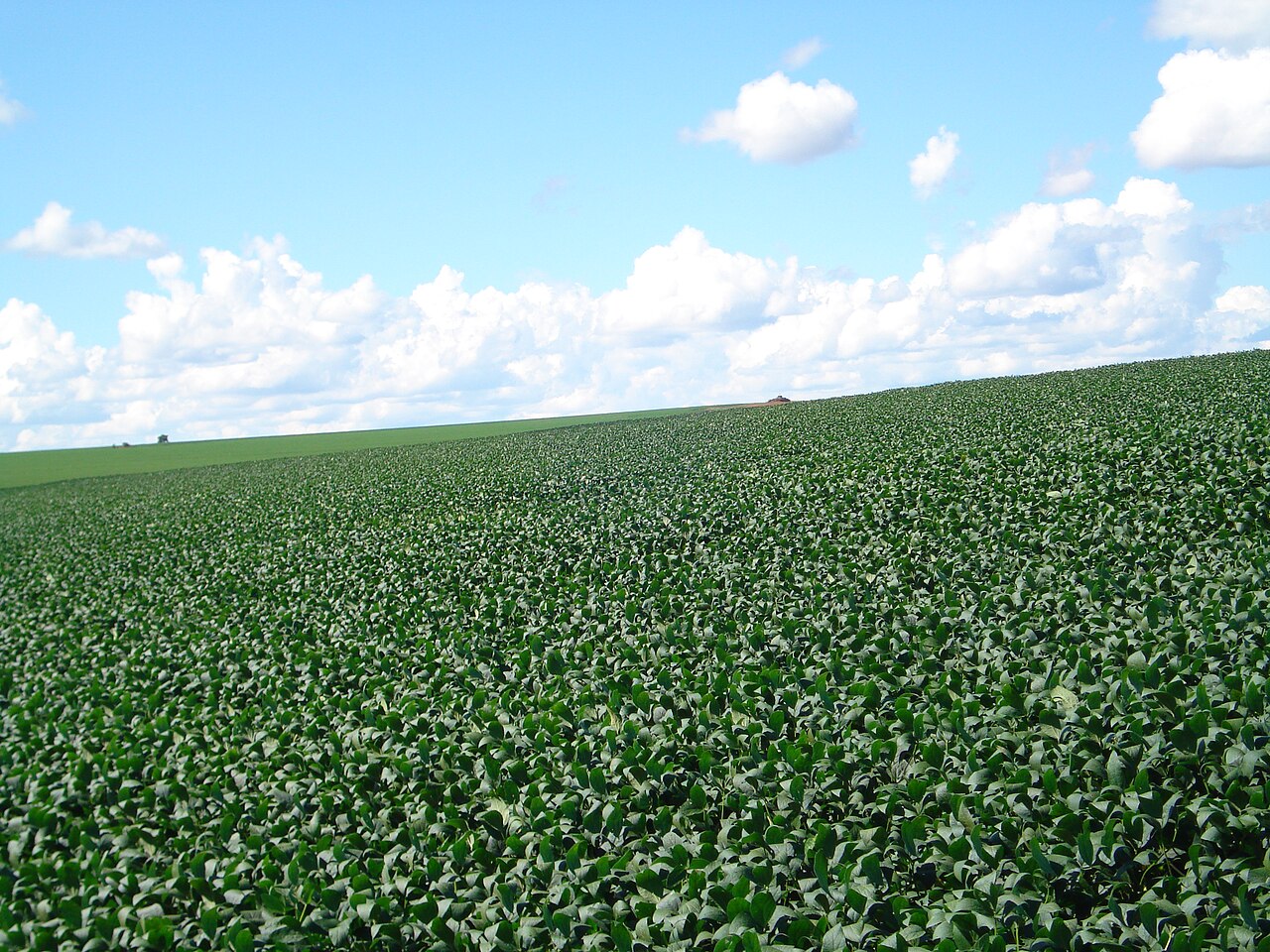
Brazil's national supply agency, Conab, is projecting a record 2026/27 soybean harvest of about 181.6 million tonnes, within a total grain crop of 366.6 million tonnes, even though planting is running behind last year because of uneven early rains.
Conab gave the figures in the 14th edition of its Agricultural Perspectives report, published on 15 September with Banco do Brasil. It expects total grain output up 1.4 percent, with soybeans at 181.64 million tonnes on 49.3 million hectares. The agency noted that the 1.4 percent rise in soybean area is the slowest expansion in two decades, a sign that gains from new land are getting harder to find even as yields keep rising. It put corn at about 148 million tonnes, up 2.8 percent, with first-crop corn on its largest area in 13 years.
The private consultancy AgRural, which traders watch for weekly planting progress, raised its own soybean forecast on 6 October to 182.7 million tonnes on 49.159 million hectares, close to Conab. Its field data show farmers had planted 7.3 percent of the expected area by early October, against 9.0 percent at the same point last year. AgRural analyst Adriano Gomes said yield assumptions are still based on trend lines because planting has barely begun.
The slow start reflects weather, not farmers holding back. Dry spells have interrupted fieldwork in Parana, frost has damaged some fields in Rio Grande do Sul, and Mato Grosso, the largest grain state, has only begun sowing its irrigated areas. Because the soybean belt is so wide, a slow start in one region can still be made up elsewhere if rains return to normal through November, which is why neither Conab nor AgRural has cut its estimate.
If the projection holds, a record Brazilian crop would add significantly to world soybean supply as Brazil competes with the US and Argentina for export demand, especially from China. More supply usually weighs on prices, which helps countries that import soybeans, soymeal or soy oil and squeezes farm margins in rival exporting countries.
Photo: Coloradogoias / Wikimedia Commons (CC BY-SA 3.0)
Source: Global Agriculture

Comments
(0)