
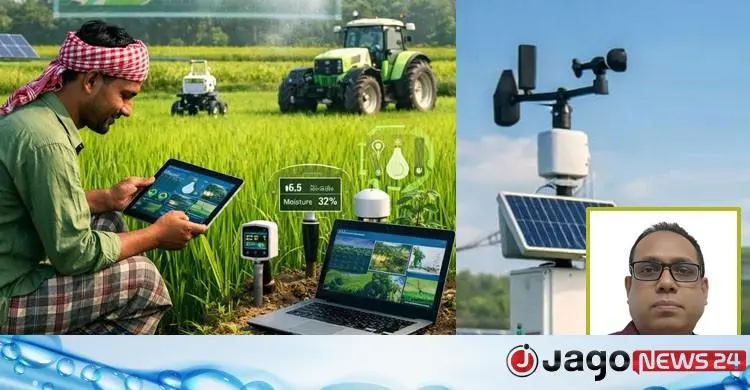
Food security is a pressing issue worldwide. Population growth, climate change, shrinking farmland, labour shortages and rising costs have put agriculture under complex pressure, making technology-driven or smart agriculture not just an option but an essential path. The combined use of Artificial Intelligence (AI), drones, the Internet of Things (IoT), sensors, mobile apps and digital supply chains is taking farming into a new era, and the government has already taken steps to use modern technology in agriculture.
Why technology is needed
Food security means not only availability of food but also nutrition, safety and access. According to the Food and Agriculture Organization (FAO), future food demand will be hard to meet without technology. Bangladesh's main challenges are climate change, declining soil fertility, labour shortages, rising costs, weak market management and farmers not getting fair prices. Smart agriculture uses ICT, AI, IoT, sensors, drones and data analysis for data-based decisions, precise management, higher output, lower costs and environmentally friendly farming.
Key technologies
- **AI:** detects crop diseases and pests from mobile phone photos, forecasts yields to aid market planning, and uses weather data to guide sowing, fertilising and irrigation. The Bangladesh Agricultural Research Council (BARC) and Genius Farms Limited have taken initiatives on AI in agriculture.
- **Spray drones:** fast spraying, less labour, more area covered in less time, fewer health risks and precise pesticide doses, especially useful amid labour shortages.
- **Soil sensors and smart irrigation:** measure moisture, pH and nutrients so fertiliser is used correctly, water waste falls and output rises.
- **Mobile apps:** deliver weather information, diagnosis, market prices, advice and training videos. The Department of Agricultural Extension (DAE) and private firms including Genius Farms have launched digital services.
- **Digital supply chains:** connect farmers directly with buyers, improve price transparency and raise farmers' profits; e-commerce is opening new marketing opportunities.
Economic effects and challenges
Technology cuts costs, raises yields and incomes, creates jobs in machinery operation, data analysis and agri-services, and improves export potential. But high costs, farmers' limited knowledge, lack of training, poor internet, weak policy coordination and data gaps remain obstacles.
Recommendations
The writer calls for subsidies for agricultural technology, village-level farmer training, public-private partnership, more investment in research and innovation, and rural internet infrastructure, with the Ministry of Agriculture playing a key role. Future farming will be data-driven, eco-friendly, labour-saving and profitable, integrating AI, drones, sensors and robotics. Implementing spray drones, soil sensors, AI disease detection, mobile apps and digital supply chains together, the writer concludes, is the most effective way to secure food for future generations.
Source: Jagonews24. First published in Bengali on The Agro News.

Comments
(0)