
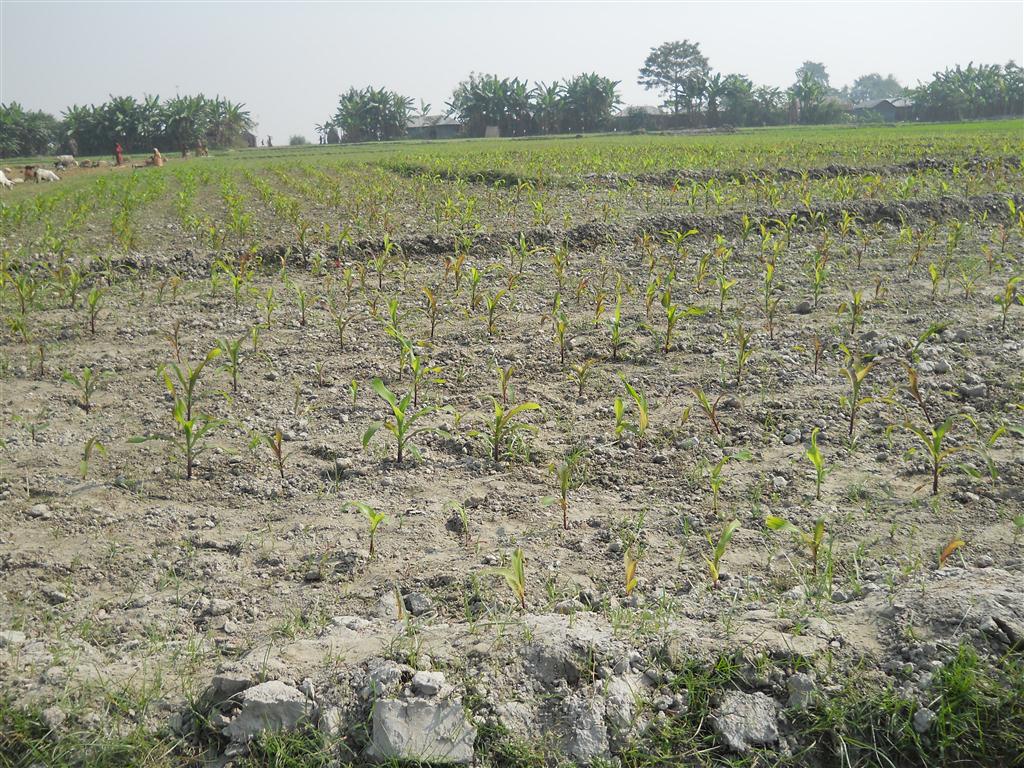
With no flood for two years, farmers on the char lands of Bakshiganj upazila in Jamalpur are turning to chilli this rabi season. The upazila office of the Department of Agricultural Extension has raised its chilli target from last season's 280 hectares to 350, and expects about 6,000 tonnes if the weather stays favourable. Agricare24 carried the report, citing Agrajatra Pratidin.
Most of the chilli is in the chars of Sadhurpara, Merurchar and Nilakhia unions, where farmers are growing the Aster One, Fire Hot, Bijli Plus and Jolshoy varieties. Sultan Mia, a farmer in Kushalnagar Uttarpara, Nilakhia, said the crop was doing well this year because there had been no flood. Solaiman Mia of Bangalpara village in Sadhurpara said farmers would grow even more chilli if prices were good.
Farmers are worried about heavy rain and waterlogging, however. Abu Musa of Bhati Kolkihara village in Merurchar said he chose chilli for its profit, but too much rain could damage the crop. Standing water raises the risk of collar rot and other diseases.
The agriculture office is advising farmers to use disease-free seed and healthy seedlings, prepare the land well, plant at the recommended spacing and keep drainage open. Plants and fruit hit by collar rot, wilt, leaf spot or fruit rot should be removed. Fields should be checked regularly for whitefly, thrips and fruit borers, with control measures taken on officers' advice.
Upazila agriculture officer Aminul Islam said the 350-hectare target could yield about 6,000 tonnes this season. Two flood-free years had raised farmers' interest, he said, though heavy rain remained a risk, and farmers were being advised from planting through to pest and disease control.
Photo: Afifa Afrin / Wikimedia Commons (CC BY-SA 4.0)
Source: Agricare24

Comments
(0)