
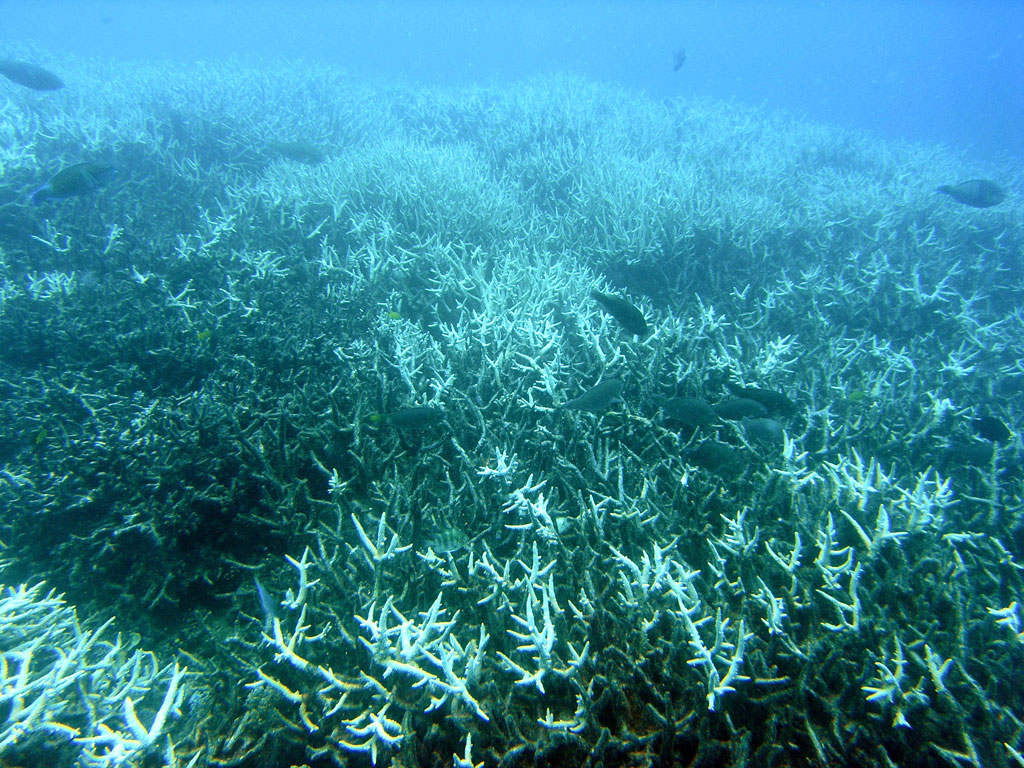
Scientists at Stanford University have found a way to bring bleached corals back from the brink by placing them in contact with healthy corals of the same colony for a few days, Euronews reported. The study was published in Science Advances.
When water gets too hot, corals expel the microscopic algae that supply much of their energy, a process called bleaching that leaves them starving. Recovery after a bleaching event can take months or years, if it happens at all. "While bleached corals may be dying, they are not dead yet," said lead author Danny Collins, a PhD student at Stanford.
The discovery began by accident in 2025, when marine biologist Steve Palumbi noticed that a bleached piece of coral that had fallen against a healthy one in a lab tank was regaining its colour where they touched. Collins then set up 10 pairs of healthy and bleached fragments from the same colonies, five in contact and five a few millimetres apart. Within seven weeks all five bleached fragments in contact had recovered; those kept apart died. Under the microscope the corals had fused, forming tiny channels through which algae and nutrients passed. Within three days algae were moving into the bleached corals, and in the second week they doubled every four days, about 10 times faster than in wild corals.
The method is not ready for use on reefs, because the corals must be genetically identical for their tissues to fuse. The team hopes to find ways to deliver the algae without direct contact. The world's reefs have lost nearly 10% of their living coral over four decades, with almost 9% lost in 2023-2024 alone during a global bleaching event, according to the Global Coral Reef Monitoring Network. "This is a recovery story. It doesn't blunt heatwaves," Palumbi said, stressing the need to reduce them.
Coral reefs matter to fishing communities across the Bay of Bengal, including around Bangladesh's only coral island, St Martin's.
Photo: J. Roff / Wikimedia Commons (CC BY-SA 3.0)
Source: Euronews



Comments
(0)