
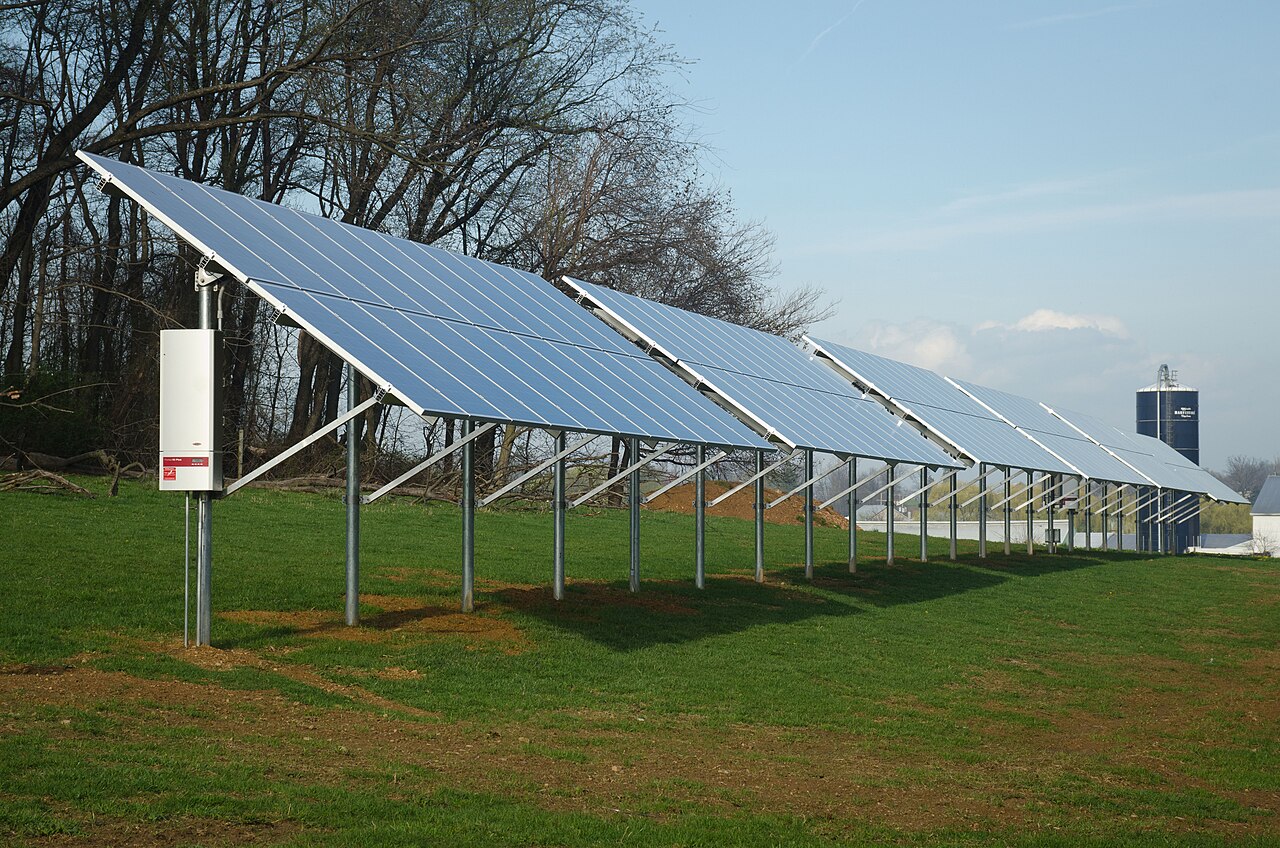
Two new studies from Cornell University show that grazing sheep around solar panels can benefit both insects and farmers, as long as the number of sheep is carefully managed, Farms.com reported.
In the first study, researchers compared grazed and mowed areas at a community solar farm in New York over three years. Grazing at a low rate of two sheep per hectare increased beneficial insects by 38% compared with mowing, with significant gains in wild bees, honey bees and lady beetles; honey bee numbers alone rose 83%. At four sheep per hectare, insect numbers were similar to mowed areas, while vegetation control improved. At eight sheep per hectare, vegetation control was strongest and the sheep stayed healthy, but honey bee numbers fell 45%.
"What's been missing is research that treats them as parts of the same system," said first author Leana Zoller, a postdoctoral associate at Cornell's Ashley School of Global Development and the Environment.
The second study produced a spreadsheet-based decision tool to help sheep farmers decide when to buy and sell animals, taking account of flock size, costs, expected revenue and vegetation growth at solar sites. It is also meant to help solar developers understand farmers' needs and write fairer grazing agreements. "We zeroed in on stocking rates because that's a concrete number that sheep farmers understand and work with every day," said senior author Steve Grodsky.
The researchers note that US demand for lamb and wool exceeds domestic production, and that solar grazing contracts can give farmers steady income: unlike conventional arrangements where farmers pay for pasture, solar operators often pay them for managing the vegetation.
Photo: Lance Cheung, U.S. Department of Agriculture / Wikimedia Commons (Public domain)
Source: Farms.com
Comments
(0)