
In September 2025, photographer Federico Veronesi was following a group of elephants along the dry bed of the Huab river in Namibia's desert when he came upon a female carrying a dead calf, its small legs wrapped in her trunk and its limp body hanging in the air. For hours she carried it, now and then setting it down as if to feed it or give it water, then lifting it again. One of his pictures of the scene has won the main prize in the Natural History Museum's Wildlife Photographer of the Year 2026 competition in London. A report by Isabelle Gerretsen published by BBC Bangla tells the story behind it.
At first the scene looked like a mother's grief. But Christin Winter, conservation programme director at Elephant Human Relations Aid (EHRA), a non-profit protecting Namibia's desert elephants, said the elephant carrying the calf was not its mother. The 14-year-old female lost her own calf two years ago and has since been seen carrying other elephants' dead calves four times, the first time such behaviour has been recorded in the area. Winter suggests it may be a form of 'emotional processing' of grief, or an attempt to protect the small body from predators.
About 150 desert-adapted elephants live along five riverbeds in the Namib desert, travelling long distances for food and water and eating the pods of the ana tree (Faidherbia albida) or floodplain grasses. They are not a separate species but a population that survives the dry environment through learned behaviour. Winter says their numbers have fallen for 20 years, partly because of long droughts but mainly because of conflict with people over water: elephants enter farms, overturn water tanks, tear pipes and break pumps.
Calf mortality is the gravest concern: of 16 calves born between 2014 and 2022, only two survived. A healthy newborn elephant weighs 100 to 120 kilograms (220 to 265 pounds), but the dead calves weigh about 60 to 65 kilograms (132 to 143 pounds). One theory is that mothers cannot carry calves to full term, so they are born premature; another is chronic stress from conflict with people. In a project running to 2028 with Daniela Chusyd, assistant professor at Indiana University Bloomington, EHRA is testing dung for heavy metals and persistent chemicals such as PFAS, and measuring thyroid and cortisol hormones.
Joyce Poole, founder of the conservation non-profit ElephantVoices, called the pictures 'truly heartbreaking'; in Kenya she once watched a mother try to lift her dead calf for two days. She said government hunting permits, as well as climate change, are pushing Namibia's desert elephants towards extinction. To Veronesi, the interaction was 'almost human behaviour'.
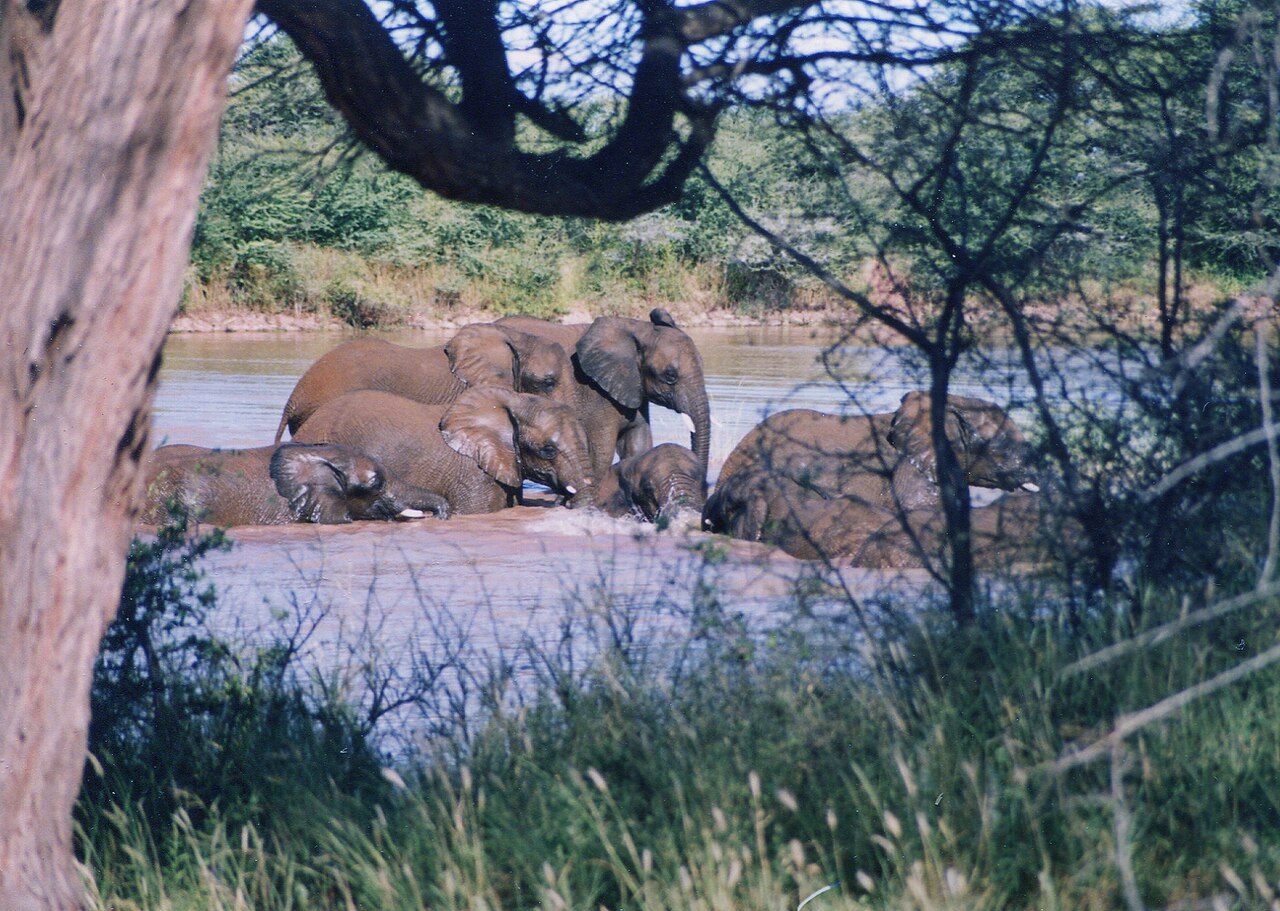
Photo: Udo Schmidt / Wikimedia Commons (CC BY-SA 2.0); a representative picture of elephants in Namibia, not the award-winning photograph
Source: BBC Bangla

Comments
(0)