
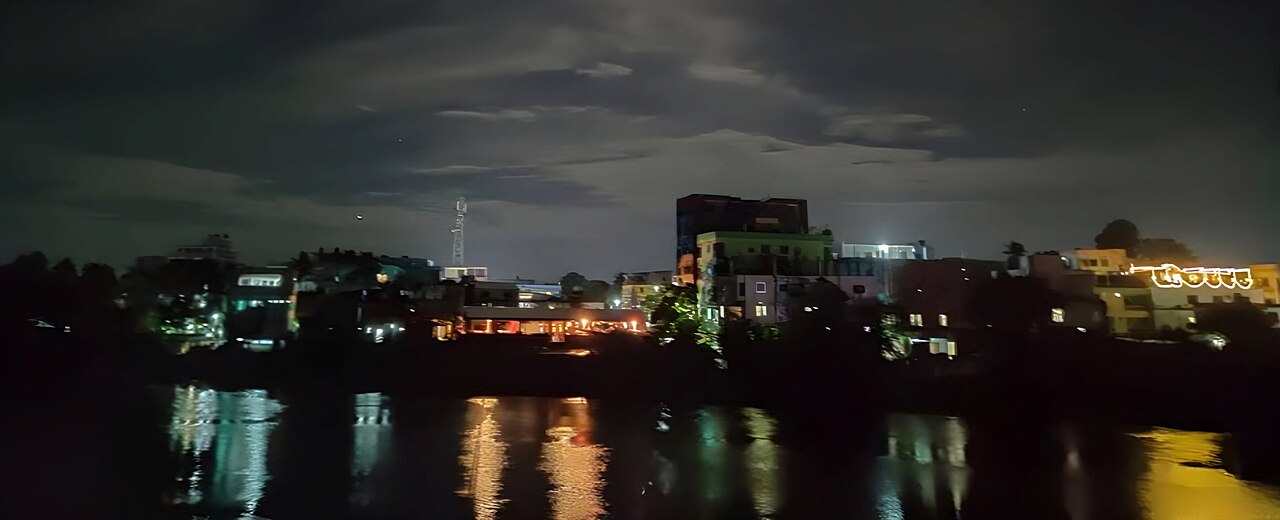
The Nabaganga, the river that runs past Magura town, has been reduced almost to a drain by encroachment and pollution. Houses, shops and other structures have gone up illegally on land along both banks, and waste from markets, shops, drains and households has filled parts of the riverbed. With the channel so shallow, the river does not flow normally even in the monsoon.
Plastic, rubbish and water hyacinth are fouling the water and destroying the places where fish move and breed. Sukumar, a fisher from the town's Notun Bazar area, said large boats once used the river and his family lived on the fish they caught. Now that the river has shrunk, the boats no longer run and there is no fishing to be had.
The Kumar and the Nabaganga both rise from the Mathabhanga in Chuadanga. The 124 km Kumar flows from Alamdanga through Kushtia and Jhenaidah to join the Nabaganga at Magura town, while the Nabaganga enters Magura from Chuadanga Sadar through Jhenaidah Sadar; the joined river carries on towards Narail as the Nabaganga. It is the stretch of the 214 km river before it meets the Kumar at Magura that has turned into a drain. The river was once a distributary of the Padma.
In Notun Bazar, shops, warehouses and the backs of hotels line both banks, most of them, residents allege, built on river land. Drain pipes from the shops empty straight into the river, and sweet boxes and clay posts thrown from hotels have largely filled the bed under the Notun Bazar bridge. East of the bridge, where the river meets the Kumar, there are allegations that multi-storey buildings have been put up on the bank. With no current, hyacinth, algae and plastic float on the water, and rubbish is heaped along the banks.
Local environmentalists say the river's water and flow are directly tied to its aquatic animals and plants: when water quality falls or the flow is blocked, their habitat suffers, and so does the land along the banks. Environmental campaigner ATM Anisur Rahman said eviction drives alone will not save the river; encroachers must be dealt with regularly, the river's boundary marked and its land recovered, and the sources of pollution shut off.
Masum Billah of Nanduali village blamed years without oversight of the banks and channel, and Ohidul Islam of Shibrampur village called for dredging to restore the river's depth. Santosh Karmakar, executive engineer of the Bangladesh Water Development Board in Magura, said the government will soon start dredging 44 km of the Nabaganga under a nationwide project to excavate 20,000 km of water bodies.
The report is by Krishi Shomoy's Magura correspondent.
Photo: Farabi Al Russell / Wikimedia Commons (CC BY-SA 4.0)
Source: Krishi Shomoy


Comments
(0)