
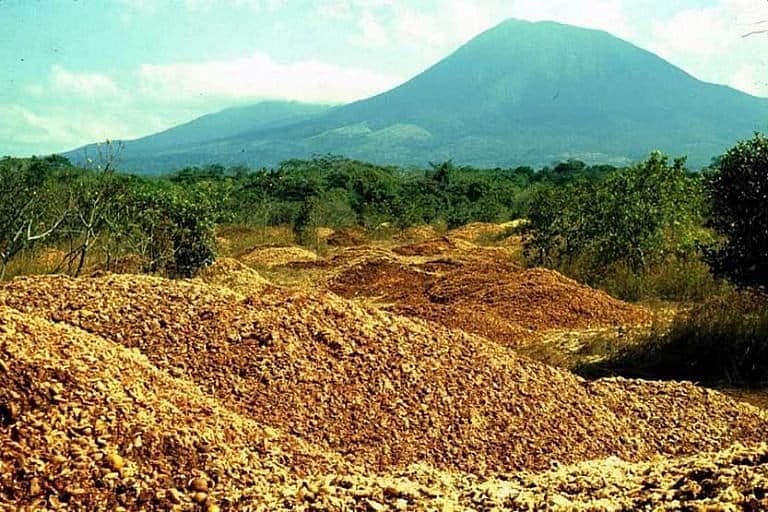
The site was almost barren — grass and rocks and little else. On it a juice company dumped 12,000 tonnes of orange peel and pulp. Sixteen years later, scientists found the land so thickly covered in trees and vines that a bright yellow signboard nearly seven feet tall by the roadside had disappeared behind the growth. The place is a national park in Costa Rica, in Central America.
In the mid-1990s a company called Del Oro opened an orange juice plant on Costa Rica's northern border. Ecologists Daniel Janzen and Winnie Hallwachs, working in the Guanacaste conservation area, made it an offer: donate some forest land to the reserve, and in return dump orange peel and other organic waste on degraded park land, where it would rot slowly into the soil. Del Oro agreed, and after a 1997 contract about 12,000 tonnes of peel and pulp were trucked onto the barren plot.
Within a year the deal was in court. A rival firm, TicoFrut, complained that the park had been ruined by the dumping; the case reached Costa Rica's Supreme Court, which found for TicoFrut. For some 15 years the site was largely forgotten, until 2013, when Princeton University researcher Timothy Treuer, discussing possible research topics with Janzen, heard about the old orange-peel plot.
The researchers compared the dump site with a similar plot across the road, measuring the number, size and species of trees and analysing soil samples. The result was unambiguous: on the three hectares that received the peel, tree biomass was 176 per cent higher, the soil richer in nutrients, tree diversity greater and the canopy denser. Waste once considered worthless had turned barren ground green.
The study was published in the journal Restoration Ecology. Co-author Timothy Treuer said there are few examples of forest being restored with agricultural and food-industry waste, and that what looks useless to us in food production can be a valuable resource to nature. Princeton ecologist David Wilcove added that industry creates environmental problems in making the goods people need, but that companies and conservationists working together can solve some of them.
For Bangladesh, where fruit processing and agro-industry generate large volumes of organic waste, the Costa Rican experiment offers a practical answer to the question of how that waste might rebuild soil fertility.
Source: Prothom Alo

Comments
(0)