
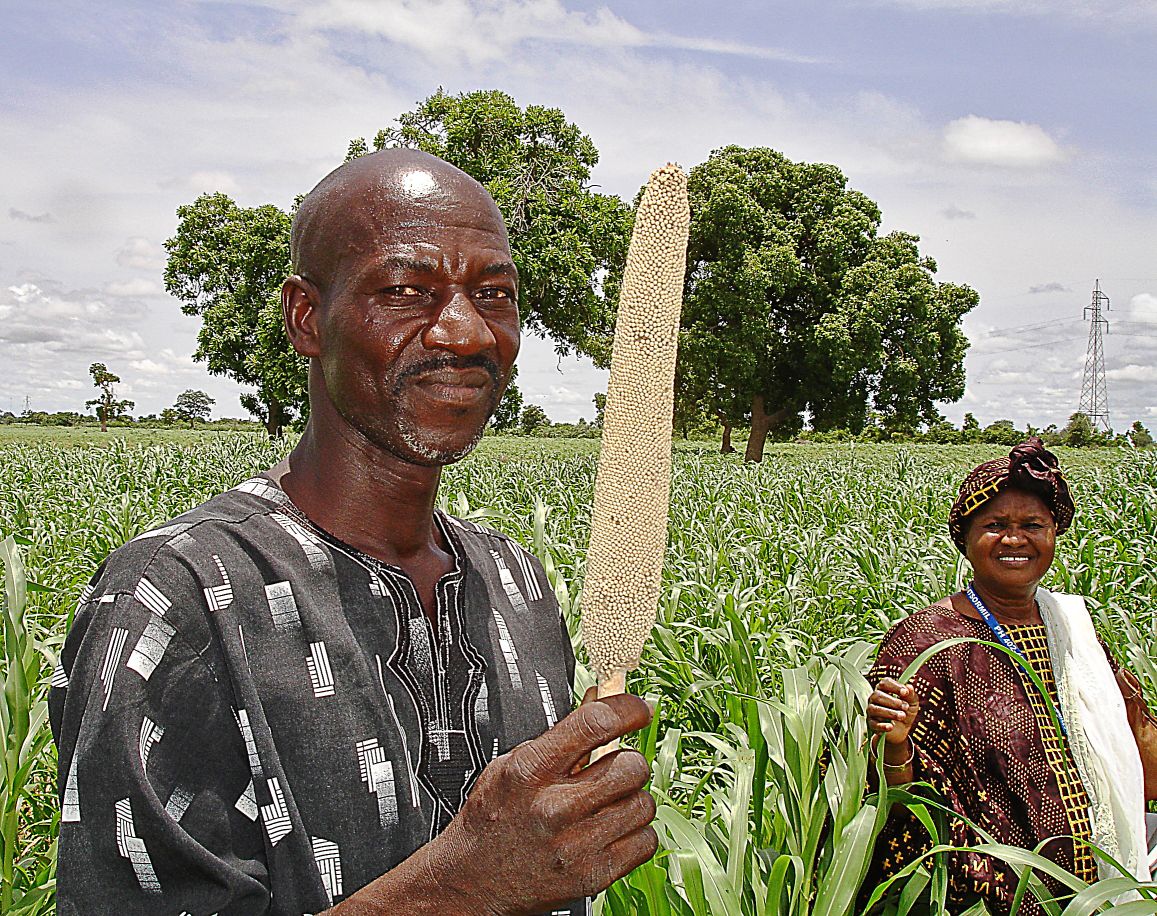
A road built near a Climate-Smart Village in Cinzana, Mali, showed how a good farm programme can leave a new problem behind. The village scheme raised yields and strengthened farmer groups. A separate project's road then opened up a nearby forest, and outsiders began cutting it illegally, because local communities had no authority or rules to control its use. Tensions grew within and between communities.
CGIAR Climate Security researchers built the Climate Security Sensitivity Tool to catch gaps like that one. It takes the conflict and insecurity risks already present in a place, using data from the INFORM Risk Index, and checks a programme against six mechanisms: economic development, institutions, trust and cooperation, resource sustainability, knowledge, and capacity and resilience.
In 2023 the team tested it on Climate-Smart Village work in Jirapa, Ghana, and Cinzana. The study combined a desk review, workshops with 20 local specialists in each country, and focus groups with women, men and young people in each village and a neighbouring community.
In Jirapa, five of the six mechanisms matched what the context required; the tool pointed to land tenure security and fair sharing of benefits as the weak spot and recommended participatory mapping and clearer tenure arrangements. In Cinzana it flagged institutions and economic development, including extension services and public finance management.
The study also exposed a limit. For Ghana, the global index held only national figures, so the tool's view of Jirapa reflected country averages, while local experts saw the area as far more conflict-prone. That is why the authors pair the tool with local experts and communities.
The researchers say it is most useful while a programme is still being designed, and that the next steps are more field validation and better local risk data. The full study is in Frontiers in Sustainable Food Systems.
Reported by CGIAR Climate Security.
Photo: Intsormil / Wikimedia Commons (CC BY 3.0)
Source: CGIAR


Comments
(0)