
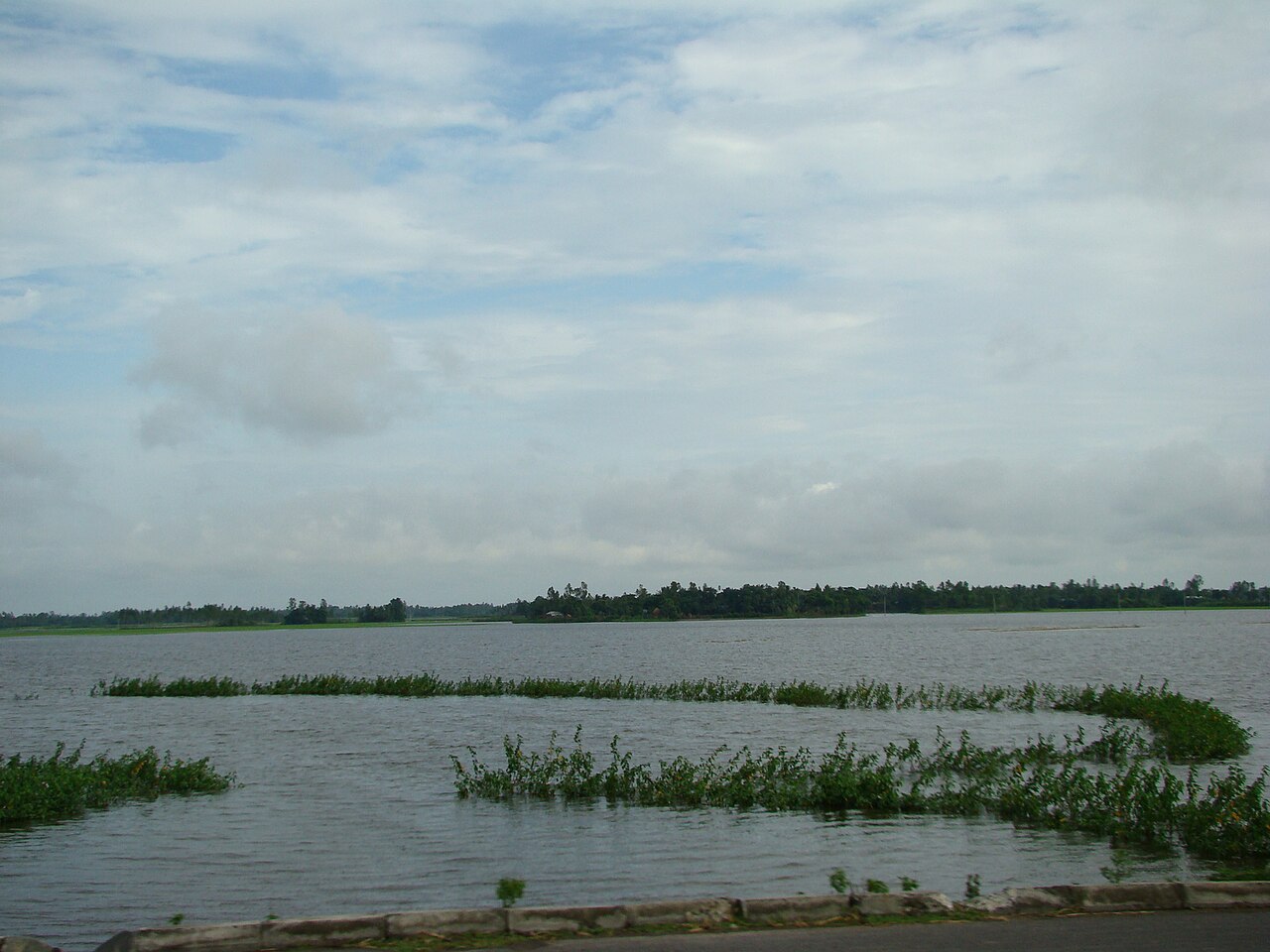
Only 1 percent of Chalan Beel, one of Bangladesh's largest wetlands, has "very high" groundwater potential; 77 percent has moderate and 22 percent low potential. Prothom Alo reports the findings of researchers in the University of Rajshahi's Department of Geology and Mining, published this month in the journal Discover Geoscience.
The study covered 5,097 square kilometres across Singra and Gurudaspur in Natore, Chatmohar and Bhangura in Pabna, and Tarash, Raiganj and Ullapara in Sirajganj. Of this, 65 square kilometres fell in the very high class, 3,933 in the moderate class and 1,099 in the low class. Using satellite images and a geographic information system (GIS), the team analysed 17 factors including rainfall, soil type, water level, slope and land use, and tracked changes in vegetation from 1990 to 2024.
Team member Wahidul Alam said that in the high-potential areas water is found at a minimum of 8 metres in the monsoon and 20 metres in the dry season; in the moderate and low areas the figures are 10 and 15 metres in the monsoon and 25 and 40 metres in the dry season. Clay covers 44 percent of the area and keeps water from seeping deep, he said.
The study's lead, Professor Chowdhury Sarwar Jahan, said the Padma's flow has fallen sharply and the Jamuna's is declining; the Padma is drawing down Chalan Beel's groundwater while farms pump heavily in the dry season. A falling water table in a wetland, he said, is a sign of environmental crisis. At 15 of 20 observation wells, the usual monsoon recovery of the water table has weakened markedly.
According to the Bangladesh Agricultural Development Corporation's minor irrigation office in Natore, the district had 36,505 electric and diesel irrigation pumps in the 2019-20 boro season and 44,229 in 2025-26. Executive engineer Md Sajjad Hossain said it would not be surprising if this showed in Chalan Beel's groundwater. Average annual rainfall in the three districts fell from 1,595 millimetres in 1990-94 to 1,370 millimetres in 2024.
If the water table keeps falling, farmers may have to pump from deeper, raising costs, and dry-season habitat for fish and other aquatic life could suffer, though the study did not measure these effects directly. Professor Kazi Matin Uddin Ahmed of Dhaka University's geology department said groundwater pumping must be taken seriously even in wetlands like Chalan Beel and more surface water used for irrigation. Mohammad Liton of Boria village in Singra put it simply: in his childhood the beel was like a sea; now there is less water and fewer fish.
Reporting: Partha Shankar Saha, Prothom Alo
Photo: Shahnoor Habib Munmun / Wikimedia Commons (CC BY 3.0)
Source: Prothom Alo


Comments
(0)