
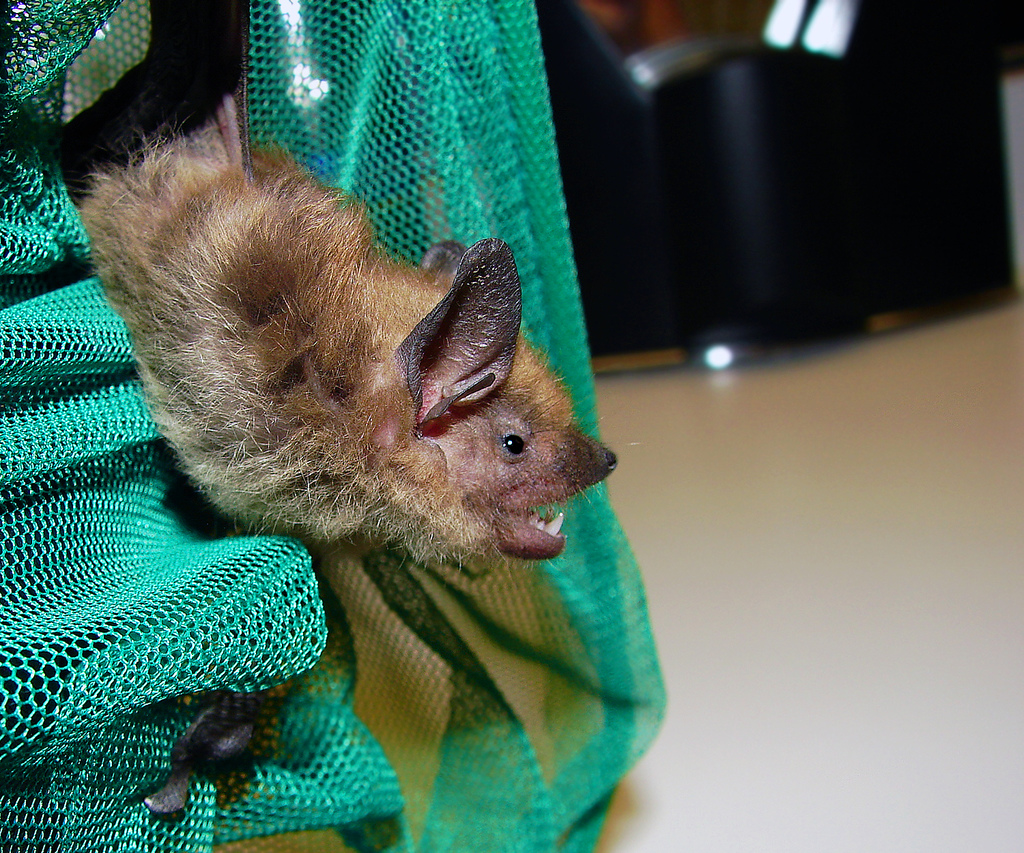
Farmers in British Columbia are being invited to learn how bats can cut the damage insects do to crops and livestock, Farms.com reported. The Okanagan Similkameen Stewardship Society and the BC Community Bat Program are holding a free event on 7 November at Burrowing Owl Winery in Oliver on the benefits of welcoming bats onto farms.
"Bats provide natural and free pest control," the event listing says. "They eat a lot of insects that damage field crops, orchards, vineyards, and harass and sicken livestock. This natural pest control saves you money. A single bat can eat its own weight in insects every night." Bats feed on mosquitoes and biting flies that target cattle, and on field insects such as cutworms and cucumber beetles.
The BC Community Bat Program estimates that a colony of 150 big brown bats can eat about 38,000 cucumber beetles in a summer, and says adding bats to an insect management programme could reduce the need for pesticides.
The event will also cover how to attract bats. Old buildings and trees around a farm can give these nocturnal predators places to live, and landowners can build bat boxes to support colonies.
Farmers elsewhere already use bats this way, Farms.com noted: in South Africa bats reduced stinkbug damage in macadamia orchards by up to 23%, in Brazil they saved about $94 per hectare of corn, and US estimates say bats save American agriculture "billions of dollars per year in pest control".
Photo: Matt Reinbold / Wikimedia Commons (CC BY-SA 2.0)
Source: Farms.com

Comments
(0)