
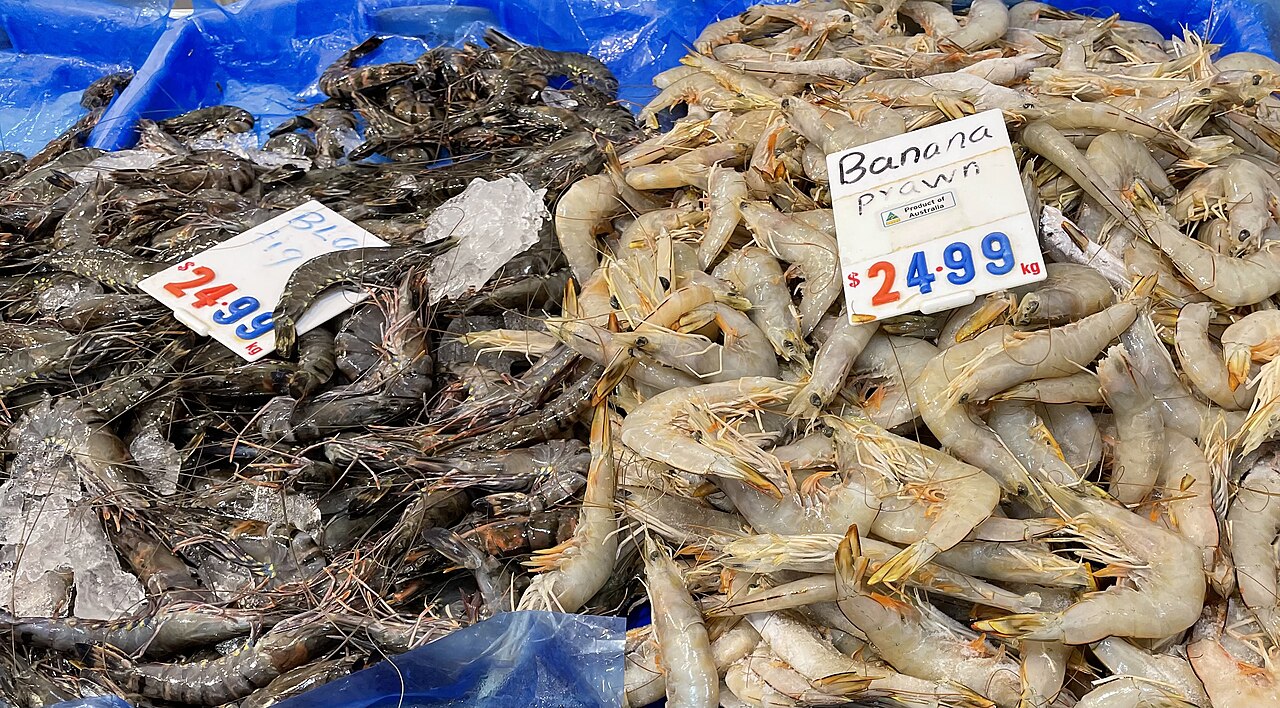
Bagda (tiger) shrimp farming on Bangladesh's coast faces growing uncertainty as climate change, abnormally salty river water and a shortage of good-quality, disease-free fry hit production. Farmers say falling output is pushing them into losses.
By the farmers' account, they used to harvest 70 to 80 percent of the fry they stocked in their ghers (enclosed ponds). Those involved say the rate has now fallen to about 10 percent, disrupting production and leaving many farmers struggling to recover their costs.
Golam Kibria Ripon, a national gold medal-winning farmer, has farmed shrimp in Paikgachha and Koyra in Khulna for two decades. He holds about 1,100 bigha of land in six separate ghers in Paikgachha, most of it leased, and farms bagda shrimp and other salt-tolerant fish on about 2,000 bigha in all, including Koyra, using what he describes as environment-friendly, natural methods.
His farm employs 75 to 80 permanent workers, and 400 to 500 day labourers find work when the ghers are prepared each season. When production falters, it is not only the farm owners but the workers who depend on them who face financial uncertainty.
Bagda shrimp matter to the coastal economy and to Bangladesh's export-oriented fisheries, and concern in the sector is growing. People involved say the risks could be reduced by tackling the effects of climate change, monitoring water salinity and ensuring a supply of disease-free, good-quality fry.
They also call for scientific gher management, water-quality testing and effective disease prevention, and for more farmer training, research and easily available technical support to keep shrimp farming on the coast sustainable.
Photo: Pelagic / Wikimedia Commons (CC BY-SA 4.0); a representative picture of black tiger shrimp
Source: Agricare24


Comments
(0)