
Bangladesh's 22-day ban on catching brood hilsa runs from 8 to 29 October. In a column in Prothom Alo, Mir Mohammad Ali, assistant professor and former head of aquaculture at Sher-e-Bangla Agricultural University, asks who guards the rivers once the officials' speedboats have gone. His answer: the people of the riverbanks, fishers and alert citizens themselves. The views are the writer's own.
He cites Department of Fisheries figures: a record 571,000 tonnes of hilsa were caught in 2022-23, falling to 500,000 tonnes in 2024-25, a reversal he attributes partly to indiscriminate catching of juvenile jatka and brood hilsa. During last year's ban, 620,140 fishing families in 165 upazilas of 37 districts received food aid; patrolling such an area, with its countless channels and chars, day and night for 22 days with a few boats is practically impossible, he argues. He points to 5 million metres of current net seized in a single night in Chandpur, and a dolphin found dead in an illegal net at Shibchar.
Community guarding works, he says, and Bangladesh has proof. Under the Department of Fisheries and WorldFish ECOFISH project from 2014 to 2019, co-management was set up in 136 fishing villages next to hilsa sanctuaries, with 575 hilsa conservation groups and about 400 trained community fish guards. The last four years of the project, 2016 to 2019, brought bumper hilsa catches in a row, but the structure was not kept going after the project ended.
His proposals: volunteer 'hilsa guard' teams in every fishing village and landing ghat, taking turns to watch remote chars and side channels; a hotline so that the river police or coast guard respond quickly, with informants kept anonymous; food aid delivered before the ban starts, with honoraria, recognition and priority for later support for those who patrol; and watch kept on wholesale depots, ice plants, road transport and shops selling illegal nets.
He also wants union councils, students, mosque imams and local media brought into awareness work, and union-by-union figures published after the ban on raids, complaints and where patrols worked. The ban, he writes, is not the fisher's enemy but an investment in future income: the brood hilsa saved today returns as many fish in the nets tomorrow.
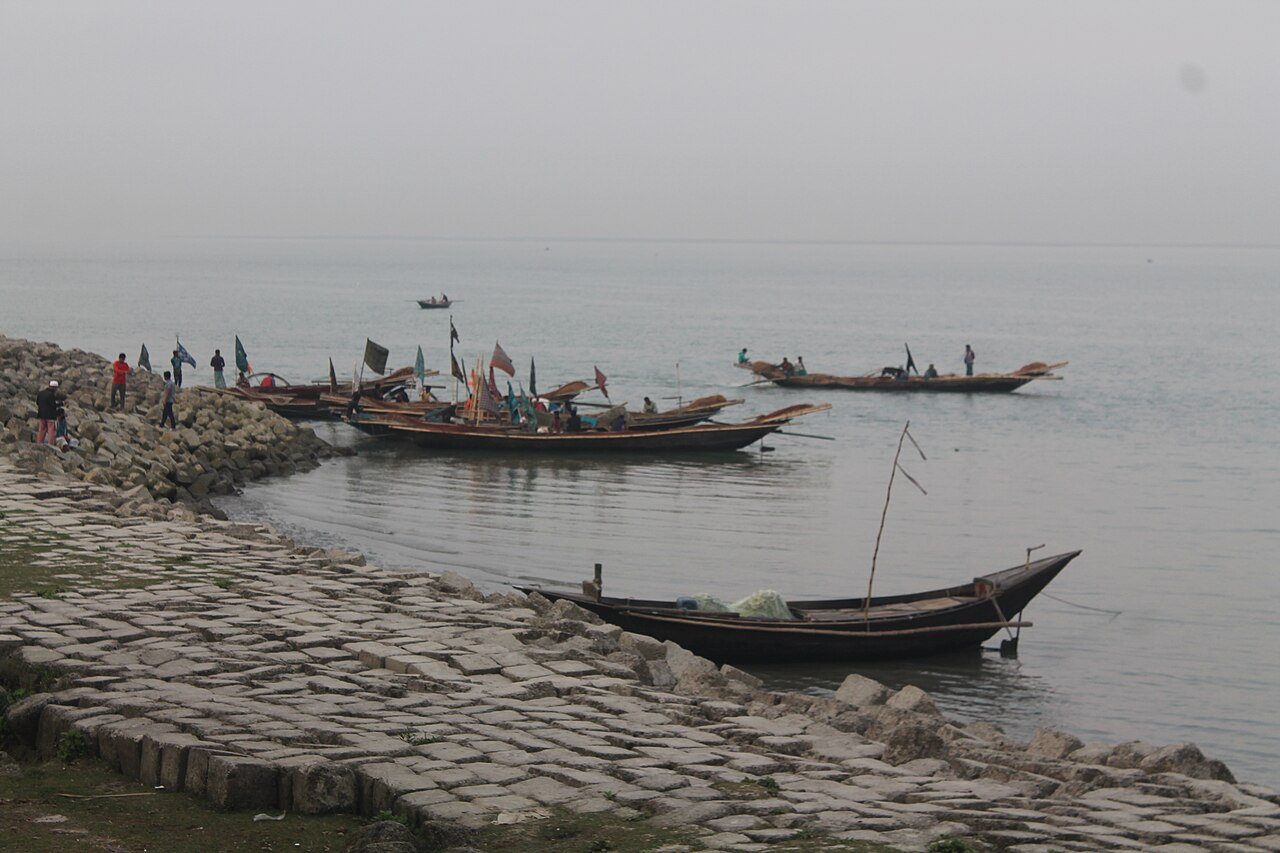
Photo: Nurunnaby Chowdhury (Hasive) / Wikimedia Commons (CC BY-SA 4.0); a fishing boat on the Meghna
Source: Prothom Alo

Comments
(0)