
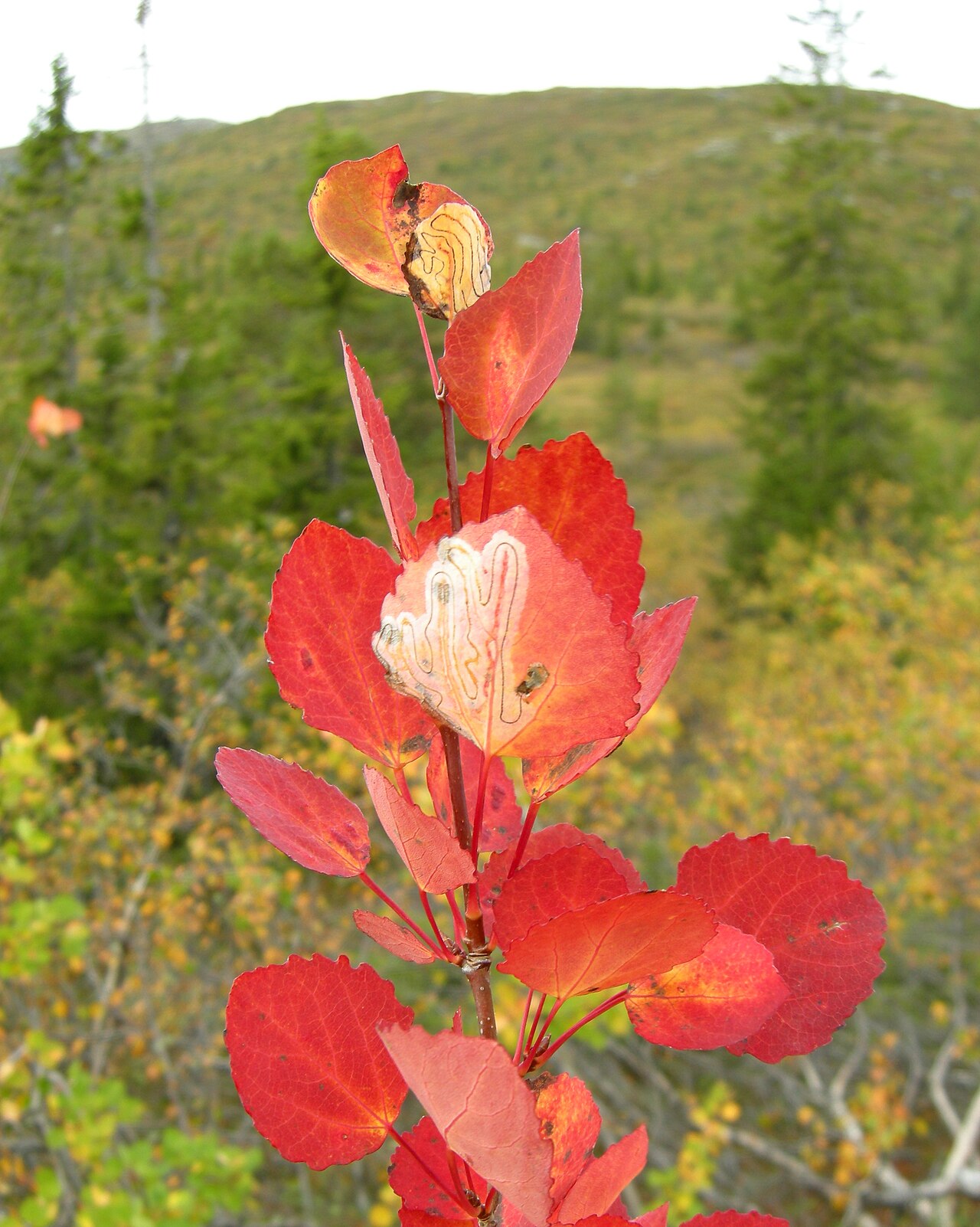
Researchers at Umeå Plant Science Centre in northern Sweden have identified a gene that controls the jigsaw-like shape of the cells covering a leaf's surface, and found that both the gene's activity and the cells' shape change when a tree is short of water, Global Agriculture reported. The work, in European aspen (Populus tremula), adds to understanding of how plants respond physically to drought, a question breeders face as droughts become more frequent.
The study, led by first author Sijia Liu with Siamsa M. Doyle, Kathryn M. Robinson, Zahra Rahneshan, Nathaniel Street and Stephanie Robert, was published in New Phytologist in September 2026 after a preprint in January. The centre is a joint research centre of Umeå University and the Swedish University of Agricultural Sciences.
Leaves are covered in pavement cells, irregular lobed cells that interlock like puzzle pieces and are thought to help the surface cope with mechanical stress. The team traced their shape to a gene of the MYB family of transcription factors, proteins that switch other genes on and off. In well-watered trees the cells were complex and interlocking; under drought they became simpler and more rounded, a change linked to a fall in the gene's activity.
To test cause rather than correlation, the researchers used gene editing to switch the gene off in some aspen lines and boost it in others. Trees without the gene resisted the drought-driven change in cell shape, while trees with extra activity were more sensitive to it, a dose-dependent response that suggests the plant tunes the gene finely rather than flipping it on or off.
In a wild Swedish aspen population, trees whose ancestors came from drier areas tended to carry gene variants linked to more complex pavement cells than trees from wetter areas, a pattern consistent with local adaptation to water supply. Global Agriculture notes that the findings could eventually inform work on crop plants.
Photo: Arnstein Rønning / Wikimedia Commons (CC BY-SA 3.0)
Source: Global Agriculture


Comments
(0)