
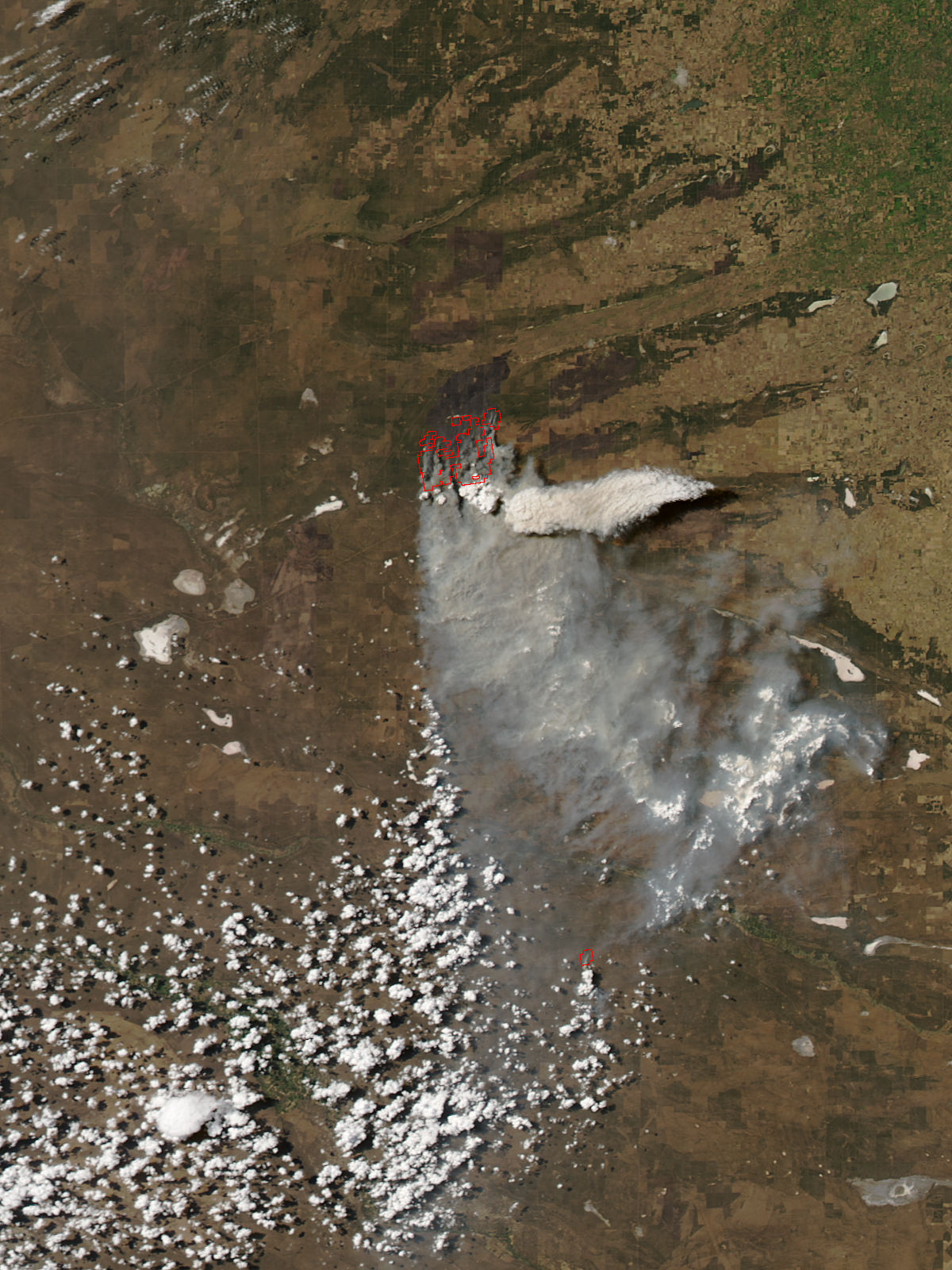
Removing cattle, sheep and goats from open landscapes leaves vegetation to pile up as fuel, and the result is bigger and hotter wildfires, three scientists argue in a contributed column published by Beef Central. Pablo Manzano, Enrike Maree and Peer Ederer, who are part of the Dublin Declaration group on the role of meat and livestock, write that "a world without cows will continue to burn". The views are the writers' own.
Their case starts with ecology. For millions of years, they write, large herbivores such as bison and aurochs kept woody plants in check and held landscapes open; where those animals are gone and marginal land has been abandoned, biomass accumulates, and fire becomes the one disturbance left. They point to this summer in Western Europe: some 115,000 hectares burned in France by late July, more than 42,000 of them in the Gironde, the country's largest wildfire since 1949, and around 3,000 hectares burned in Belgium's High Fens. Fire thunderstorms, pyrocumulonimbus clouds, were observed in France for the first time.
The writers cite grazing trials in South Africa's Free State. Ungrazed plots lost their palatable grasses, saw unpalatable species rise by 20 percent, lost eight species and built up 6,760 kg of mostly dead material per hectare, which they describe as fuel. An adaptively grazed plot improved veld condition by 7.9 percent and gained six species. They also argue that silvopasture, trees integrated with grazing, can lower fuel loads.
They note that the evidence does not mean the 2026 fires were caused directly by destocking, but say the mechanisms are clear. EU civil-protection practice already describes grazing as a wildfire-prevention tool, with fire-break grazing schemes in Spain and Portugal, and US land agencies are promoting targeted grazing on public land. "On open land, the destiny of accumulating biomass comes down to a choice between metabolism and combustion: mouths or flames," they write.
For livestock farmers the column is a defence of grazing as land management rather than only as food production: herd size, timing and stocking density, the writers argue, should be planned as seriously as any firebreak.
Photo: Jeff Schmaltz, MODIS Land Rapid Response Team, NASA GSFC / Wikimedia Commons (public domain)
Source: Beef Central
Comments
(0)