
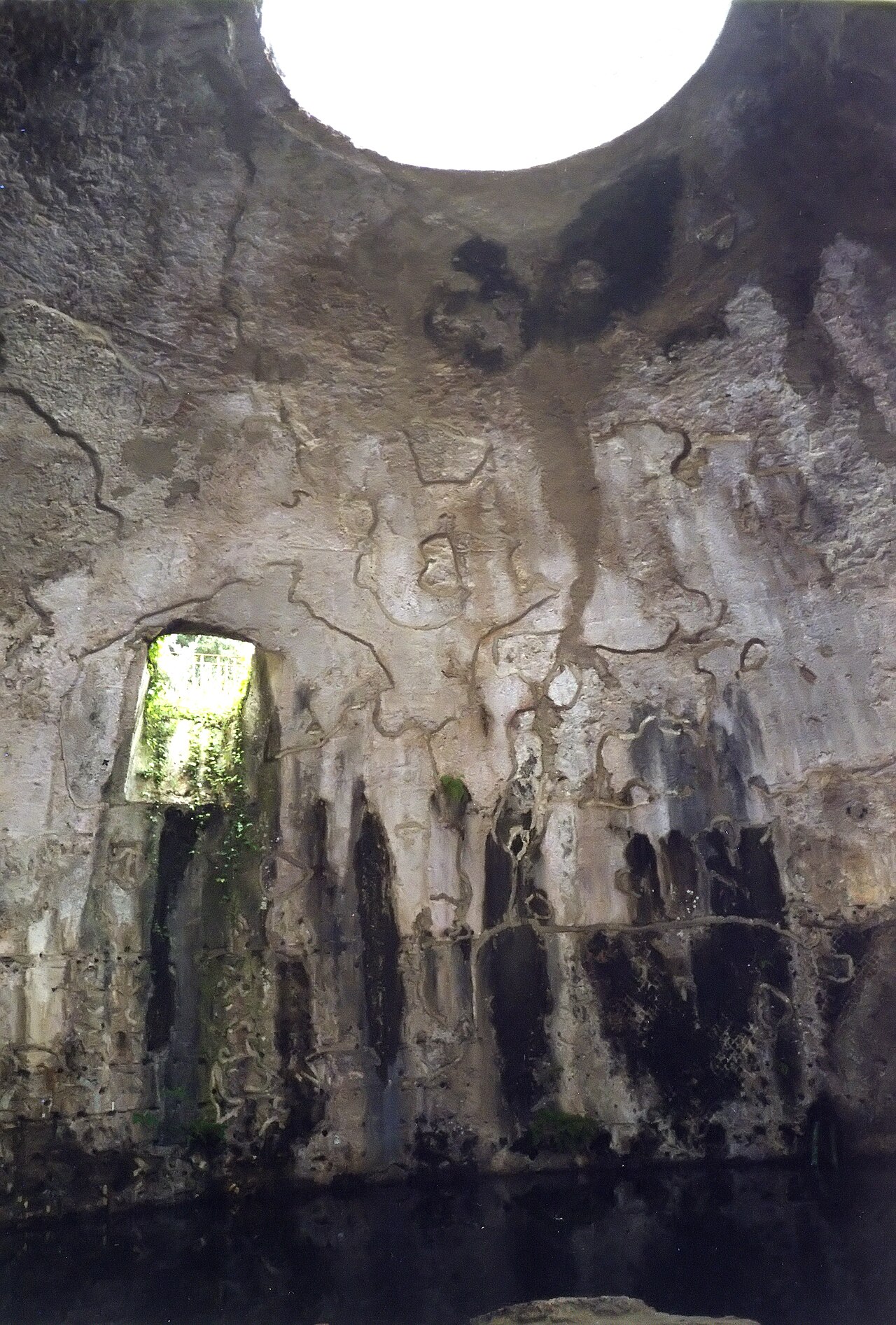
Archaeological sites usually yield coins, pots or inscriptions. At Baia, near Naples in Italy, there is a living tree, and it grows upside down. Ei Samay's photo feature by Debarghya Bhattacharya tells its story.
Inside a cave-like structure in the Baia archaeological site grows a fig tree whose roots and trunk point upwards while all its branches and leaves hang down. Rooted in the stone wall, it has survived this way for years.
In Roman times Baia was a resort for the rich, with palaces of emperors including Julius Caesar, Nero and Caligula. The area was later abandoned, the palaces fell into ruin and part of it sank under the sea.
According to the report, the tree took root in part of the ruins of Nero's palace. How a seed came to sprout among the bricks and stones remains a mystery.
A pilot flying along the Naples coast in the 1940s spotted the tree, and tourists have come to see it ever since; the site is now a popular attraction.
Photo: dome of an ancient bath at the Baia archaeological site. AM / Wikimedia Commons (CC BY-SA 2.5)
Source: Ei Samay


Comments
(0)