
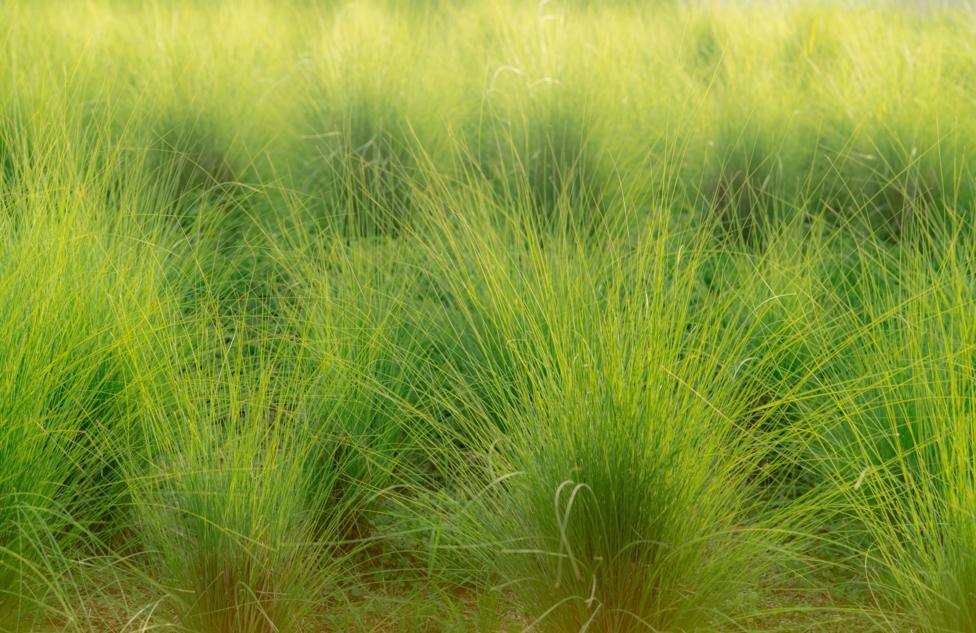
The government has moved to make wide use of binna grass, the tall grass that grows untended across Bangladesh's fields and fallow land. A technical committee was formed on Monday to review which projects the grass can be used in, and instructions have been issued to prepare a guideline for its use.
The grass is known in English as vetiver. In parts of rural Bangladesh it is also called benna grass, khaskhas or chhon. A perennial, it grows in dense clumps of long, narrow leaves and typically reaches between one and a half and three metres in height.
Its most striking feature is the root. Professor Mohammad Shariful Islam of the civil engineering department at the Bangladesh University of Engineering and Technology (BUET), who has researched the grass for about two decades, said: "The roots of this grass are extremely long and strong. The roots can penetrate two to three metres, and sometimes up to four metres, into the soil."
That root system is what makes it useful in engineering. "The long roots of this grass go deep into the soil very quickly and hold the soil firmly. That is why in engineering this grass is used to protect roads, prevent landslides and also river erosion," Professor Islam said. In several countries it is planted on side slopes to check hill erosion and landslides. He has been included in the committee the government has formed.
The question is tied to a canal digging programme. In line with an election pledge the present government has begun excavating canals across the country, and specialists say those canals will silt up during the rains. Binna grass, they argue, could be an affordable and durable option for protecting embankments and preventing that silting.
They are also proposing scientific use of the grass by the Roads and Highways Department, the Water Development Board and in landslide protection work.
Botanists point out that the roots and other parts of the grass are used in making expensive perfume, among other things. Mohammad Abdur Rahim, principal experimental officer in the botany department at Jahangirnagar University, said: "This grass may look ordinary but its capacity is extraordinary."
Source: BBC Bangla

Comments
(0)