
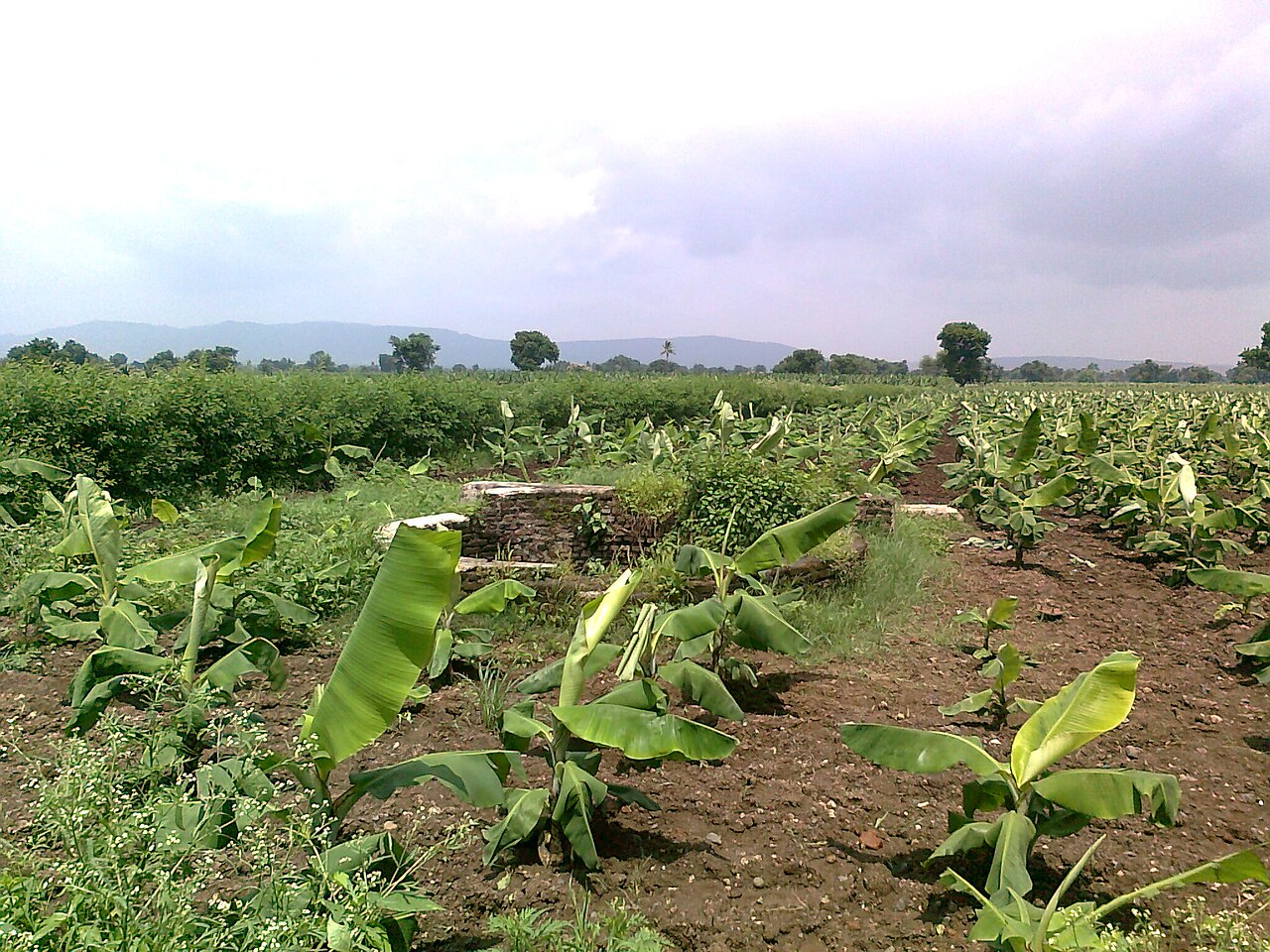
Sunita Nehare used to start household chores at 4 am, work as a field labourer from 6 am for Rs 200 for two hours, and then work on her own family's land until 1 pm, saving Rs 100 a day in a post office account. Although the family owned 12 acres in Pachod village of Maharashtra's Wardha district, she had no say in how it was farmed, Down To Earth reported for the International Day of Rural Women.
Only about 3.5 acres were cultivated when she married into the family: the sloping, rain-fed fields lost water quickly, wild boar, nilgai and rabbits damaged crops, and her husband had turned to drink after repeated poor harvests. After a family crisis, her father-in-law handed her responsibility for the land. She began in 2018 with nine rows of cotton that yielded five quintals; by experimenting with sowing patterns, manure and irrigation, she raised output on those 3.5 acres to 25 quintals. In 2024 she dug a well with help from a state scheme and now spends about Rs 12,000 a season on diesel for irrigation.
With the Climate Change Adaptation Project, run by the non-profit Dharamitra with NABARD support, she adopted farm bunding, tank silt, raised beds, soil testing, vermicompost and green manure, and intercropped cotton with red gram. She makes bio-inputs such as Jeevamrit, applies six trolley loads of cow dung manure a year and says she no longer uses urea. She has brought idle land back with jowar, bajra, green gram and sesame, rotates crops, uses solar fencing against wild animals and has planted mango, guava, cashew, jackfruit and lemon on the bunds.
Her cotton yield has risen from about 1 to 1.5 quintals an acre to 7.14 quintals, with another 2.75 quintals of red gram. Over the last two to three years her farm income has topped Rs 2 lakh, and with home-grown food and poultry the total comes to about Rs 2.5 lakh. She also earns about Rs 3,000 a month as a Pashu Sakhi, a village livestock worker. Yet she warns that rain is less predictable and prices are beyond farmers' control, and does not want her son to depend only on farming.
"Women can transform their lives and those of their families when empowered with decision-making authority, access to resources and proper guidance," said Tarak Kate of Dharamitra. The story was reported by Aniket Likhar.
Photo: ABHIJEET / Wikimedia Commons (CC BY-SA 3.0)
Source: Down To Earth

Comments
(0)