
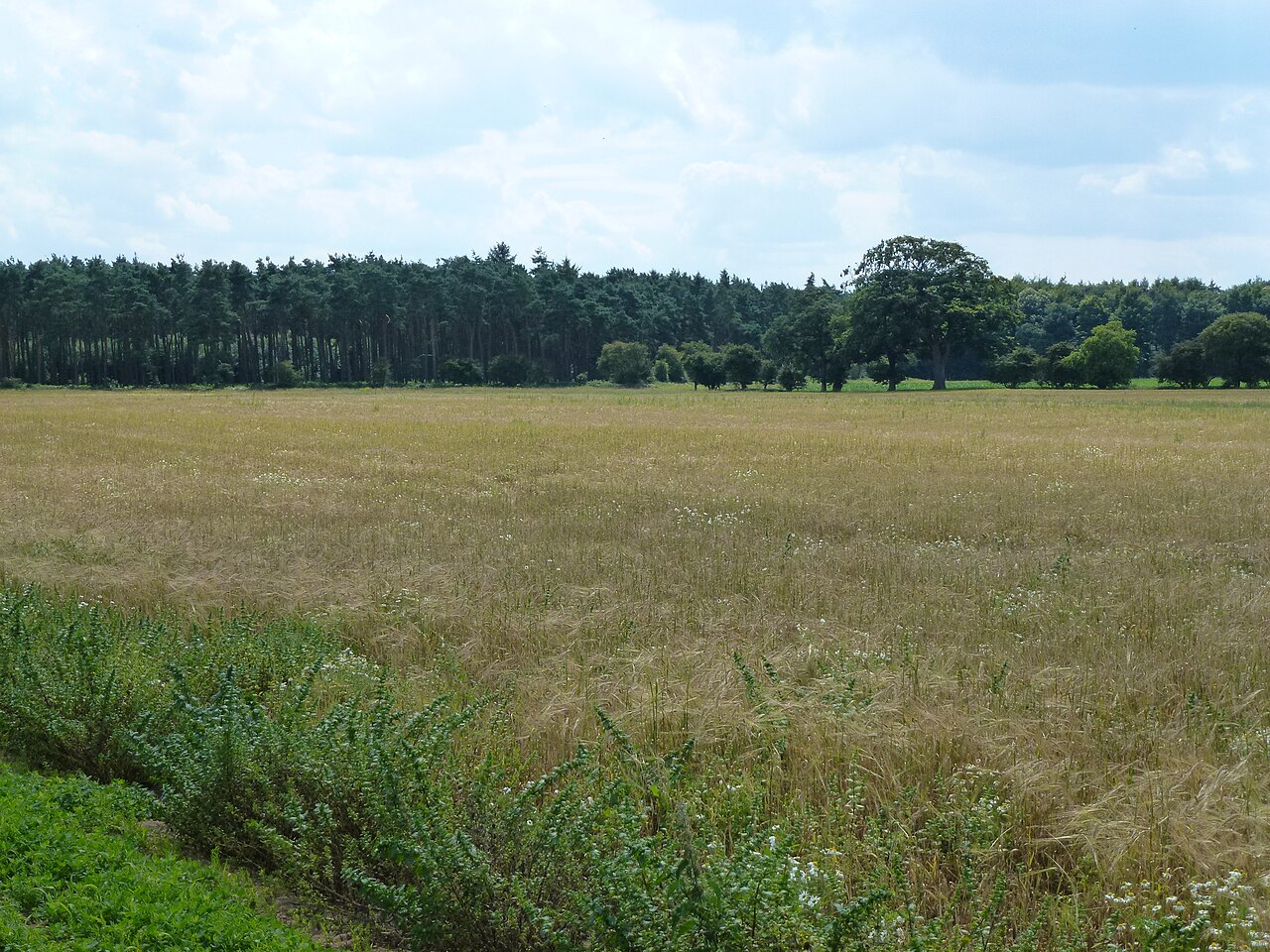
England's barley harvest fell to its lowest level in more than a decade in 2026, while wheat production edged higher on slightly better yields, according to provisional Defra figures reported by Farmers Weekly.
Wheat production reached 10.8 million tonnes, up 0.8% on 2025, despite a 1.8% fall in harvested area. Average yields rose 2.7% to 7.2 tonnes a hectare, still below the 10-year average of 7.9 tonnes. Barley production fell 11% to 3.7 million tonnes, driven by a smaller spring crop and an 8% drop in yields.
Even so, several UK feed barley cargoes have been loaded for export, mainly to Ireland, much of it from northern Scotland, where weaker demand from maltsters and distillers has left a surplus. Ex-farm prices on 14 October put feed barley at £182.6 a tonne against £196.2 for feed wheat. "Barley is shirt-tailing wheat," said Andrew Dewing, managing director of Dewing Grain, arguing the discount is too big and will narrow over time. At these prices few farmers want to sell, he said.
Wheat markets remain caught between geopolitical risk and plentiful global supplies. Futures recovered after doubts emerged over a Russia-Ukraine energy ceasefire announced by US President Donald Trump, with Russia then attacking Ukrainian gas and power facilities, but the price response has been muted. "The market seems immune to the lack of flow of wheat and corn coming out of Russia and Ukraine," Dewing said. He questioned whether stocks are as plentiful as the AHDB suggests: "Fundamentally, the UK is short of wheat and will have to import."
Photo: Richard Humphrey / Wikimedia Commons (CC BY-SA 2.0)
Source: Farmers Weekly

Comments
(0)