
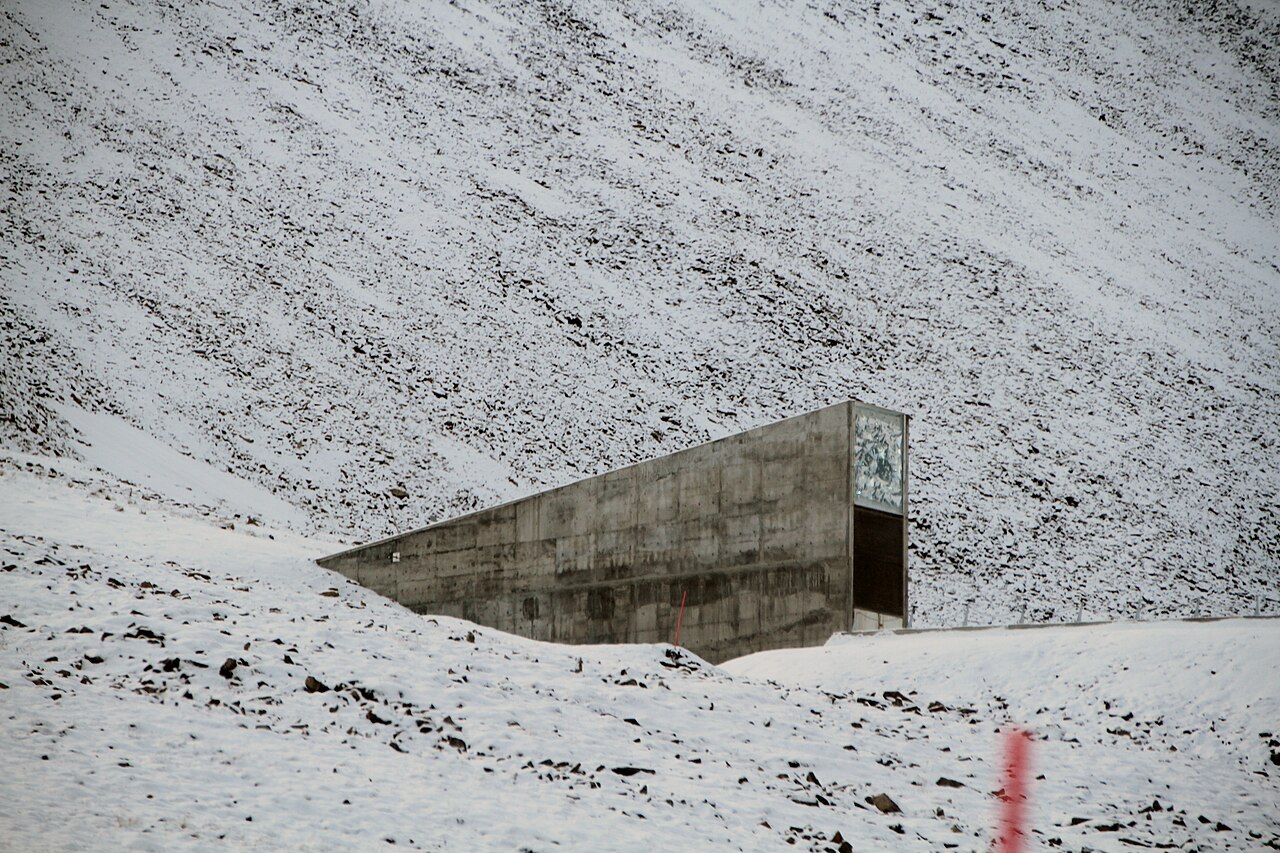
Ukraine's national plant genebank sent 773 seed samples to the Svalbard Global Seed Vault in the latest deposit on 13 October, adding to the more than 1.4 million samples stored inside the Arctic mountain, Global Agriculture reported. Each sample is a duplicate of one held in a genebank, so crop diversity can be recovered if the original is lost.
"We had to prepare the seeds in close proximity to military hostilities, check and complete the necessary documents, and arrange the packaging and transportation," said Viktor K. Riabchoun, head of the National Plant Genebank of Ukraine. Ukraine's shipment included buckwheat, a traditional food that also serves as an "insurance" crop sown when winter crops fail.
CGIAR genebanks made a large contribution. CIMMYT sent 3,370 samples, ICARDA in Lebanon 2,039, the International Rice Research Institute (IRRI) 1,890 and the International Potato Center (CIP) 1,027, with ILRI and the Alliance of Bioversity International and CIAT also depositing. IRRI's rice included 410 first-time deposits with diversity from Madagascar, Costa Rica and Nepal, bringing coverage to 99.59% of its fully curated collection, while CIP's shipment of wild potato and sweetpotato relatives, maca and ahipa raised its backed-up share to 91%. ICARDA once withdrew seeds from the vault to rebuild a collection after conflict.
Italy's CREA made its first deposit, of 272 samples including historic wheat and rice such as Mentana, bred by Nazareno Strampelli in the early 20th century. "Our food connects us across borders, and so does the responsibility to protect it," said Stefan Schmitz, executive director of the Crop Trust, which runs the vault with Norway and NordGen. The seeds remain the property of each depositor.
Photo: Bjoertvedt / Wikimedia Commons (CC BY-SA 3.0)
Source: Global Agriculture

Comments
(0)