
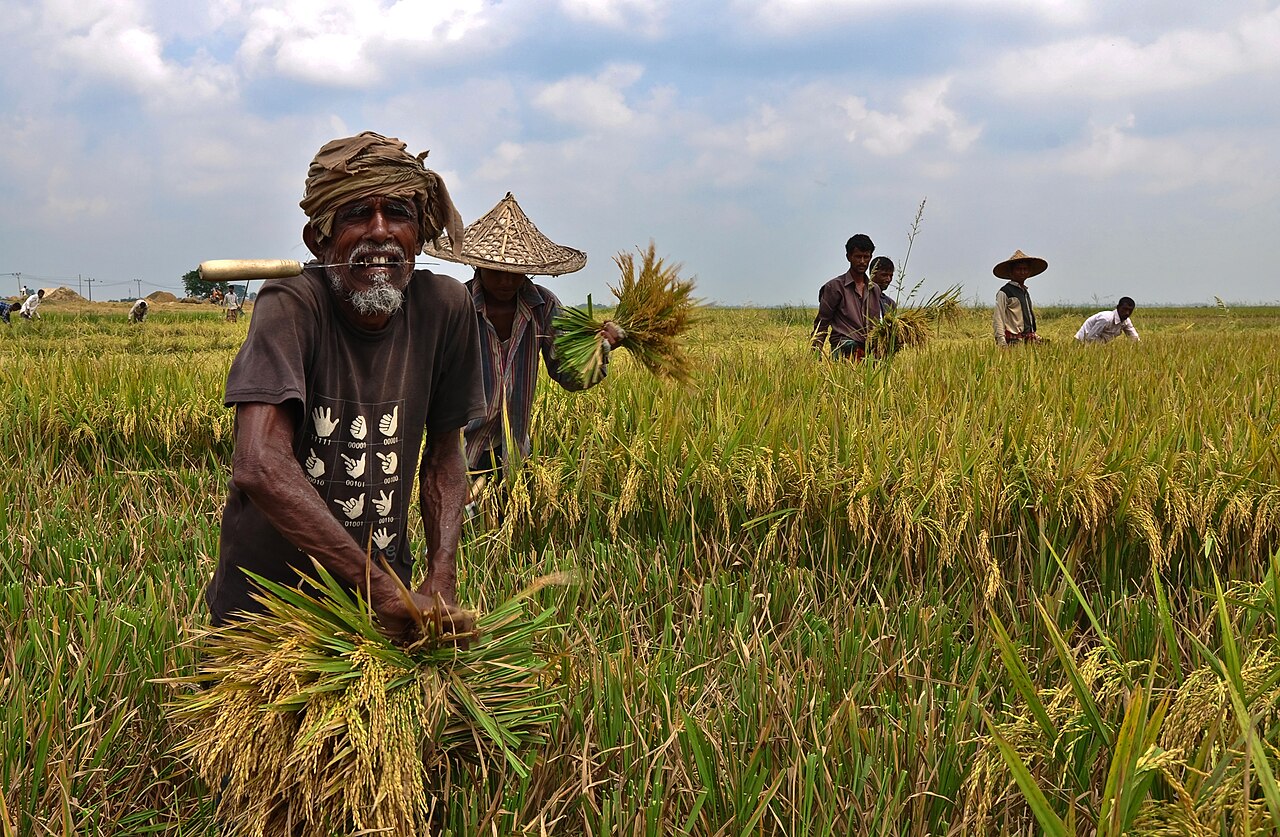
About 3,000 farm households in Bangladesh's flood-prone haor region are growing climate-smart rice varieties that cut flood-related losses, getting better access to quality seed and receiving training to diversify into new crops and income, through a project led by the International Rice Research Institute (IRRI), the institute said. The results were presented at a Project Impact Showcase and Farmer Experience Sharing Day in Sunamganj on 2 October.
The Climate-Smart Rice Value Chain in the Haor Region (CS-RVC) project is implemented by IRRI with Friends in the Village Development Bangladesh (FIVDB) and supported by HSBC Bangladesh. "Early-maturing, short-duration rice varieties are important for reducing climate risks in the haor region," said Md Omar Farooq, deputy director of the Department of Agricultural Extension (DAE) in Sunamganj, because they help farmers harvest before flash floods.
Besides the 3,000 households it supports directly, the project has reached another 10,000 farmers indirectly and given more than 2,000 farmers agri-entrepreneurship training. Its activities cover more than 5,000 hectares of rice and over 100 hectares of chilli, groundnut and mustard, and women make up about 20% of beneficiaries.
Five licensed Community Seed Banks, mostly run by women, now supply quality seed locally under IRRI's 3A framework of awareness, accessibility and affordability. A "Crop Cafeteria" lets farmers compare improved varieties in Aman and Boro demonstrations under local conditions. At the showcase, stalls displayed chilli powder, roasted groundnuts, mustard oil and honey made with project support, alongside machinery and vermicompost demonstrations.
Rehana Noor, the project's manager at IRRI, said research, better seed systems, crop diversification and training are helping farmers adapt while opening opportunities for women and young people. The project runs until 2027.
Photo: Balaram Mahalder / Wikimedia Commons (CC BY-SA 3.0)
Source: IRRI
Comments
(0)