
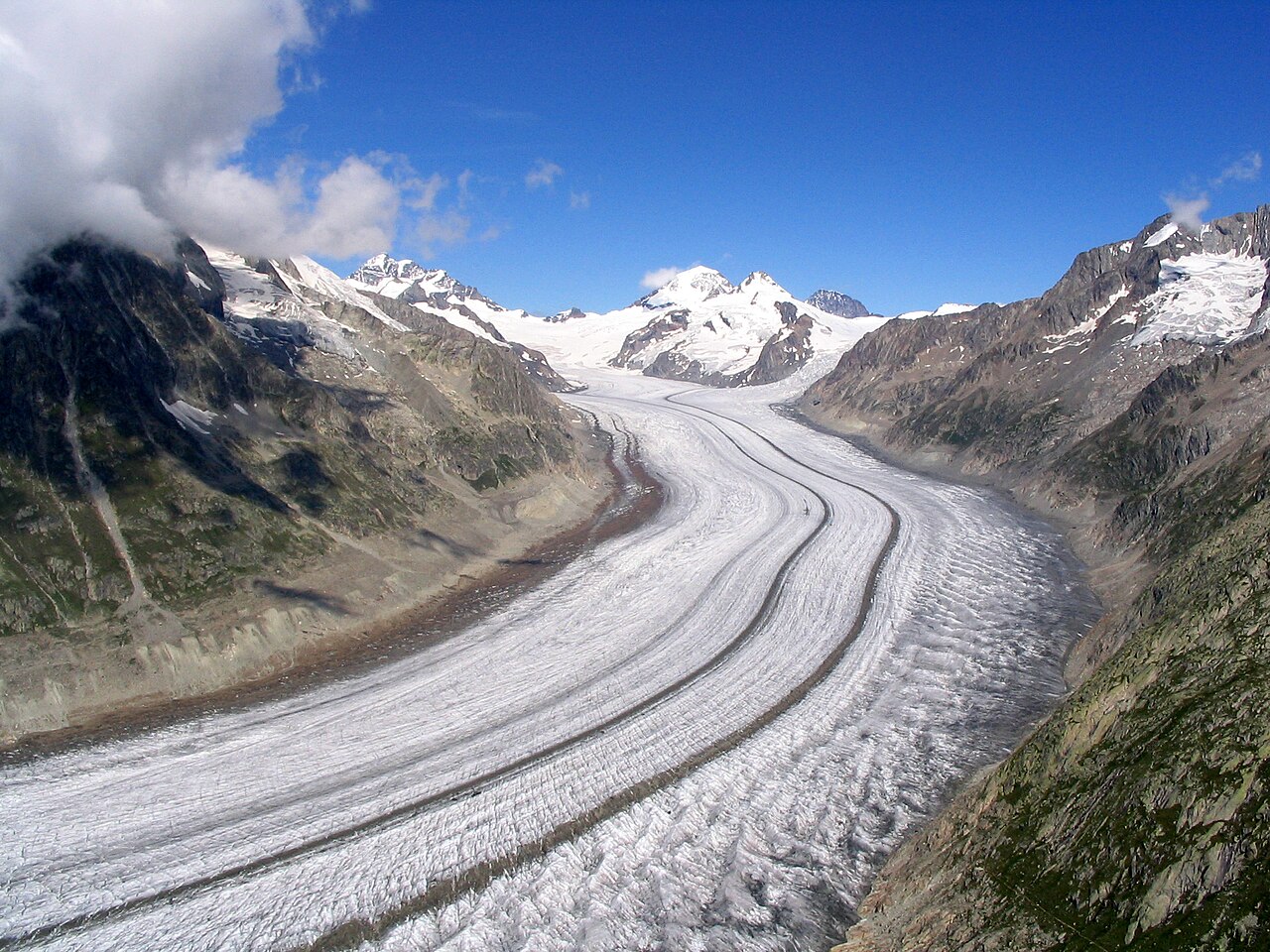
Switzerland's glaciers lost 5.5 percent of their ice in the first eight months of this year as record heat gripped Europe, according to the joint annual report of the Swiss Glacier Monitoring Network and the Swiss Commission for Cryosphere Observation, published on Thursday, Desh Rupantor reported.
The report says the glaciers' average thickness fell by 2.5 to 4 metres in 2026, and that the country has lost 19.4 percent of its total glacier ice over the past five years. How many small glaciers vanished entirely this year has not yet been officially counted. Citing The Guardian, the paper said scientists blame low winter snowfall and record summer temperatures.
The Aletsch, the country's largest glacier, lost the most ice this year, while the Glacier de Tsanfleuron thinned by more than 4 metres on average. Researchers estimate that between July and September alone Swiss glaciers lost about 2.2 trillion litres of water, more than four times the drinking water Swiss households use in a year.
Scientists say the glaciers are not only melting at the surface but changing fast inside. Meltwater flowing beneath the ice carves holes and cavities whose roofs later collapse, so the glaciers break up from within and disintegrate more quickly.
The report's lead author, ETH Zurich glaciologist Matthias Huss, said places that lay under hundreds of metres of ice a few years ago now feel like the surface of the Moon, a rocky desert. Extreme years now come almost every year, he said, though this year's melt did not reach the record of 2022, when dust from North Africa settled on the snow.
The rapid shrinking raises concern about future water supplies and about the long-term survival of Europe's ice-covered regions.
Photo: Dirk Beyer / Wikimedia Commons (CC BY-SA 3.0)
Source: Desh Rupantor

Comments
(0)