
Some people sweat heavily while or after eating, mostly on the face and neck, and some start sweating at the mere smell of food. The condition is called gustatory sweating. In an article for Prothom Alo, physician Dr Nazmul Haque explained its causes and what to do about it.
Many people sweat normally after spicy food, he said. But regular heavy sweating at meals or at the smell of food, without spicy food, can point to an underlying physical problem.
Sweating is controlled by the autonomic nervous system. When diabetes damages these nerves, the problem can appear. It can also occur with long-standing diabetes, hormonal disorders and kidney disease.
Excess sweating while eating can also follow surgery on the parotid gland near the face, and some people develop it after recovering from Bell's palsy, which weakens the muscles on one side of the face.
The first step, the doctor advised, is to find the cause. If diabetes is behind it, blood sugar must be kept under control. In some cases drugs such as pregabalin or amitriptyline are used, and depending on the patient, botulinum toxin may be given. He cautioned that none of these medicines should be taken without a doctor's advice.
He urged anyone who regularly sweats abnormally while eating not to ignore it and to see a doctor, since it can be a sign of nerve complications from conditions such as long-standing diabetes.
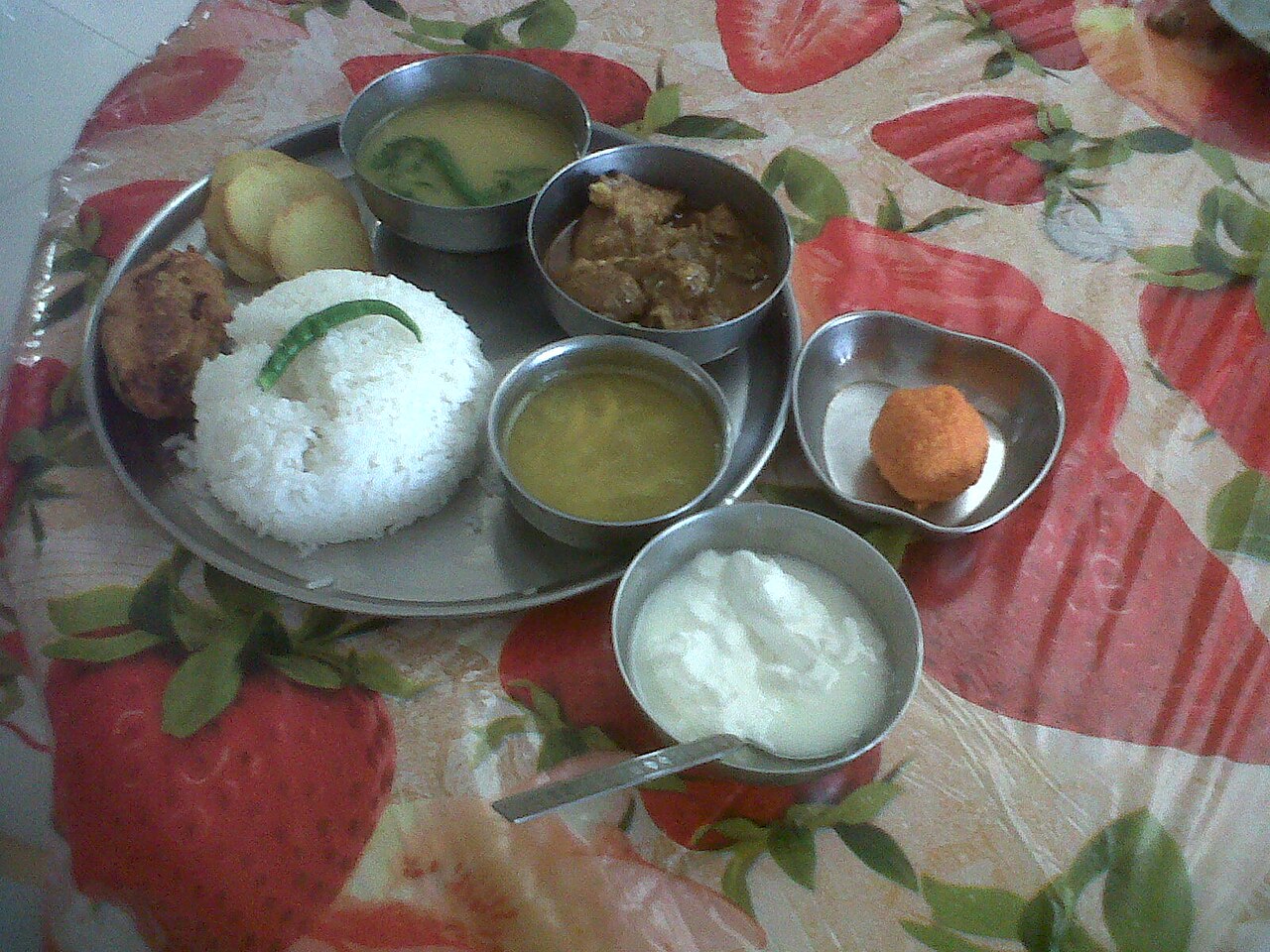
Photo: A Bengali plate of rice, dal and curry (representative), Jiniya Chakraborty / Wikimedia Commons (CC BY-SA 4.0)
Source: Prothom Alo


Comments
(0)