
The government is planning a floating LNG terminal, a floating storage and regasification unit (FSRU), at Akram Point in the Sundarbans, with the gas to be piped to Mongla for factories in the economic zone. According to Samakal, a team led by the shipping minister, the power minister and a state minister visited the site in August, and Prime Minister Tarique Rahman is due to visit on 22 October.
Akram Point lies inside the Sundarbans near the mouth of the Pasur and Shibsa rivers and the Bay of Bengal, 60 km downstream of Mongla port and 30 km upstream of Hiron Point. Two wildlife sanctuaries flank it and the Shibsa dolphin sanctuary lies to the north-west; Ganges river dolphins and Irrawaddy dolphins range freely there. The Environment Conservation Rules of 2023 place gas terminals in the red, highest-risk category, and since 1999 a 10 km belt around the Sundarbans has been an ecologically critical area where industry harmful to the forest is banned.
At a discussion on Monday, Finance and Planning Minister Amir Khasru Mahmud Chowdhury said a site with a 20-metre draught near Khulna had been identified for a modern terminal where large ships could unload oil and LNG directly. Sheikh Shawkat Ali, member (engineering and development) of the Mongla Port Authority, said a terminal would mean regular dredging that would let other ships reach the port more easily. Bangladesh's two existing floating LNG terminals are at Moheshkhali in Cox's Bazar.
The Forest Department has not been formally told. Chief Conservator of Forests Amir Hossain Chowdhury said that if asked, the department would set out its concerns about the Sundarbans; State Minister for Environment and Forests Md Faridul Islam said his ministry had not been informed either. An official speaking anonymously noted that the Sundarbans is a UNESCO World Heritage Site and a Ramsar site, and that UNESCO once moved to list it as heritage in danger over the Rampal power plant.
Professor Abdullah Harun Chowdhury of Khulna University's environmental science discipline said the project may help energy security but is extremely risky given the forest's sensitivity, and needs a proper environmental impact assessment and management plan first. Professor Anwarul Quadir, executive director of the Sundarban Academy, said LNG is mostly flammable methane and a fault or leak could put the forest at risk of fire; a terminal at Moheshkhali caught fire this year.
Advocate Kudrat-e-Khuda, convener of Paribesh Surakkha Mancha, said regasification uses large volumes of water and sharply cools the nearby river, which would harm fish eggs and aquatic micro-organisms in the Pasur and Shibsa, while tanker traffic and pumping noise would disrupt dolphin breeding. Samakal also cites a September report by the Rainforest Action Network finding that LNG terminals on the US Gulf Coast have permanently damaged 5,411 acres of land and wiped out 1,123 acres of swamp forest.
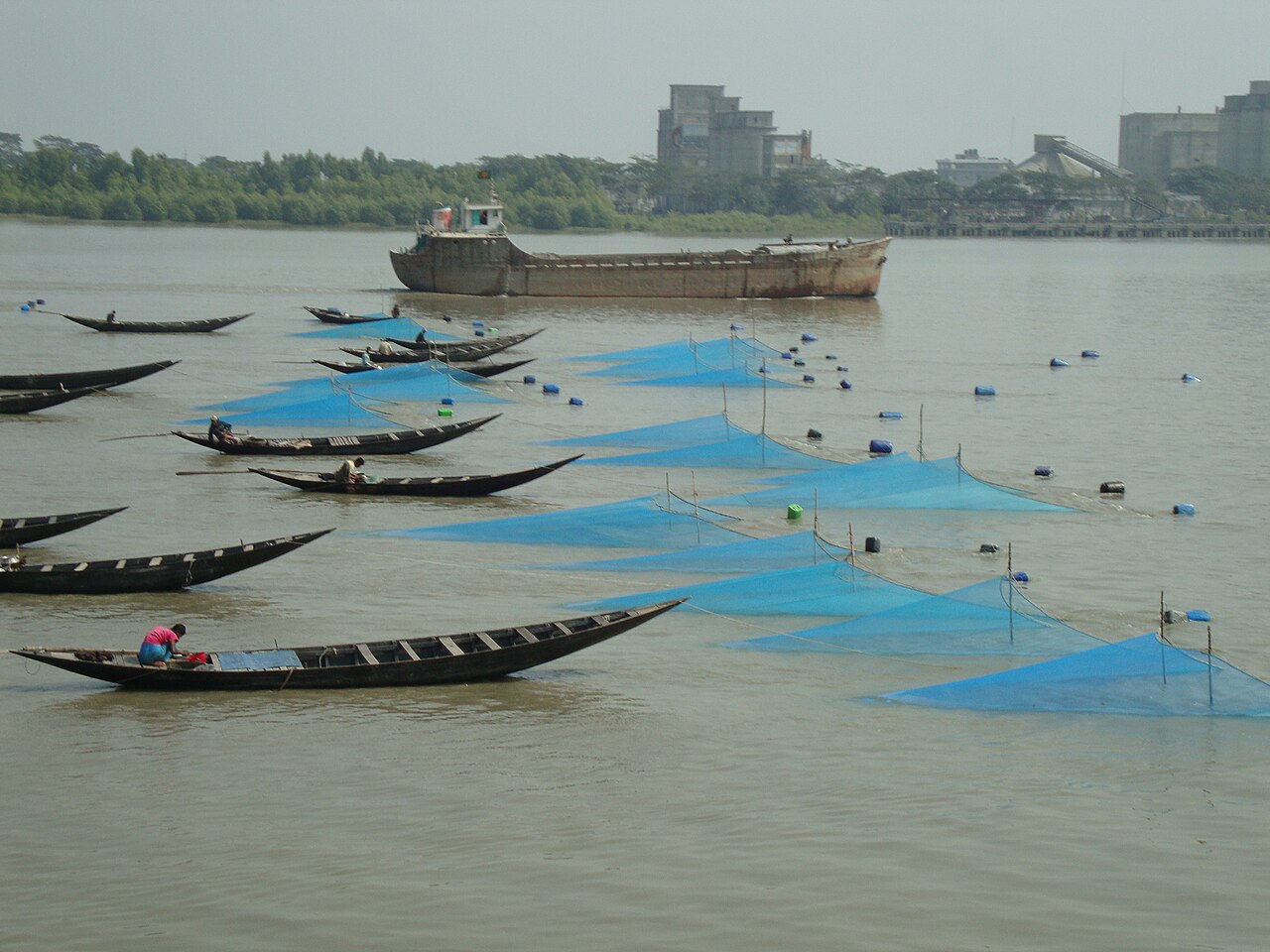
For the fish and fry of the Sundarbans rivers, and the fishers who depend on them, the question now is how strict the project's environmental review will be.
Photo: Mithun Ahmed / Wikimedia Commons (CC BY-SA 4.0)
Source: Samakal

Comments
(0)