
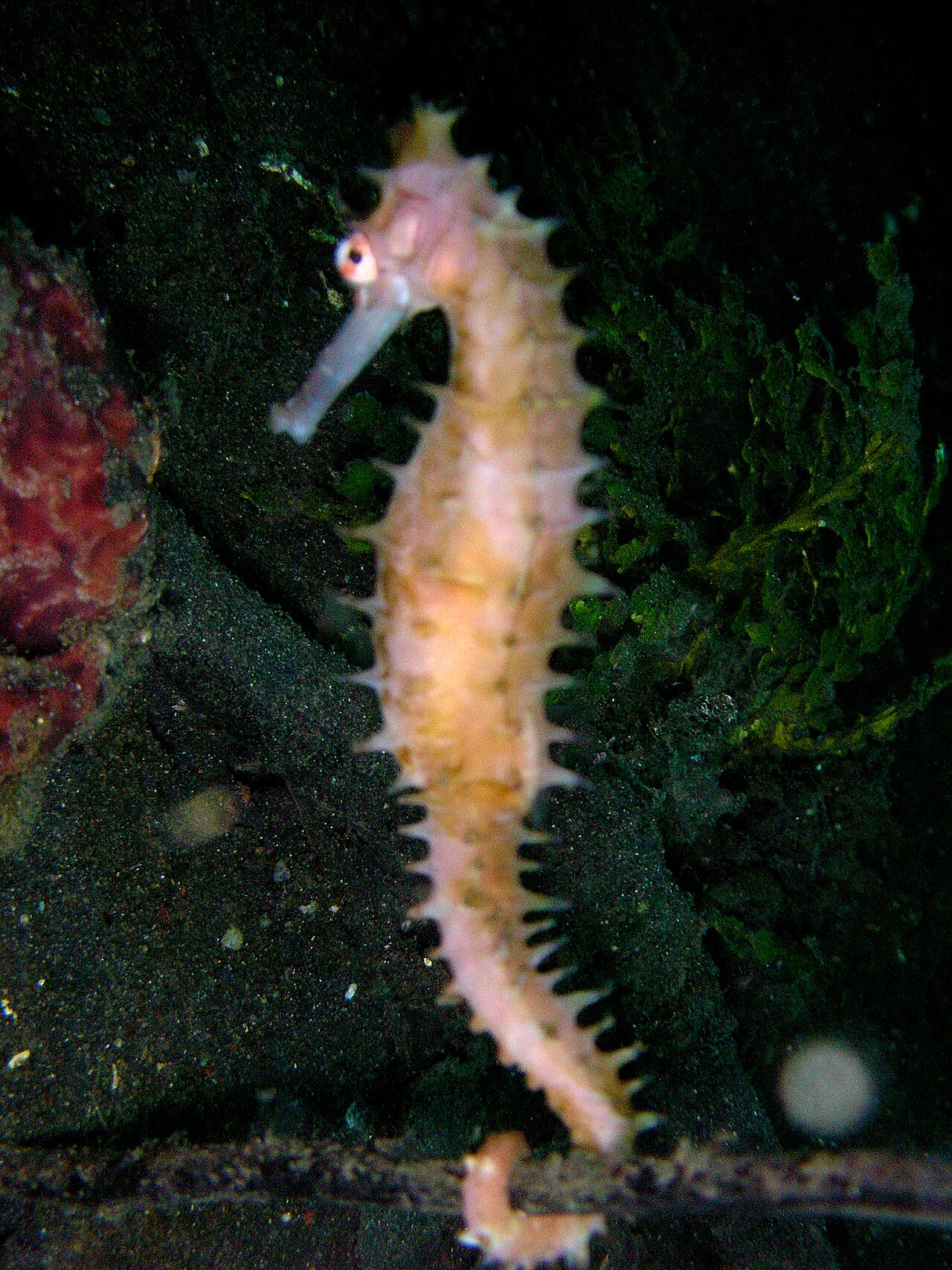
A spiny seahorse long thought to be one widespread species from the Red Sea to the Pacific is in fact three, according to a study published in the journal Zootaxa. The newly described Indian Ocean species, Hippocampus amandavincentae, was identified from two 16cm specimens collected in 2019 from trawler bycatch landed at the Thoothukudi Fisheries Harbour in Tamil Nadu.
The study keeps the name Hippocampus histrix for the Pacific species and Hippocampus jayakari for the Arabian region. The Indian Ocean animal has a shorter snout, five spines on its crown instead of four, and stouter spines along its trunk and tail, and differs genetically by 6-7% from the Pacific species, said lead author Shalu Kannan, a project scientist at the Zoological Survey of India's Andaman and Nicobar centre. Dive photos and genetic records from Madagascar, Mozambique and the Seychelles suggest it ranges widely through the Indian Ocean.
The specimens came through fishers, not divers. Kannan, who did the work for her PhD at Kerala University of Fisheries and Ocean Studies (KUFOS), said it took over a year to obtain them and the discovery would not have been possible without the fishermen's help. The species is named after Amanda Vincent, co-founder of Project Seahorse.
The find also exposes the pressure on seahorses. All seahorses are protected under Schedule I of India's Wild Life (Protection) Act, 1972, yet co-author Rajeev Raghavan of KUFOS described a strong illegal trade on the southeast coast. A 2020 study estimated that about 13 million seahorses a year were caught as bycatch in India between 2015 and 2017, mostly by non-selective gear. Seahorse researcher A. Murugan said bycatch is hard to avoid because seahorses share their habitat with high-value catches such as blue swimming crab and shrimp, and few survive bottom-trawl nets.
Raghavan said the new species may be the only seahorse endemic to the Indian Ocean, and its range overlaps the major fishing grounds of the Bay of Bengal and the Arabian Sea, so it could become highly threatened if bottom trawling and bycatch are not regulated. Its population is unknown, the Vulnerable listing of H. histrix will need reassessment, and museum specimens must be re-examined. India now has seven known seahorse species.
The report is by Priyanka Shankar for Mongabay India.
Photo: Steve Childs (thorny seahorse, Hippocampus histrix) / Wikimedia Commons (CC BY 2.0)
Source: Mongabay India

Comments
(0)