
The government has proposed a Tk 1,203.73 crore project to expand safe water supply and sanitation in the Barind Tract of the Rajshahi and Rangpur divisions. The Department of Public Health Engineering, under the Local Government Division, will carry it out. The fully government-funded project goes before the Executive Committee of the National Economic Council (ECNEC) for approval on 25 October, Dhaka Mail reports.
Climate change, overuse of groundwater and too little rainwater soaking into the ground are pushing the Barind water table down in the dry season, and in places even drinking water is hard to collect. The Bangladesh Delta Plan 2100 ranks the Barind second among the country's six regions most at risk for drinking water.
According to the Planning Commission, work will run from October 2026 to March 2030 in 123 upazilas of 16 districts. The plan includes 59,778 improved latrines, 4,394 community water supply units, 22,176 shallow tube wells, 1,399 shallow tube wells with submersible pumps and tanks, 4,829 deep tube wells and 1,113 deep tube wells with submersible pumps and tanks. It also proposes 1,068 ring wells, 1,797 rainwater harvesting systems, 16 pond sand filters built by re-excavating ponds, and 125 public toilets.
The proposal says 63.6 percent of people in the Barind have basic sanitation and 36.4 percent do not. A project evaluation committee recommended the project on 26 January.
Whether new tube wells alone can solve the crisis is in question, since the falling water table means even some deep tube wells no longer give enough water. Professor Chowdhury Sarwar Jahan of Rajshahi University's geology and mining department said alternatives to groundwater are urgently needed: digging and re-digging canals (kharis) and ponds to hold rainwater, and building cross-dams on the kharis because rain runs off the high Barind land quickly.
For farming his advice is direct: drought strikes the region even in the monsoon aman season, so river water should be used as far as possible. At the start of the boro season, water from ponds and kharis should be used first and groundwater pumped only as needed; indiscriminate extraction must stop. He also called for treated rainwater to be recharged into the ground and for wider public awareness.
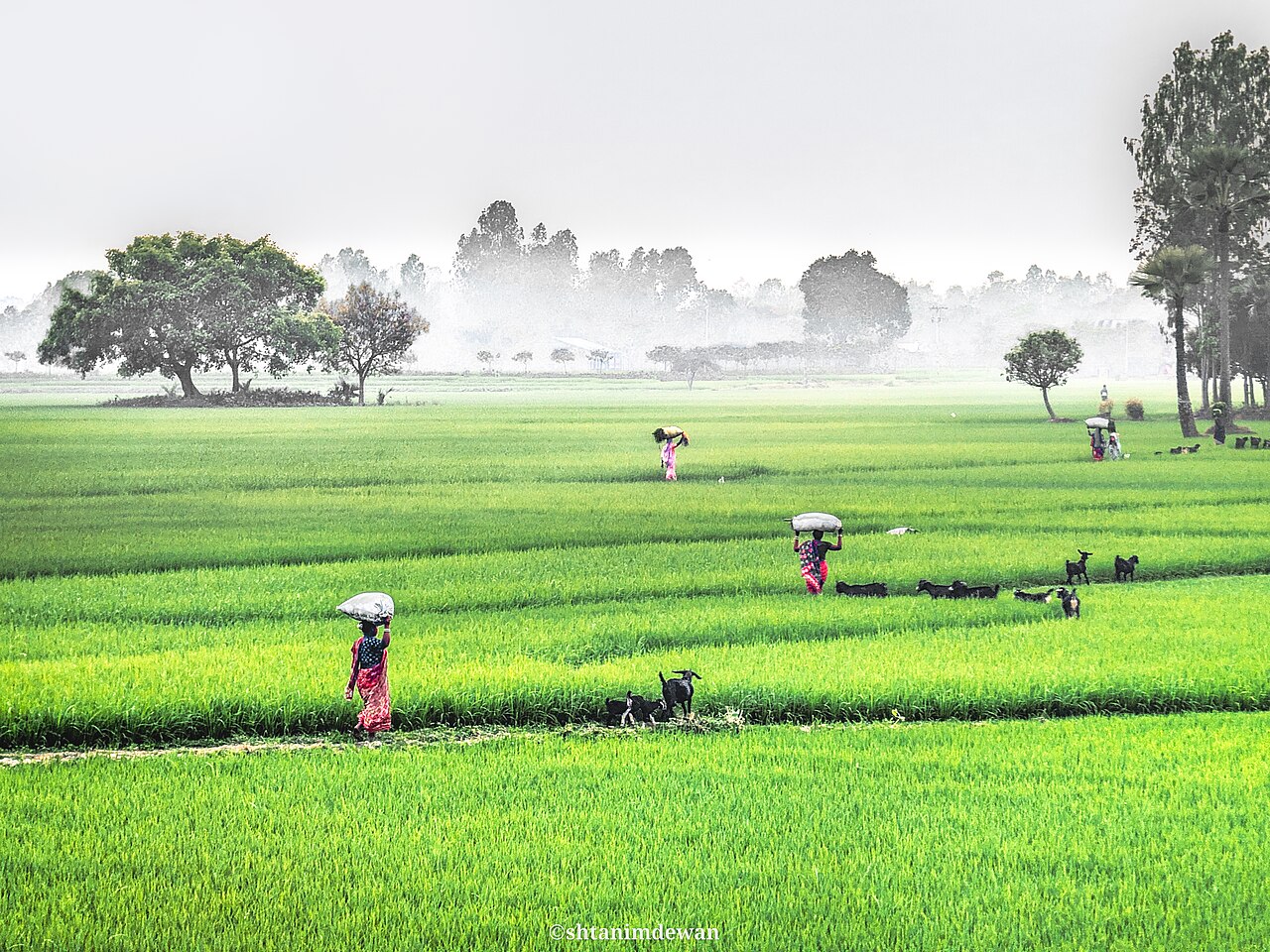
Photo: S.H. Tanim / Wikimedia Commons (CC BY-SA 4.0)
Source: Dhaka Mail


Comments
(0)