
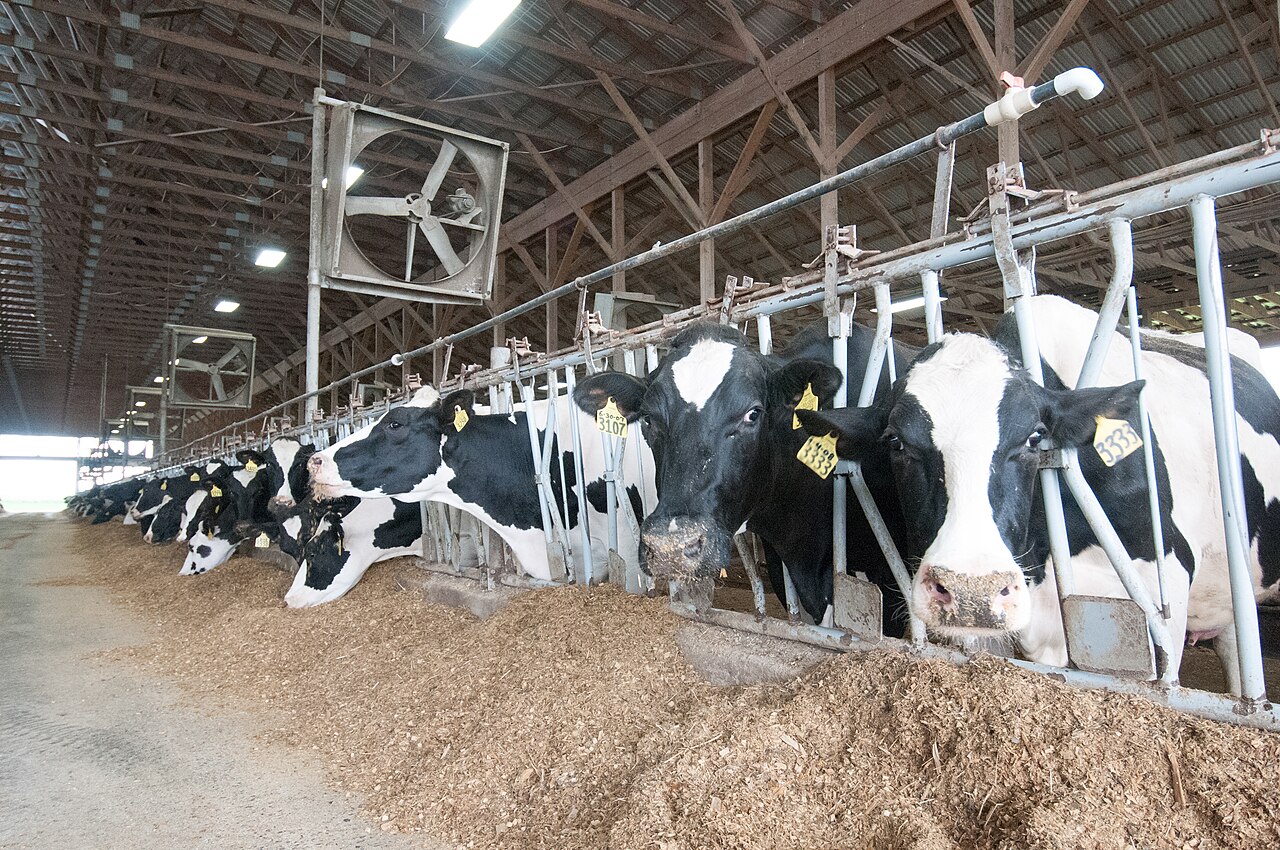
Continuous sensors give results comparable to standard reference methods when measuring ammonia and methane from dairy barns, according to research by Wageningen Livestock Research, part of Wageningen University & Research, on four conventional dairy farms in Flanders, Belgium.
From November 2022 to October 2024 the researchers measured emissions with both continuous sensor systems and the standard reference methods, working with the Flanders Research Institute for Agriculture, Fisheries and Food (ILVO) and the Netherlands Organisation for Applied Scientific Research (TNO). The two sets of results did not differ in a statistically significant way.
For ammonia, the sensors recorded an average of 18.0 kilograms per animal place per year against 19.0 kilograms by the reference methods, after adjusting for milk urea, outdoor temperature and accessible floor area. For methane, sensors measured 357 kilograms per animal per year and the reference methods 351 kilograms.
The team also looked at ventilation. Including the ventilation rate, the volume of air moving through a barn, made results from different barns more comparable: average ammonia emissions then came to 13.6 kilograms per animal place a year by sensors and 13.9 kilograms by reference methods.
WUR says the findings show modern sensors can be a reliable basis for long-term emissions monitoring in dairy housing and will help harmonise how emissions are measured. The work is part of a wider collaboration between Wageningen Livestock Research and ILVO comparing measurement techniques.
Photo: USDAgov / Wikimedia Commons (public domain)
Source: Wageningen University & Research

Comments
(0)