
A jet-black deer has been seen again in the green pine forest of Dow Hill in the Kurseong forest division of West Bengal, India. Kurseong's divisional forest officer, Devesh Pandey, first photographed the animal at the start of January this year. This time a tourist saw it while trekking in the Dow Hill forest, the Kolkata daily Sangbad Pratidin reports.
According to the forest department, a few days ago, after finishing the Baghira Trail joyride, the tourist was walking deep in the forest when he saw the black deer and took several pictures. After the pictures spread on social media, more tourists have been coming to the area.
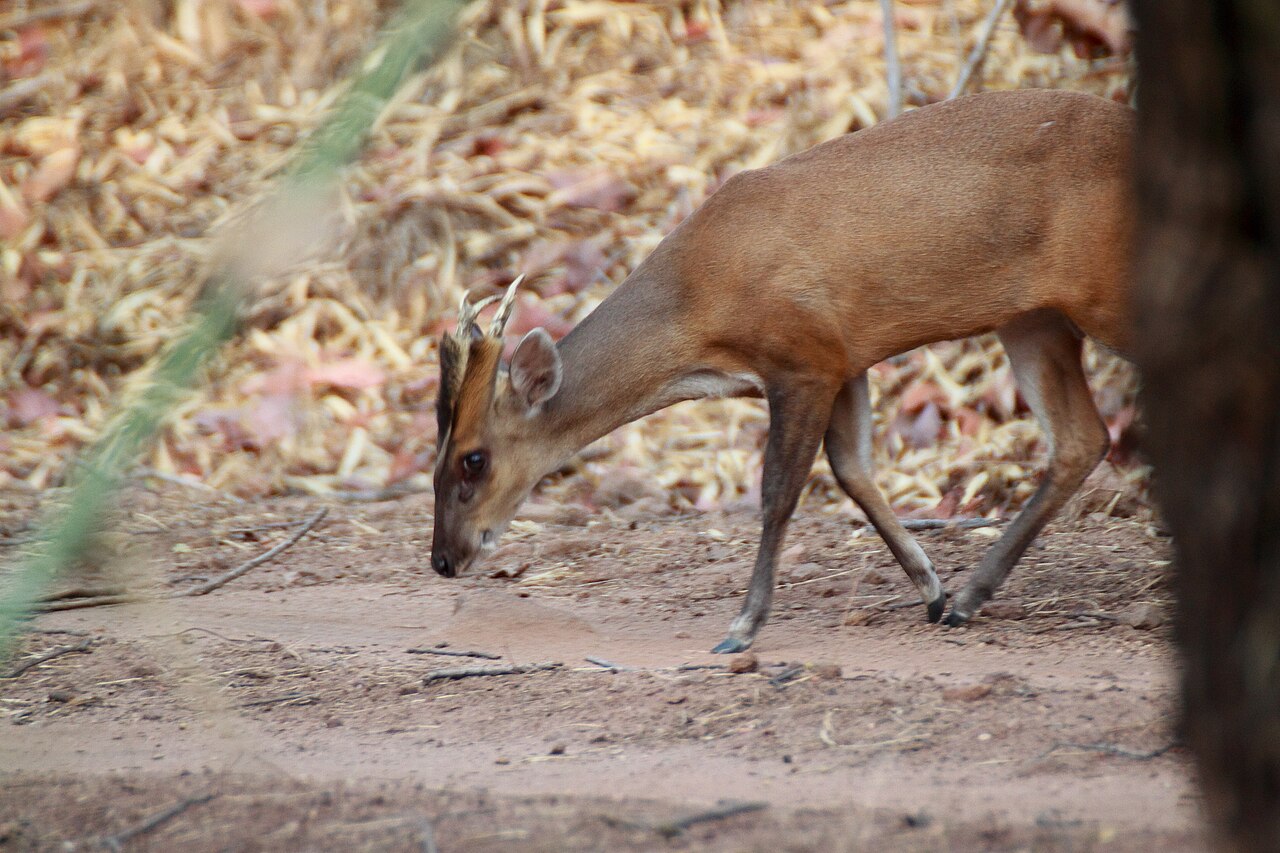
Forest officials say a genetic change called melanism, which causes excess dark pigment, turns these animals jet black; they are known as melanistic deer. About one in a million ordinary deer shows such a change. The animals are in fact common barking deer, or muntjac.
Pandey said rare black leopards had been seen several times in the hill forests, but a black deer was a historic sighting. Two sightings in a row show that the Kurseong forest is favourable for their breeding, he said.
A melanistic deer was seen in Darjeeling's Senchal forest in 2010, but the state forest department has no earlier record of a black deer moving about openly like this. Alongside their delight, officials are worried, because such a rare deer could become a target for international poachers.
Reporting: Biswajyoti Bhattacharya, Sangbad Pratidin
Photo: Brian Gratwicke / Wikimedia Commons (CC BY 2.0); a barking deer of normal colour (Muntiacus muntjak)
Source: Sangbad Pratidin

Comments
(0)