
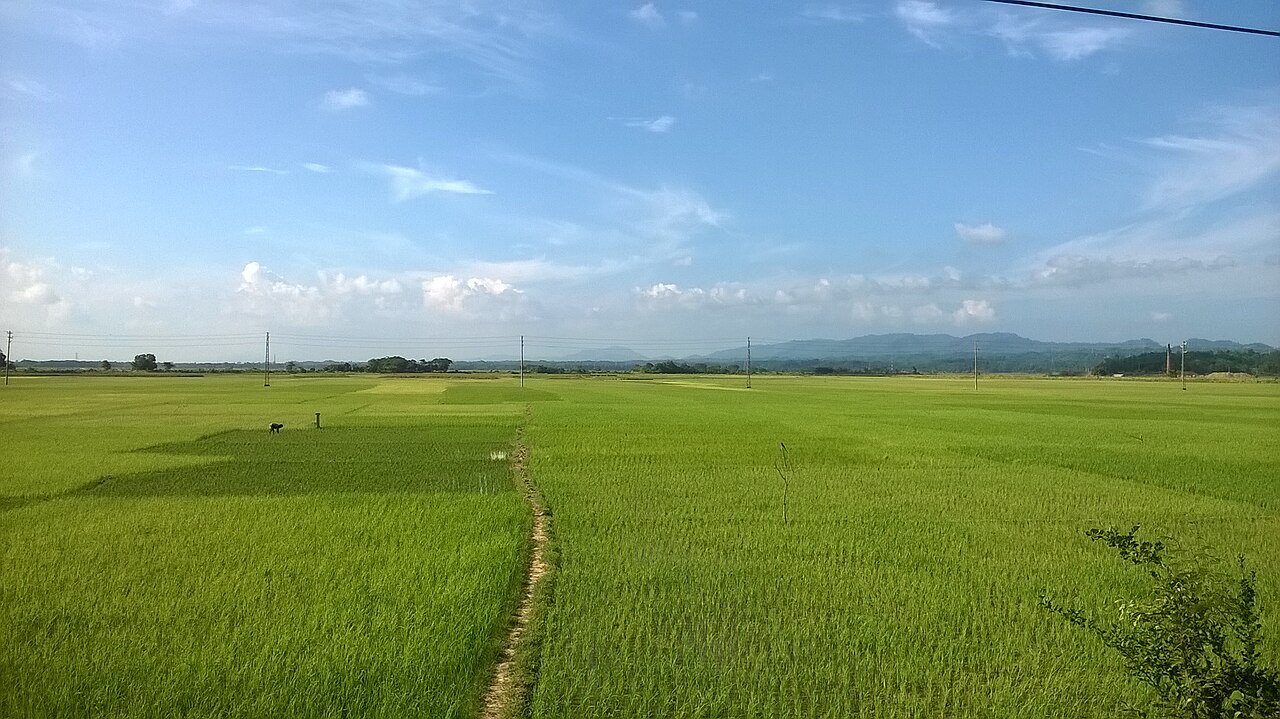
Gumai Beel in Rangunia, known as Chattogram's granary at the foot of the hills, is green with Aman rice, and most fields are coming into ear. The upazila agriculture office says rice was planted on a record 3,500 hectares of the wetland this Aman season. Last Boro season it was 3,460 hectares, with an average yield of 6 tonnes a hectare. With favourable weather, officials expect this Aman harvest to beat earlier records.
Across Rangunia upazila, Aman covers 15,457 hectares this season: 642 hectares of hybrids, 14,685 hectares of high-yielding varieties and 120 hectares of local varieties. Local lore has it that the wetland alone can meet about two and a half days of the country's rice needs.
Md Rezaul Karim, a Gumai Beel farmer, grew Boro on eight kani and harvested an average of 6 tonnes. Paddy now sells at Tk 330 an ari (10 kg) for coarse grain and Tk 350 for fine. With good prices he planted the same area in Aman and expects a good yield. Upazila agriculture officer Belal Hossain said farmers had been given incentives and support to meet the target; the grain has begun to fill and the harvest should come within a month.
Behind the promise lies a worry. By government figures, about 50 hectares of the wetland's fertile land have been lost for good in the past decade to encroachment, unplanned urban growth and brick kilns. Permanent and temporary structures have gone up on beel land, and six brick kilns stand on its edge at Chandraghona and Nischintapur. With no roads or irrigation inside the wetland, about 1,000 hectares far from the main road lie uncultivated.
Rangunia upazila nirbahi officer Md Nazmul Hasan said regular drives are under way to protect the farmland, work on several structures under construction has been stopped, and legal action is being taken against brick kilns and other illegal occupation. Agronomists and local citizens say that unless irrigation and road links are built quickly and land filling is stopped completely, one of the country's largest granaries could lose its heritage.
The report is by Jaglul Huda, Dainik Azadi's Rangunia correspondent.
Photo: Smshaheen123 / Wikimedia Commons (CC BY-SA 4.0); part of Gumai Beel, Rangunia.
Source: Dainik Azadi

Comments
(0)