
Are Bengal's six seasons, still printed in the calendar, losing their familiar character? Md Sanaullah, senior assistant editor at Prothom Alo, asks the question in a column for the paper. It is wrong, he argues, to say the six seasons have become three, since meteorologists have always divided Bangladesh's climate into three or four main seasons for analysis. The worry is how changes in temperature, rainfall and humidity are altering the feel of the seasons and the normal timetable of farming and nature. One hot or wet day proves nothing about climate change, he reminds readers; it takes many years of data.
He cites the World Bank's 2025 report An Unsustainable Life: the maximum temperature in Bangladesh has risen by about 1.1 degrees Celsius since 1980, but the temperature people feel, with humidity included, has risen by about 4.5 degrees. A 2022 study in PLOS Climate found that days above 36 degrees had increased markedly at 18 weather stations, and that monsoon rainfall was trending down in parts of the centre and north. The World Meteorological Organization puts the 2025 global average at about 1.43 degrees above pre-industrial levels, with all eleven years from 2015 to 2025 the warmest on record.
The column spells out what this means for farmers. If rain fails when Aman seedlings are transplanted, farmers need extra irrigation or must plant late; excessive heat at flowering disrupts pollination and leaves empty grains. Some varieties suffer badly at around 35 degrees or more. Flash floods in the haors before the Boro harvest, salt water on the coast and pressure on groundwater in the dry north-west do not always share one cause, he writes: river management and land-use decisions matter too.
According to the World Bank's Bangladesh Country Climate and Development Report, without effective action climate variability and extreme weather could cost up to a third of agricultural GDP by 2050, a risk projection rather than a certain outcome, the writer stresses. The Bank's 2025 study estimates that heat-related illness cost about 250 million workdays in 2024 and up to 1.78 billion US dollars. It also projects that about 13.3 million people could be displaced within the country by climate-related causes by 2050.
For solutions, he calls for local early weather warnings delivered to farmers in plain language, rice varieties tolerant of drought, salinity and heat, water-saving irrigation and crop planning suited to the seasons. In cities he wants ponds and canals restored, more trees and shaded walkways, and heatwave alerts, clean drinking water and rest breaks for workers, students and older people.
He also asks for long-term observation of more than temperature: rain, dew, flowering times, the arrival of birds and the breeding of fish. The six seasons, he writes, are not just poetic ornament but the living basis of Bengal's food, livelihoods and culture.
The views are the writer's own.
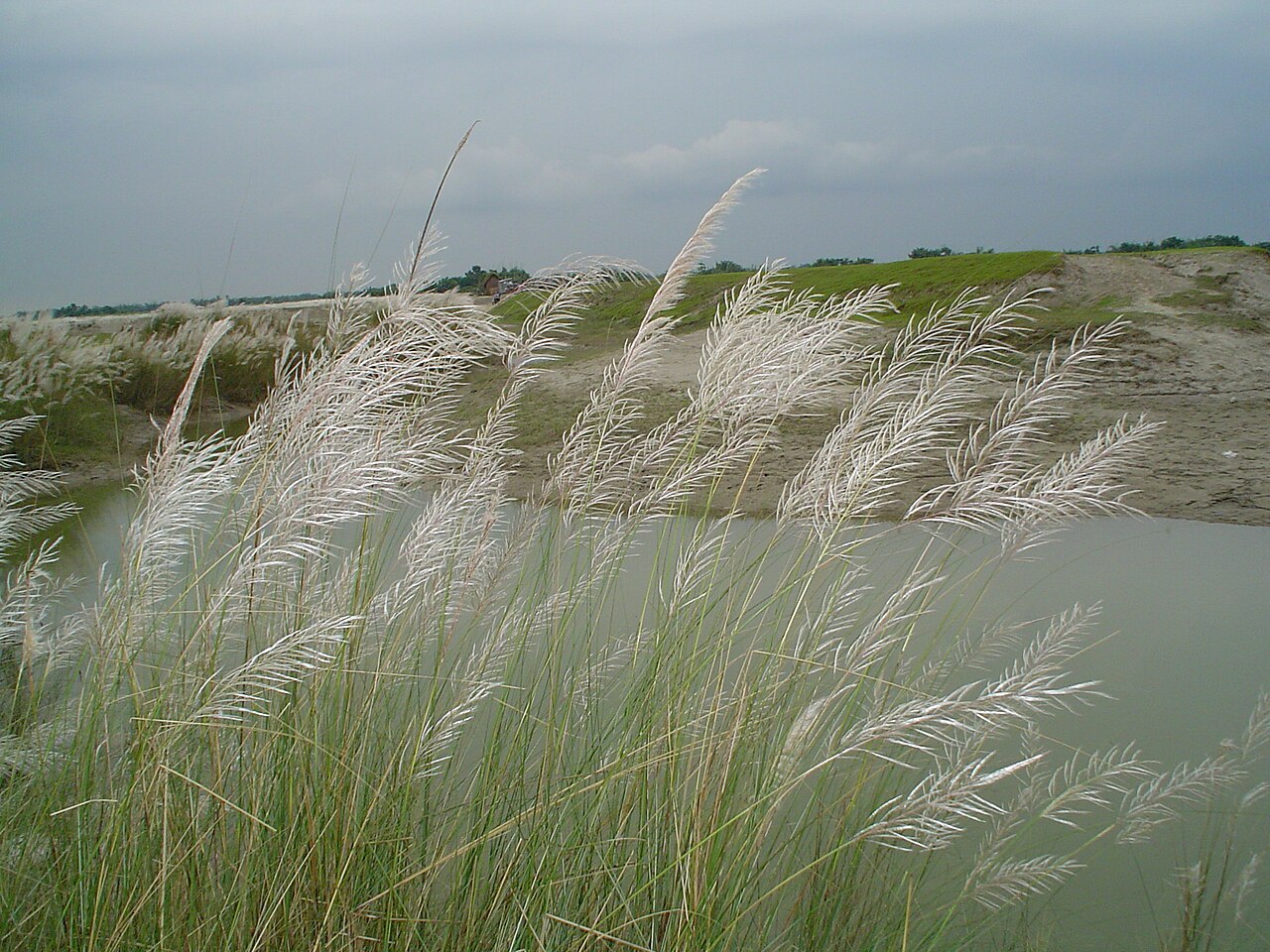
Photo: Auyon / Wikimedia Commons (CC BY-SA 3.0); autumn kash flowers on a char of the Dharla river, Kurigram.
Source: Prothom Alo


Comments
(0)