
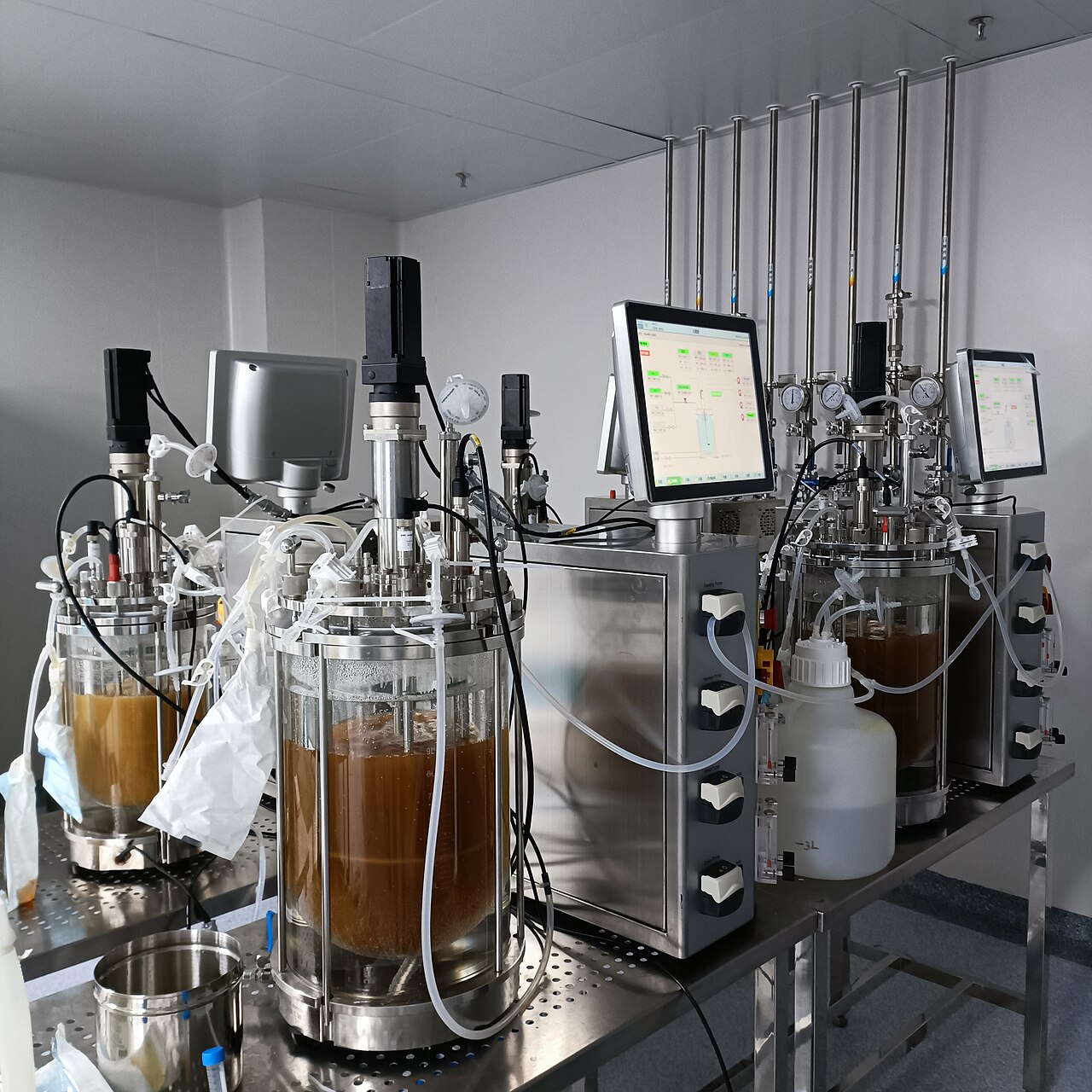
Pythag Tech, a New York-based start-up that uses artificial intelligence to design cultivated meat production processes, has raised $4.25 million in seed funding led by Azolla Ventures, Green Queen reports.
Co-founder and chief executive Sami Nabulsi, who started the company with chief R&D officer Anne-Sophie Mertgen in 2023, calls it "an R&D company for cultivated meat". Its platform targets the industry's three main cost drivers: growth media, cell line development and bioprocessing. Pythag builds production processes, the cells, the media that feeds them and the bioreactor conditions they grow in, and licenses them to food companies that make the meat.
The work starts in a "dry lab", where computational tools mine public data for hypotheses, such as which molecules might switch on a growth pathway or which nutrients a cell does not need. The wet lab then runs as many cheap experiments as possible, logging every result in one database from flasks to bioreactors. Machine learning looks across the data, finds links between cells, nutrients and process conditions, and chooses the next experiments, in a loop that improves with each round.
The new money will buy automation equipment, open a second lab in Thailand alongside the one in Melbourne, and grow the wet-lab and AI teams. Nabulsi said the company has achieved very high cell densities and very low media costs but declined to publish figures, calling headline numbers "a bit of a gimmick in this industry". As a technology provider Pythag needs no regulatory approval itself, but it plans to take processes through approval jointly with customers.
The round comes as the sector struggles: funding for cultivated meat start-ups fell 49% in 2025 to $74 million, against $1.5 billion at its peak four years earlier. Matthew Nordan of Azolla Ventures said cultivated meat can help "only if it provides functional equivalence at lower cost".
Photo: Habin Zhang / Wikimedia Commons (CC BY-SA 4.0)
Source: Green Queen

Comments
(0)