
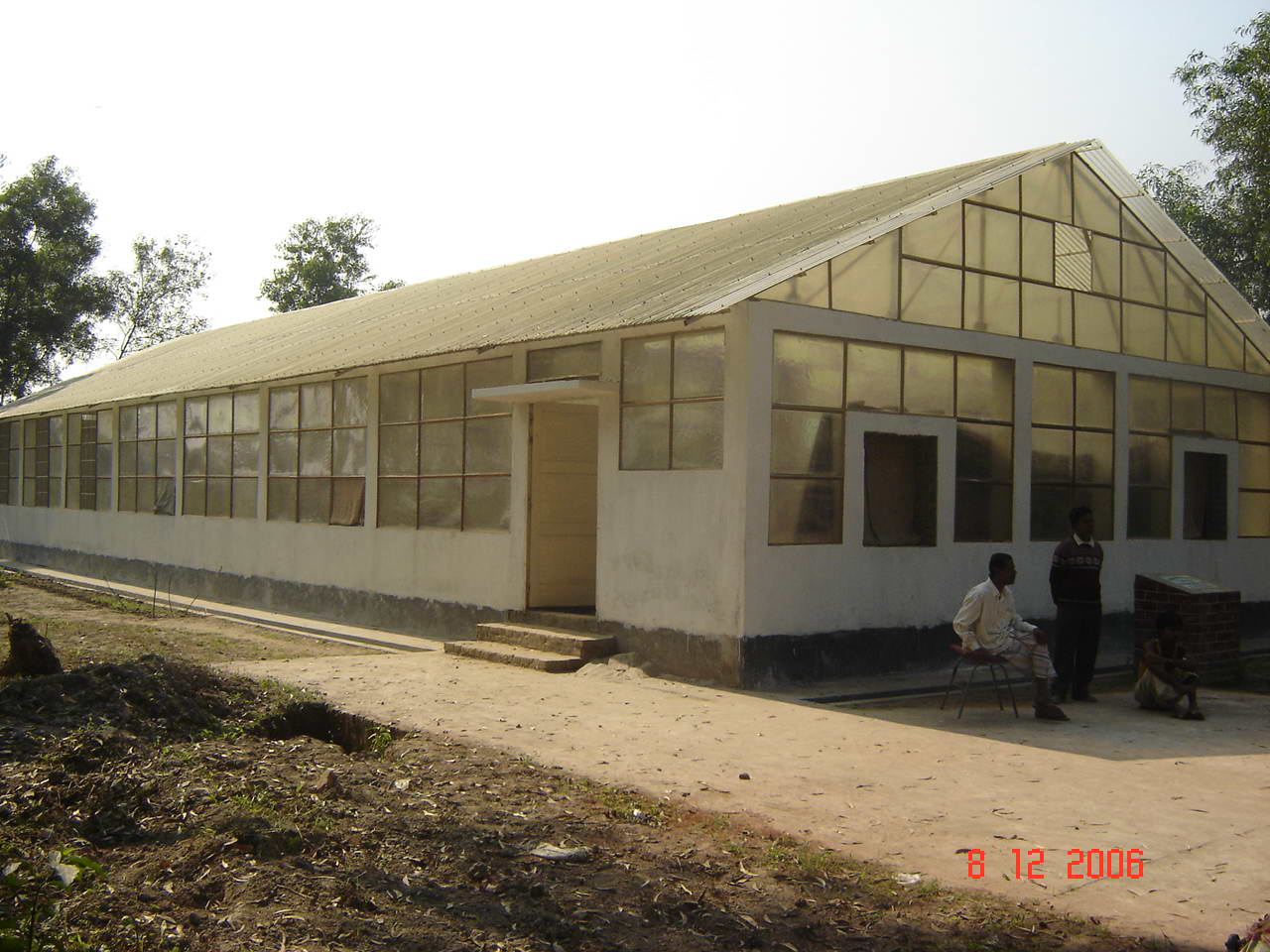
Seventeen polynet houses built in Pabna so that farmers could grow capsicum, tomato and other high-value vegetables all year are now almost all out of use, Krishi Shomoy reported. They were built under the Rajshahi division agricultural development project during the previous government at Tk 24 lakh each. Four years on, houses visited in Santhia and Ishwardi have torn plastic and iron frames standing like skeletons, with no crops inside; some farmers have planted grapevines in them for want of anything else.
Nazrul Islam Sarkar of Bakhtarpur in Ishwardi said he could have earned Tk 1 lakh a year by leasing the land; the house is so hot that no crop survives, so he took the plastic off and now farms outside in the ordinary way. The net on Nazrul Islam Fakir's house in Madhpur, Santhia, was torn in a storm and rainwater has flooded it; he says nobody can work inside after 10 in the morning and seedlings and vegetables are scorched.
Most of the mist and drip systems meant to control temperature no longer work. Farmers say iron-rich, hard groundwater wore the equipment out quickly, and that poor materials and thin polythene meant the houses did not last. The contract promised five years of maintenance, but nobody came after the first year. Workers Babul Hossain, Azgar Ali and Hasu Khan said the heat makes work inside impossible after 10am.
Bailey Begum, a national award-winning woman entrepreneur in Ishwardi, said the promised quality of materials was never supplied, and farmers have lost more than they would have earned growing ordinary vegetables or leasing the land.
Shahjahan Ali Badsha, president of the Bangladesh Farmers Association and a well-known Pabna farmer, is himself among those affected. Houses modelled on those of cold countries, he said, need temperature, humidity and ventilation control to suit Bangladesh's climate, with different settings for different crops, yet these houses use one system for every crop.
Project director S M Hasanuzzaman of the Rajshahi division agricultural development project claimed that the farmers had not succeeded because they did not want to work hard and did not follow advice.
Photo: Greenhouse at Bangladesh Agricultural University, Hermitage17 / Wikimedia Commons (Public domain)
Source: Krishi Shomoy


Comments
(0)