
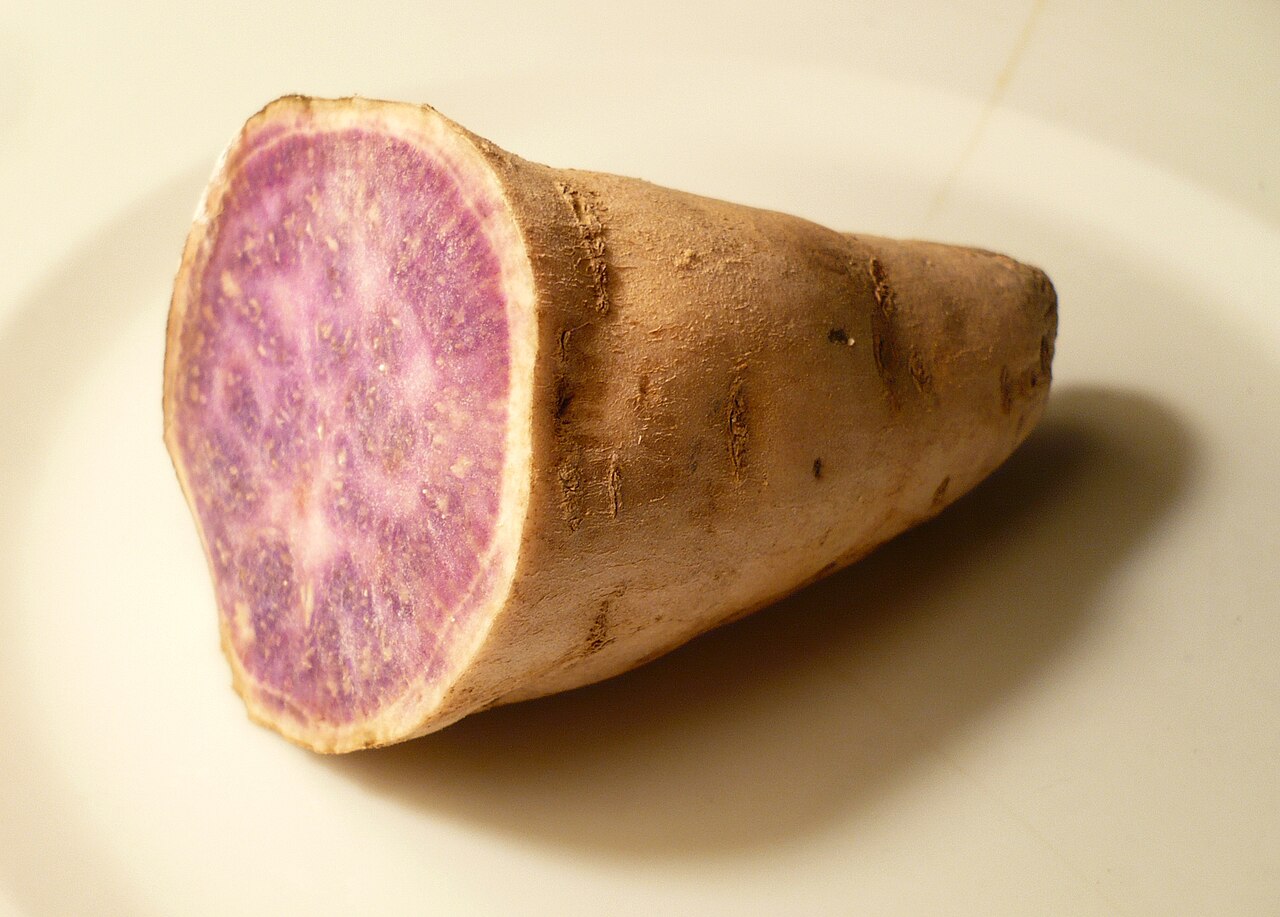
The Philippines has begun scaling up production of ube, the purple yam, to meet rising demand abroad and open export markets for its farmers, AgNavigator reported.
The Department of Agriculture (DA) says production targets will be set by what buyers want, market demand and farmers' capacity. The DA provides technical help and quality planting material, local government units mobilise growers and find sites, and private partners and institutional buyers make sure output meets market specifications. "We can accelerate expansion, respond to growing global demand and develop a bigger export market that will translate into higher and more sustainable incomes for our farmers," said Agriculture Secretary Francisco P. Tiu Laurel Jr.
As of 7 October the DA had allocated PHP3.7 million (US$58,929) to produce 420,000 setts of about 100g each at six research centres and stations; 211,180 have gone to Echague, Isabela, and the rest are scheduled for distribution. That supports about 70 more hectares, but another 1.4 million setts are needed, which the DA aims to supply by December through minisett propagation, tissue culture and single-leaf nodal cuttings, with selected farmers and cooperatives acting as multiplier farms. Ten varieties have been chosen for large-scale production.
Cagayan Valley regional director Rose Mary G. Aquino said the initial target is 100 hectares in Isabela, rising to 500 hectares by 2028. A DA-funded facility at Quirino State University has made ube powder samples that meet Japanese standards, and Korean investment group Carnot Fleet has visited to look at opportunities. The DA has also listed needs for cold storage, mechanisation, automated irrigation, consolidation and processing facilities, and wants to keep its planting material from being used by competing countries.
The plan is a template for any country trying to turn a niche crop into an export: secure clean planting material first, tie production to buyers, then build the processing that adds value.
Photo: Badagnani / Wikimedia Commons (CC BY 3.0)
Source: AgNavigator

Comments
(0)