
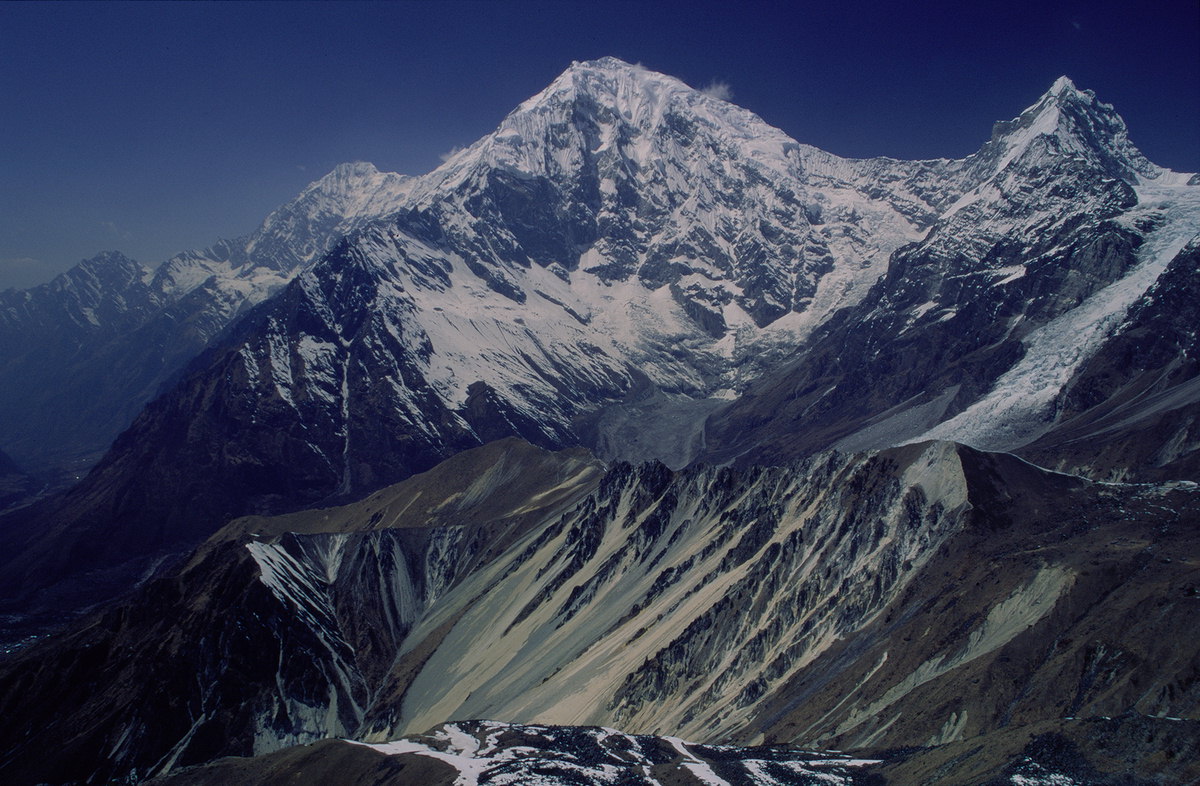
In Rasuwa district on the Nepal-Tibet border, a large part of a glacier broke away from Langtang Lirung, slid about 1,200 metres and blocked the Bhotekoshi river. When the natural dam gave way, a torrent of water, mud and rock poured down on the settlements below. In a Samakal column, banker and development researcher MM Mahbub Hasan starts from this event to write about the financial side of Bangladesh's climate risk.
The column quotes the figures Nepal's prime minister, Balendra Shah, gave at the UN General Assembly: at least 1,450 dead, and roads, bridges, schools and homes swept away. Finance minister Swarnim Wagle estimates reconstruction will need $4 billion to $5 billion; the World Bank has arranged up to $170 million in emergency funds and Bangladesh has given a $1 million grant. The gap between need and money received, the writer says, is the real story.
Disaster losses come in three stages, he argues: broken infrastructure, then halted production and work, then reconstruction debt that weighs on budgets for years. When a bridge collapses, a farmer's rice cannot reach market. By the figures he cites, a major flood can cut Bangladesh's GDP by up to 9 per cent; the 1991 cyclone caused $1.5 billion in losses and Cyclone Sidr in 2007 nearly $1.75 billion.
On the climate debt risk index of the Dhaka research group Change Initiative, Bangladesh falls in the 'high-risk debt trap' category. From 2002 to 2023 it received only $1.41 billion for adaptation, not even 1 per cent of what is needed. The government has raised climate allocations across 25 ministries by about 26 per cent this fiscal year, to more than 11 per cent of the total budget; the writer asks how much of that goes into preparing in advance.
He makes three proposals: a national loss-and-damage database kept to international standards; parametric insurance, so that agreed sums reach farmers, small shopkeepers and day labourers as soon as rainfall, wind speed or water levels pass set thresholds; and disaster clauses in foreign loan agreements, so that repayments are suspended for a time after a major catastrophe.
COP31 meets in Antalya, Turkey, from 9 to 20 November. The writer notes that the environment ministry has set up a technical coordination committee and three subcommittees, and a joint position with Nepal and Bhutan is under consideration. At what is being called the 'implementation COP', he argues, Bangladesh should take not only grievances but a list of investable projects in solar power, grids, storage and green industry. The views are the writer's own.
Written by MM Mahbub Hasan, banker and development researcher, Samakal
Photo: Ahtih / Wikimedia Commons (CC BY-SA 3.0); Langtang Lirung
Source: Samakal


Comments
(0)