
In mid-July 2026 the monsoon rains all but stopped across north-western and central India. BBC correspondent Chandan Kumar Jajware reported on 14 July that, according to weather specialists, a "monsoon break", a temporary pause in the monsoon, meant no rain there for several days and could sharpen drought conditions. Kharif sowing was under way, while West Bengal was having continuous rain.
The India Meteorological Department (IMD) said on the Saturday of that week that rainfall was likely to stay low for the next six to seven days across north-west India, west-central India and the southern peninsula.
What forecasters said
Navdeep Dahiya, founder of the private Live Weather of India, posted satellite images on X and wrote that from the Western Ghats to the core monsoon zone inland there was no rainfall anywhere, with negligible cloud over both the Arabian Sea and the Bay of Bengal. The scene, he wrote, looked less like the morning of 12 July than of 12 April, and he saw no improvement before 18 July.
Mahesh Palawat, a meteorologist and head of Skymet Weather, told BBC News Hindi there was no prospect of rain in west-northern and central India until 19 or 20 July, and that temperatures in Delhi and the National Capital Region could stay around 37 to 38 degrees Celsius. Breaks are regular, he said, but this one was under the influence of El Niño: the monsoon was already weak and the break was long. Usually the rain shifts north for four or five days, he explained, but this break was expected to last ten, cutting seasonal rainfall further.
Rain would continue over eastern Uttar Pradesh, Bihar, Jharkhand and West Bengal, Mr Palawat said. Sagarika Ghose, a Trinamool Congress member of the Rajya Sabha, wrote on social media that the weak July monsoon posed risks to agriculture, water security and rural livelihoods, and that she would raise the matter in Parliament.
What a monsoon break is
According to the IMD's frequently asked questions on the monsoon, the monsoon trough is an elongated belt of low pressure. When it lies south of its normal position, the monsoon is strong over India. When it moves north, runs along the foothills of the Himalayas or is not seen at all, break conditions set in over most of the country, with heavy rain along the Himalayan foothills and sometimes floods on the Brahmaputra.
In Mr Palawat's account, strong westerly winds push the trough north. A cyclonic system forming over the Bay of Bengal and moving inland pulls the monsoon back south, and the rain returns.
El Niño is the warming of the central and eastern Pacific above normal, and it often weakens the Indian monsoon. On 9 July 2026 NOAA's Climate Prediction Center in the United States forecast that El Niño would strengthen through the year, with a 97% chance of lasting into early spring 2027 and an 81% chance of a very strong event in October to December.
The risk to kharif sowing
Kharif crops are the monsoon crops of India, Pakistan and Bangladesh, sown with the first south-west monsoon rains and harvested in October and November; rice, maize and cotton are the main ones. The BBC reported that India's June 2026 rainfall was about 40% below average, and that good rain up to 9 July had cut the deficit to 12%. Down To Earth reported that on 1 July the IMD had forecast July rainfall below 94% of the long period average.
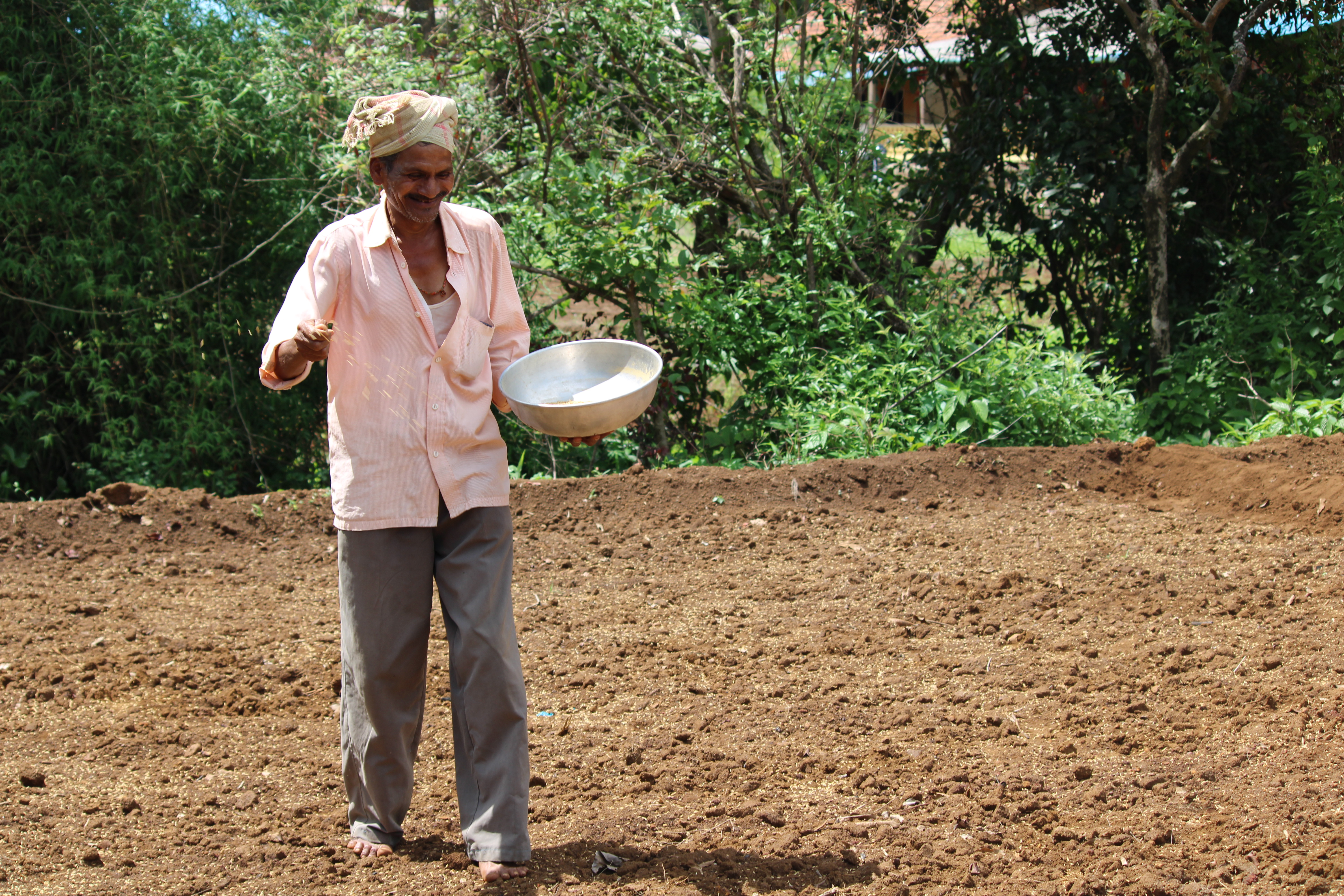
Photo: Cpangarkar / Wikimedia Commons (CC BY-SA 4.0)
Sources: BBC Bangla, India Meteorological Department (IMD), NOAA Climate Prediction Center, Down To Earth, Wikipedia
Comments
(0)