
Md. Shariful Islam Akash, a young entrepreneur from Deobaria village in Sarisha union of Pangsha upazila in Rajbari district, has built a small business around modern farm hand tools made with local technology. To make farmers' work faster and lighter, he has sold 25,000 to 30,000 locally made implements so far, worth about Tk 1.5 crore to Tk 2 crore. As of late December 2025, when this report appeared, he was working with more than 45 kinds of tools, from ploughs and sickles to special hand tools for digging holes, produced by combining village blacksmithing with lathe work and sold both in shops and online.
From a job to farm tools
Shariful, son of Md. Mojibur Mollah, left his job in 2020 to become an agricultural entrepreneur, and for the two years before this report he had focused on farm tools. He grows jujube (borui), guava and a range of other fruits and vegetables himself, and he said it was his own time in the field that pointed him to the idea.
"I grow jujube, guava and other fruit and vegetables myself," he said. "Working in the field, I saw how hard and slow land preparation and hand work are, and I felt something had to be done to make farmers' work easier. That is where this venture began."
Farming once meant long hours of heavy labour, he noted, but that idea has begun to change. Modern hand tools and household farm implements now let a farmer do more in less time, making daily work easier and more effective. Digging soil, making holes, clearing weeds and cutting crops, jobs that used to take a farmer hours, can now be finished in far less time with modern tools, which cuts the labour while raising efficiency.
More than 45 kinds of tools
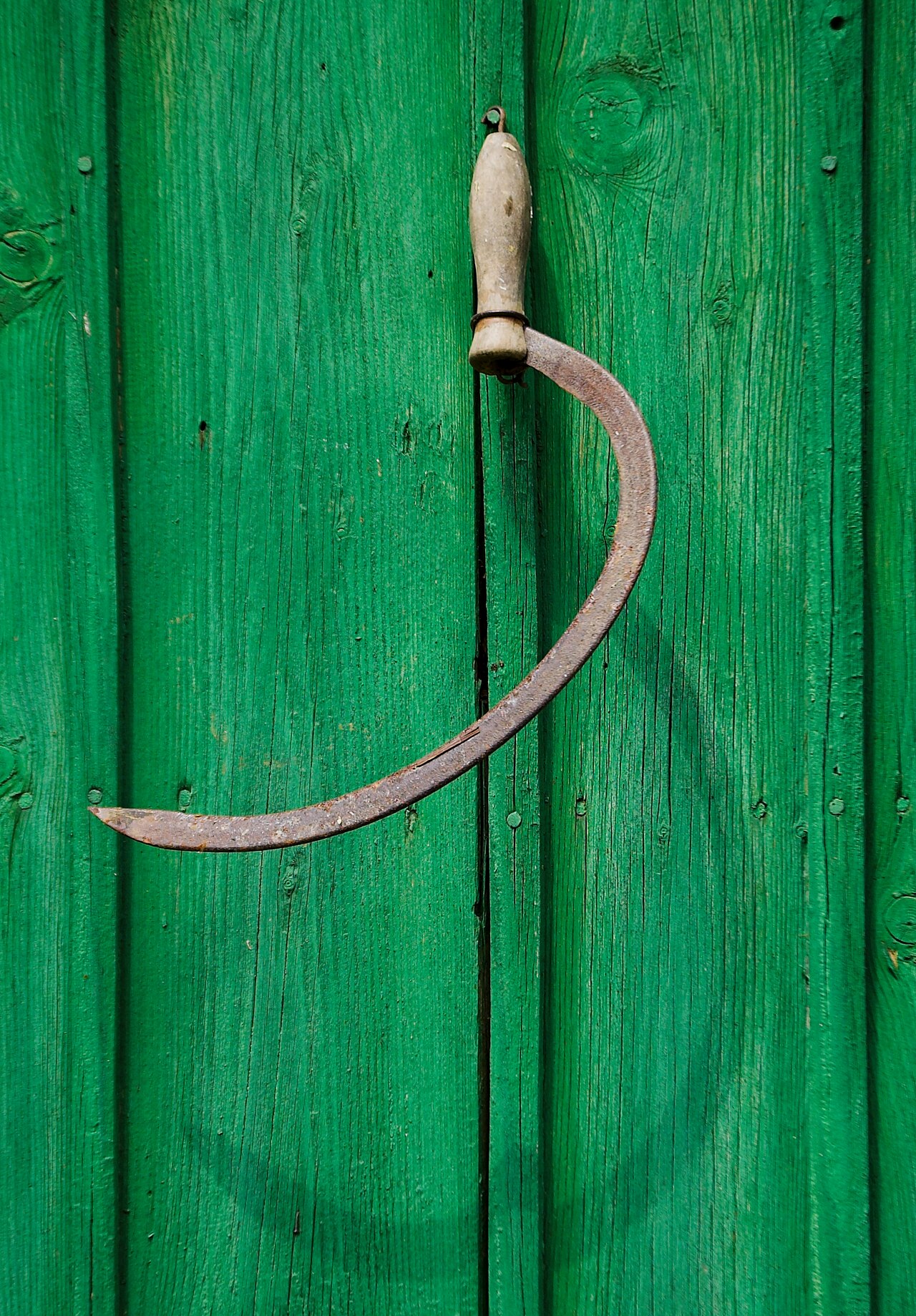
According to Shariful, he currently works with more than 45 modern farm implements chosen to match what farmers need: various ploughs, special hand tools for making holes in the soil easily, machetes (da), sickles and shears, crowbars (shabol), the curved bonti blade and even implements suited to household use. The tools are made with local technology, he said, bringing together the village blacksmith's forge and lathe work.
Carefully finished and blending local and foreign designs, the tools are used in jobs from preparing land to clearing weeds and cutting crops, saving the farmer time on one side and easing the physical strain on the other. The implements are sold both offline and online, he said, though the online platform called "Agro Mart" accounts for the larger share of sales.
Prices, sales and the entrepreneur's aim
Depending on quality, Shariful said, the hand tools sell for between Tk 150 and Tk 2,500. Up to the time of the report, 25,000 to 30,000 pieces of various kinds had been sold, with a market value of roughly Tk 1.5 crore to about Tk 2 crore. Promotion and marketing took time at first, he said, but sales had risen significantly in the preceding months.
Profit, he insisted, was not the only goal. "The main aim is to make the country's agriculture stronger and to make farmers' work easier," he said, adding that the satisfaction of contributing to agriculture, alongside the growth of the business, was what kept him going.
Shariful also argued that many Chinese-made tools used in the country are less durable and hard to maintain, often breaking after a short time and proving impossible to reuse, whereas tools made with local technology can be repaired cheaply in the local market and used again, so farmers do not have to buy new ones. Not only professional farmers but also people who grow vegetables for their families use the products, he said, and the response across the country had been good; several other young people were working with him part-time. Looking ahead, Shariful said he planned to make heavier and more effective farm machinery, with a single goal: to lower farmers' production costs and create the chance to grow more crops on limited land.
Rajbari and Pangsha, a farming district
Rajbari, where Shariful lives and works, is a small district on the Padma in central Bangladesh. According to Banglapedia, the district covers about 1,092 square kilometres and had a population of roughly 1.05 million, with a density of about 961 people per square kilometre and a literacy rate of 52.3 percent. Most of its land is made of alluvial soil carried down by the Padma, and its rivers include the Padma, Gorai, Chandana and Chitra. Agriculture is the leading source of income, at about 60.84 percent, followed by commerce at about 14 percent and service and other occupations; the district is overwhelmingly Muslim.
Pangsha, Shariful's upazila, lies in the west of the district between the Padma and the Gorai (Gorai-Madhumati). It covers about 250 square kilometres and had a population of about 243,000, Banglapedia records, with paddy, jute, sugarcane, betel leaf and sesame as its main crops and agriculture accounting for nearly 68 percent of income. The upazila's listed cottage industries include blacksmithing, the very craft behind Shariful's tools. His home, Deobaria, lies in Sarisha union, a unit of about 5,098 acres with roughly 9,700 men and women each and a literacy rate of 44.9 percent, according to the encyclopedia. This is farmland where paddy and jute grow on river silt, and where hand tools for digging, weeding and harvesting are part of daily working life. A district where farming supports six in ten households and where blacksmithing is a listed village industry is a fitting base for a business built on affordable, locally made farm implements.
The village blacksmith and the hand tool
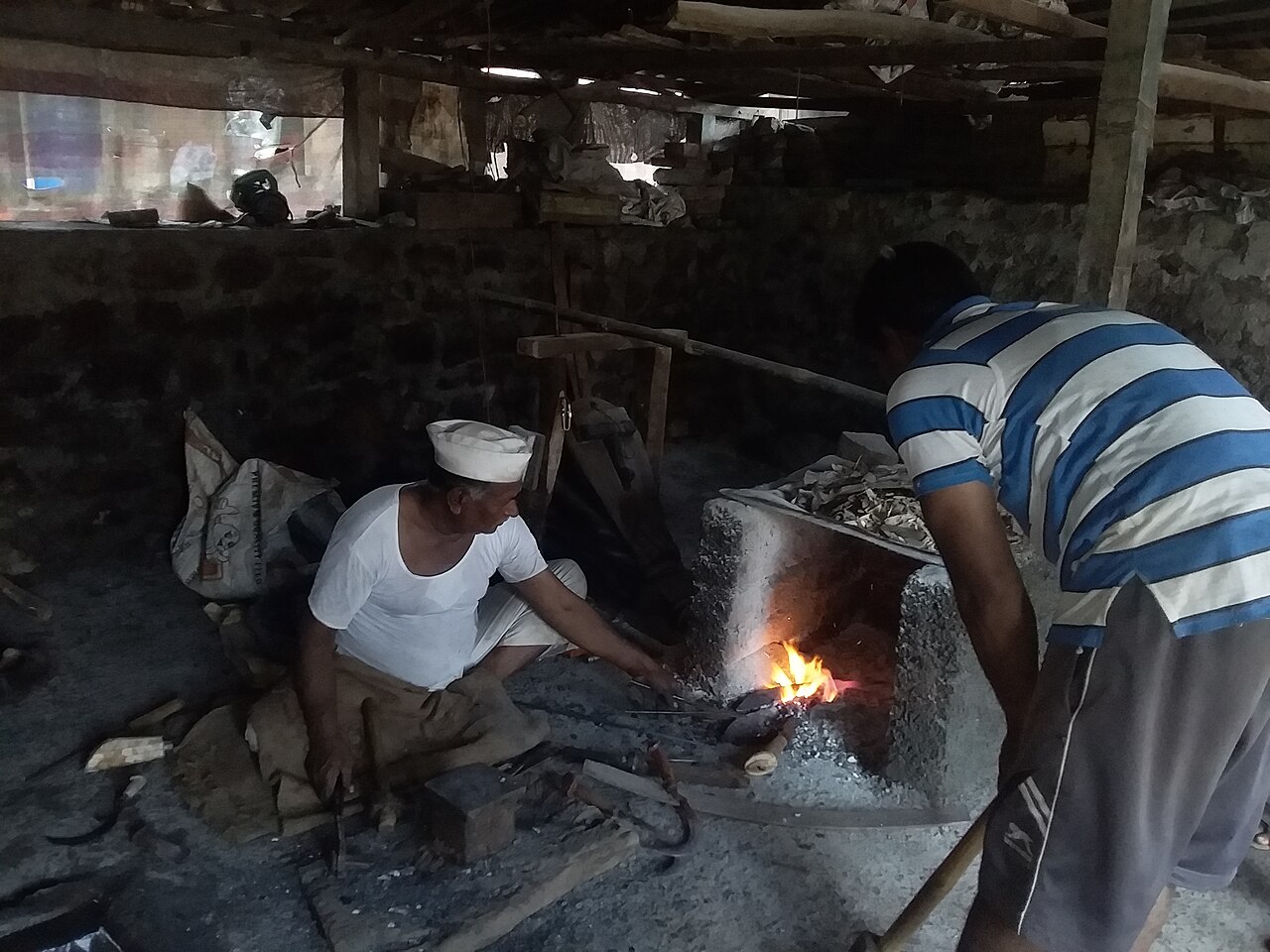
Shariful's tools come out of a craft as old as farming in Bengal: the work of the village blacksmith, the kamar. According to Banglapedia, kamars are village metalworkers who have made iron implements since very ancient times, their trade tied to the beginning of settled agriculture in the region.
From the kamar's forge come the plough (langal), sickle (kaste), hoe, digging tool (khanta), spade (kodal), pickaxe or crowbar (shabal) and the billhook (da), along with household and carpentry tools such as knives, axes, tongs, saws, chisels and hammers. The work is done in a kamar para, a blacksmiths' quarter, with a manually regulated iron-smelting foundry and an anvil on which red-hot iron is hammered into shape. In the past, Banglapedia notes, kamars were divided into sub-groups, with early accounts describing several social classes in Bengal and eastern Bengal, and the craft emerged as an occupational group tied to the start of settled agriculture in the region.
The craft has long been associated with particular communities, but Banglapedia notes that many Muslims have taken up the trade while many kamars have moved into other work in villages and towns; its survival, the encyclopedia says, is bound up with traditional patterns of agriculture, irrigation and housing. That is the backdrop to a venture like Shariful's: demand for hand-forged iron tools continues wherever land is still worked by hand, even as the number of working smiths falls and cheaper imported tools crowd the market. By joining this forge work with modern lathe work and local and foreign designs, he is in effect trying to carry an old craft into a new, partly online, market.
How Bangladesh farms with machines
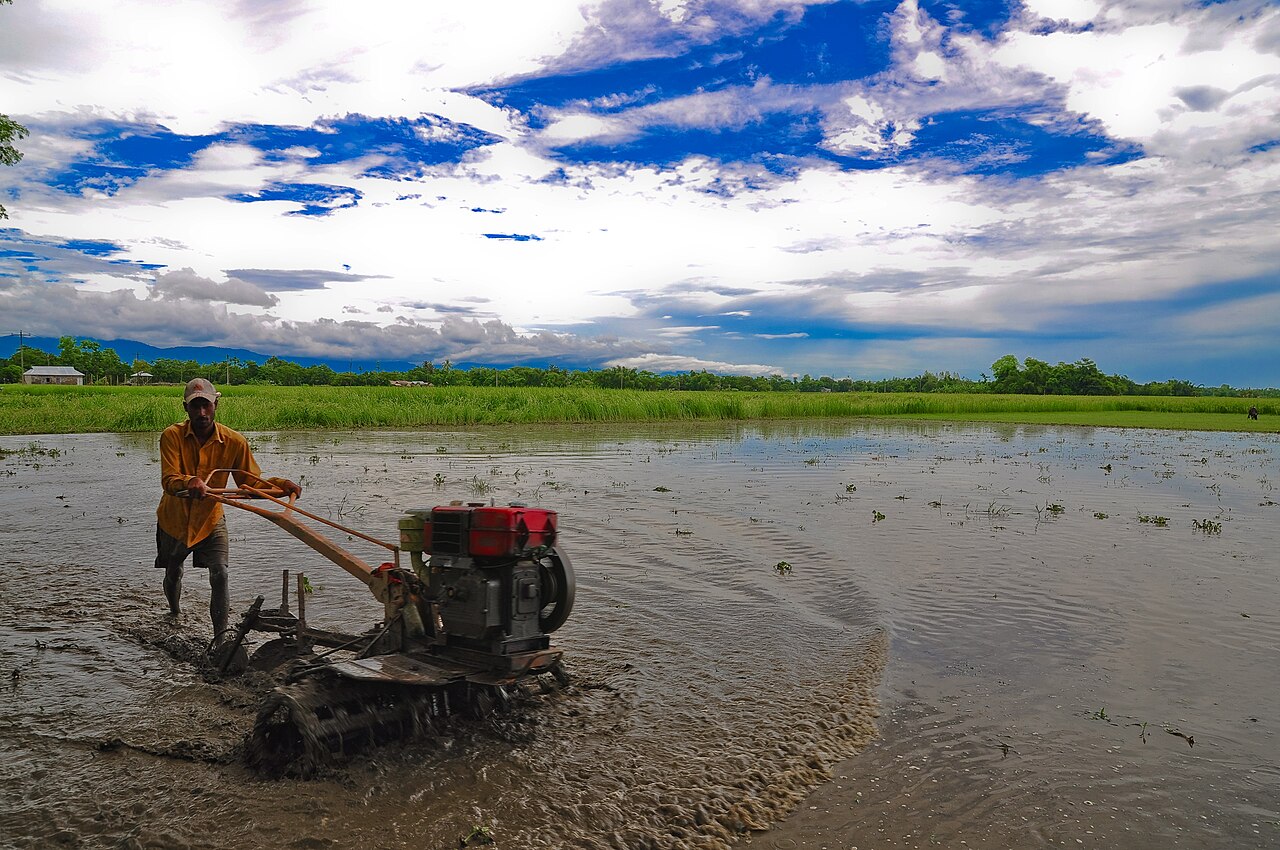
Bangladesh is counted among the countries where farming is heavily mechanized once the two-wheel tractor, known locally as the power tiller, is taken into account. A two-wheel or walking tractor is a single-axle machine, usually powered by a heavy-duty single-cylinder diesel engine of about 5 to 18 horsepower, that can pull and power a wide range of implements: ploughs and harrows, seeders and transplanters, reapers and even, in Asia, small combine harvesters, as well as trailers for carrying loads, according to Wikipedia.
The range of implements the machine can run is wide, according to Wikipedia. For soil work there are rotary tillers, mouldboard and disc ploughs, harrows, seeders, transplanters and planters; for plant protection and weed control there are inter-cultivators and sprayers; for the grain harvest there are reapers, reaper-binders and, in the Asian context, even combine harvesters; and trailers with capacities from about half a tonne upward handle transport. In short, a two-wheel tractor can do much of the work of a larger four-wheel tractor, which is part of why these small machines spread so widely among smallholders in Bangladesh.
International statistics that count only four-wheel tractors treat Bangladesh as barely mechanized, but when two-wheel tractors are included the country, along with Sri Lanka, is among the most highly mechanized in South Asia in terms of the area tilled by machine. Agriculture remains central to the economy even as its share has fallen over the decades. Banglapedia records that agriculture's share of GDP dropped from about 60 percent in the pre-liberation period to roughly 30 percent by 1997/98, and that the share of the labour force in agriculture fell from 73.8 percent in 1989 to 63.2 percent in 1995/96, when about 34.5 million of 56 million workers were in agriculture. More recently the sector made up roughly 12 percent of GDP in the 2022-23 financial year and about 14 percent in 2017, while still employing something like 42.7 percent of the workforce, according to World Bank and other data.
The government has pushed mechanization further through the Department of Agricultural Extension (DAE), which sells machines such as combine harvesters, reapers and rice transplanters to farmers at subsidised prices. News reports in January 2025 said the Anti-Corruption Commission had examined the distribution of about 40,000 machines under the programme. Where the big machines handle land preparation, harvesting and threshing on larger plots, the hand tools Shariful sells are aimed at the everyday jobs on small plots and home gardens: digging, making holes for saplings, weeding and cutting crops. For smallholders and family gardeners, a sturdy, repairable hand tool at Tk 150 to Tk 2,500 is often more within reach than a machine costing many times as much, which is the gap Shariful says his products try to fill.
Jujube and guava, the crops he grows
The fruit Shariful grows himself, jujube and guava, are among the most widely cultivated in Bangladesh. Jujube, known locally as borui or kul, belongs to the genus Zizyphus, which has about 40 species; the two cultivated kinds are the Indian jujube (Z. mauritiana) and the Chinese jujube (Z. jujuba), according to Banglapedia. The plant is hardy and drought-tolerant, and popular varieties include BAU Kul 1 and 2, BARI Kul 1 and 2, Narkeli, Sabzi and apple kul, with BAU Kul 1 fruit weighing between 90 and 250 grams. Some varieties are spineless, fast-growing and bear fruit within four to five months of planting, Banglapedia says, while the sweet Comilla kul, locally called Dab kul, and the crisp apple kul, which drops less fruit, are also grown; the tree additionally supports lac production through an insect. Jujube is grown across the country, including in saline areas such as Bagerhat and Satkhira, sandy areas and hilly districts, and is eaten fresh or processed into jam, jelly, chutney, pickle and juice; March to May is considered the best planting time, with pruning done after harvest.
Guava, or peyara, is of the genus Psidium, of which the species grown here is Psidium guajava, a medium tree of 2 to 10 metres with shallow roots that came originally from tropical America. Its flowers are hermaphrodite and pollinated by air or insects, and the fruit is green when unripe and turns yellow when ripe. Banglapedia lists local varieties such as Kazi Piyara, Sawupkanti of Barisal and Kanchannagar of Chittagong, alongside BAU-developed FTIP BAU Piyara types including a Jelly variety high in pectin that is suited to jam and jelly, and BARI Piyara 2 and 3, Allahabad and L-49. Guava is a major source of vitamin C, at about 260 milligrams per 100 grams of edible portion, and contains roughly 80 to 83 percent moisture. It grows best at 23 to 28 degrees Celsius with around 100 centimetres of annual rainfall, in well-drained soil with a pH of about 4.2 to 8.2, and Bangladesh is among the world's major guava-growing countries. Both crops are grown mainly by smallholders and home gardeners of the kind Shariful says use his tools.
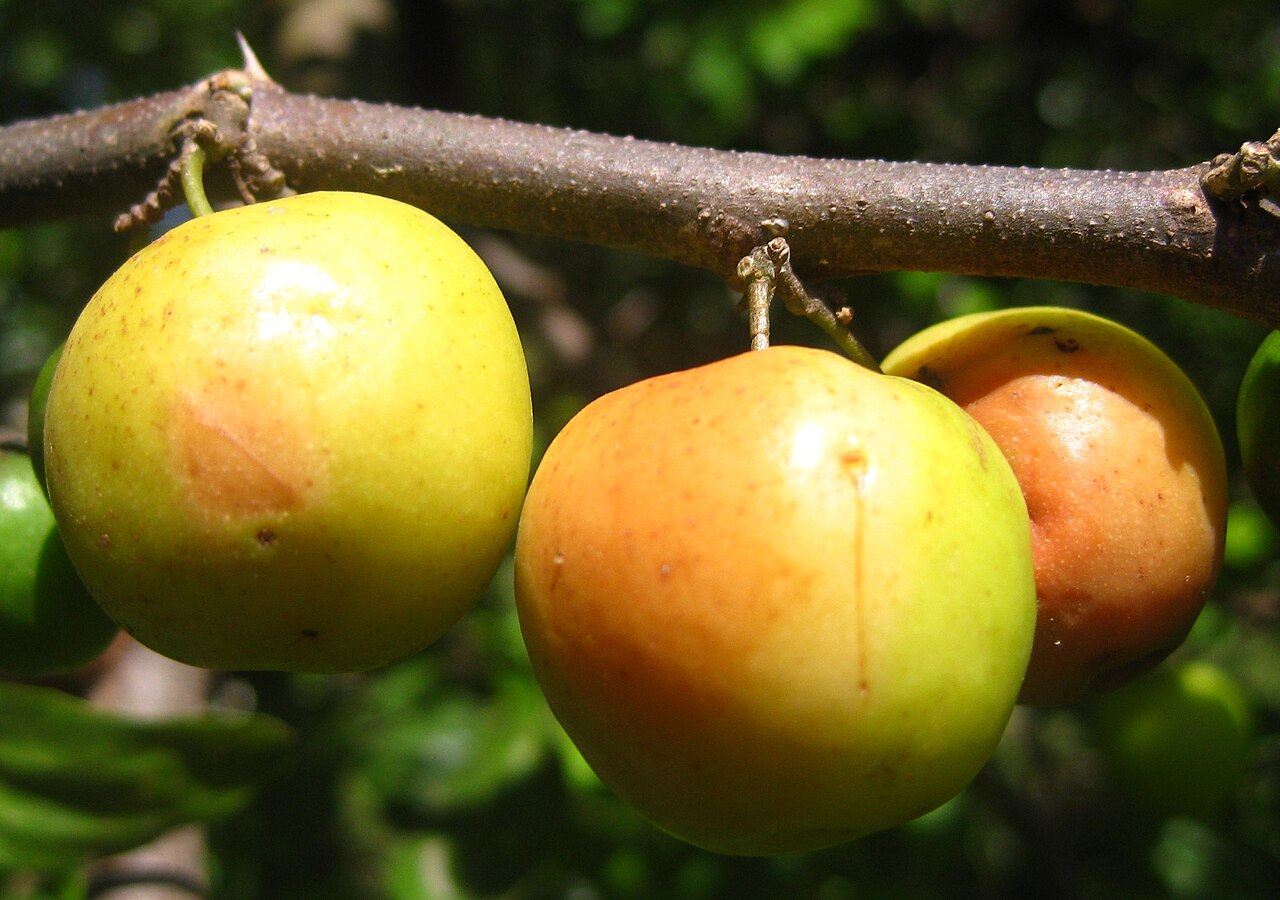
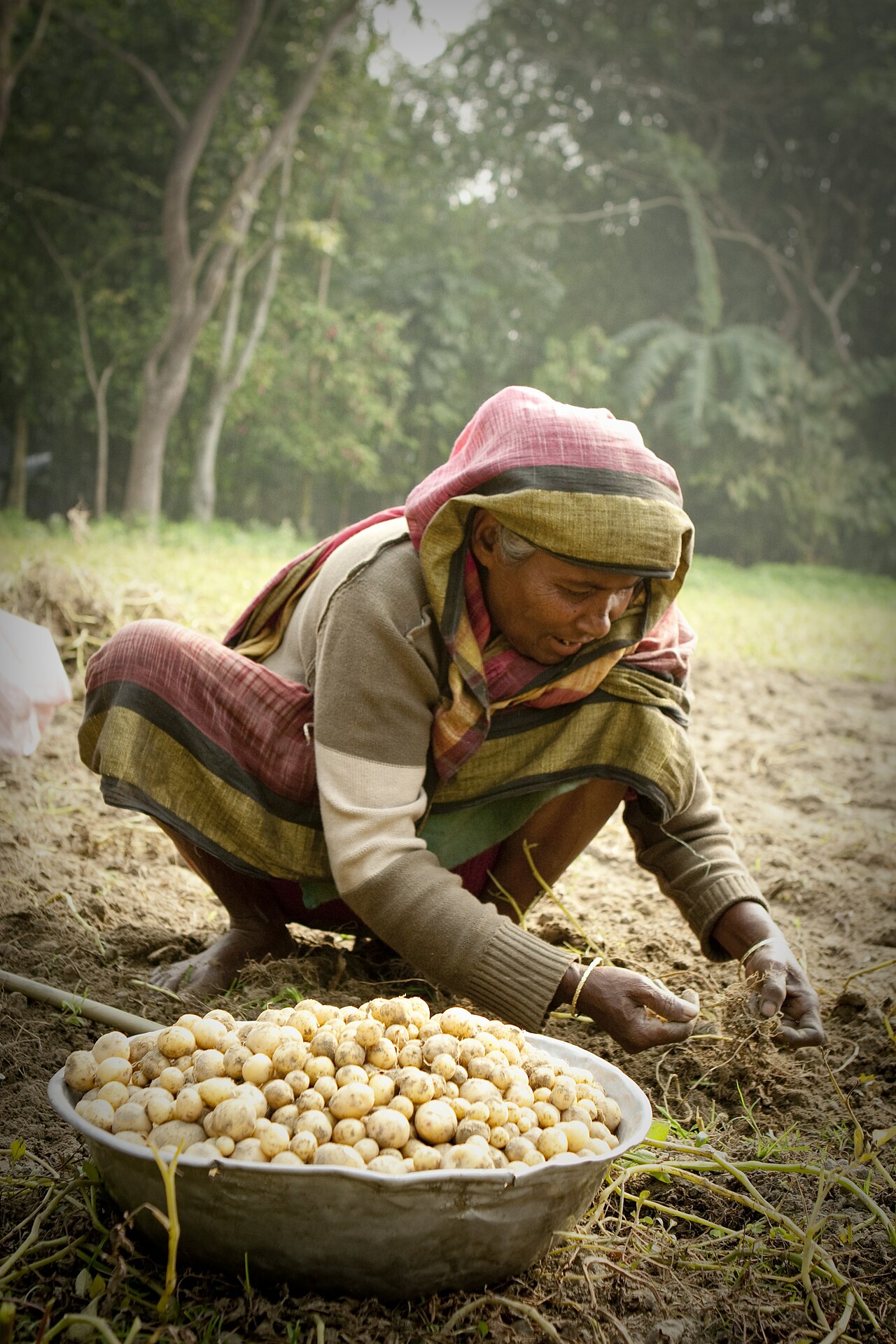
Photo: Balaram Mahalder / Wikimedia Commons (CC BY-SA 3.0)
Sources: Jagonews24; Banglapedia; Wikipedia (two-wheel tractor and agriculture in Bangladesh); World Bank.
Comments
(0)