
On Tuesday this week Bangladesh formally joined ACCELERATE (Accelerating Scaling of Low-Emissions Rice in Southeast Asia), an initiative to cut methane emissions from rice fields. Writing in Bangla Tribune, Dhaka Tribune editor Riaz Ahmed calls it a turning point, all the more so ahead of the COP31 climate summit on 9 to 20 November.
According to the column, Thailand, Vietnam, Cambodia, the Philippines and Indonesia already benefit from the programme. Rice covers about three quarters of Bangladesh's cropland and emits an estimated 32.4 million tonnes of carbon dioxide equivalent in methane a year, which the writer compares with the annual emissions of about 7.7 million petrol cars.
Methane warms the planet 86 times more than carbon dioxide over 20 years. The main source, the column says, is irrigated boro rice, which supplies about 55 percent of the country's rice. Keeping fields flooded for long periods starves the soil of oxygen and lets methane-producing bacteria thrive, while groundwater levels fall and irrigation and fuel costs rise.
The remedies Ahmed lists are alternate wetting and drying (AWD), deep placement of fertiliser, direct-seeded rice (DSR) and short-duration varieties. Under AWD the field is allowed to dry at intervals so that air reaches the soil, cutting methane and saving groundwater.
Measurement, once the obstacle, is becoming easier with satellites. The column notes that the International Rice Research Institute (IRRI) recently held a meeting in Dhaka on measuring, reporting and verifying (MRV) agricultural emissions. Dr Humnath Bhandari, IRRI's longtime head in Bangladesh, described digital MRV as affordable and accurate, and Dr Bjoern Ole Sander, who leads IRRI's work in Thailand, said farmers on 100,000 hectares in six Thai provinces had been helped to adopt low-emission rice.
If ACCELERATE succeeds, Ahmed writes, Bangladesh can show progress on its national methane plan, use irrigation water better and open the door to climate finance that could help farmers join carbon markets. The real test, in his view, is whether Department of Agricultural Extension field staff have the capacity and will to take these technologies from the lab to farmers' fields.
The views are the writer's own.
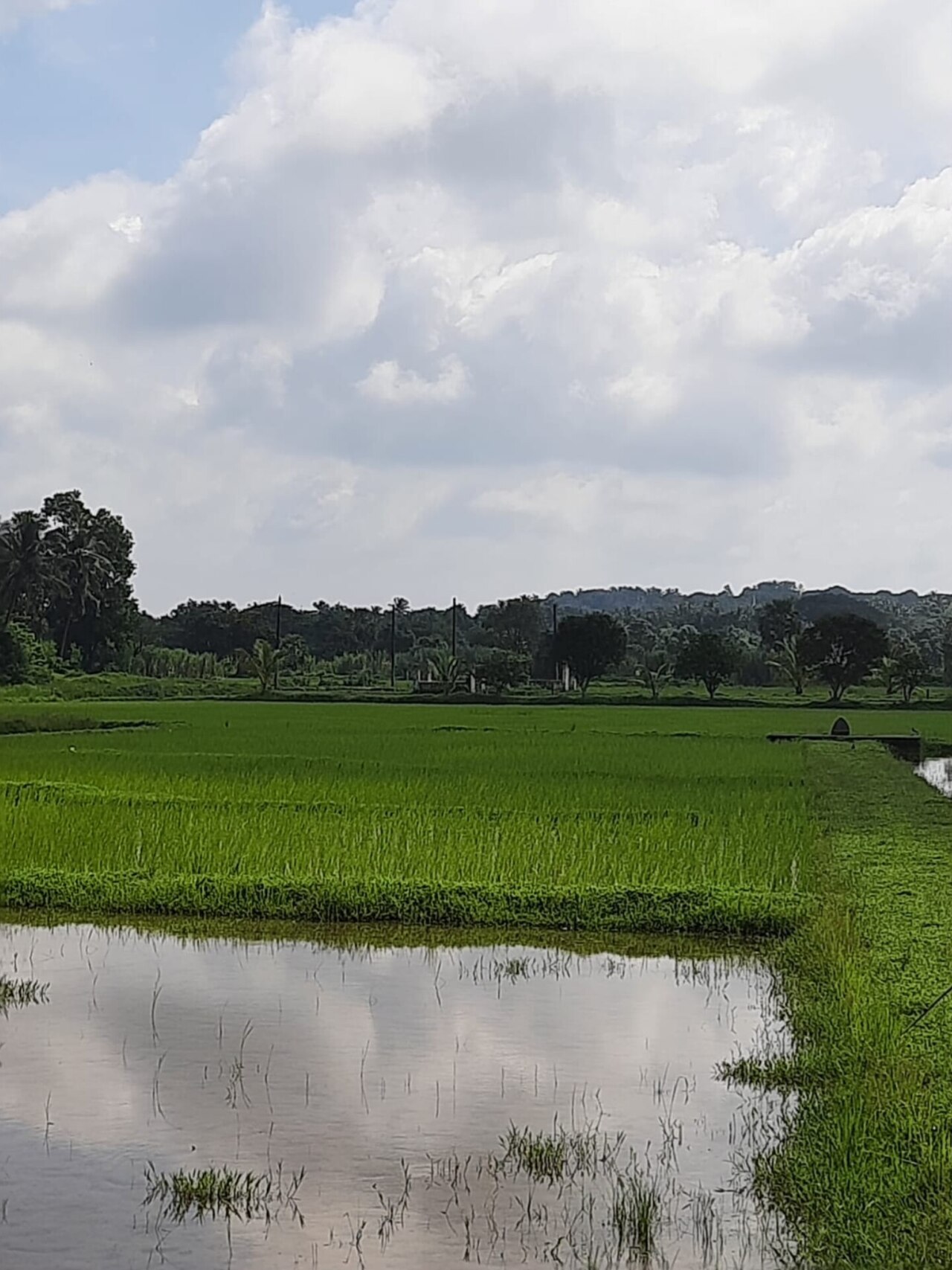
Photo: a paddy field under managed water (illustrative), Prathvi Acharya / Wikimedia Commons (CC BY 4.0)
Source: Bangla Tribune

Comments
(0)