
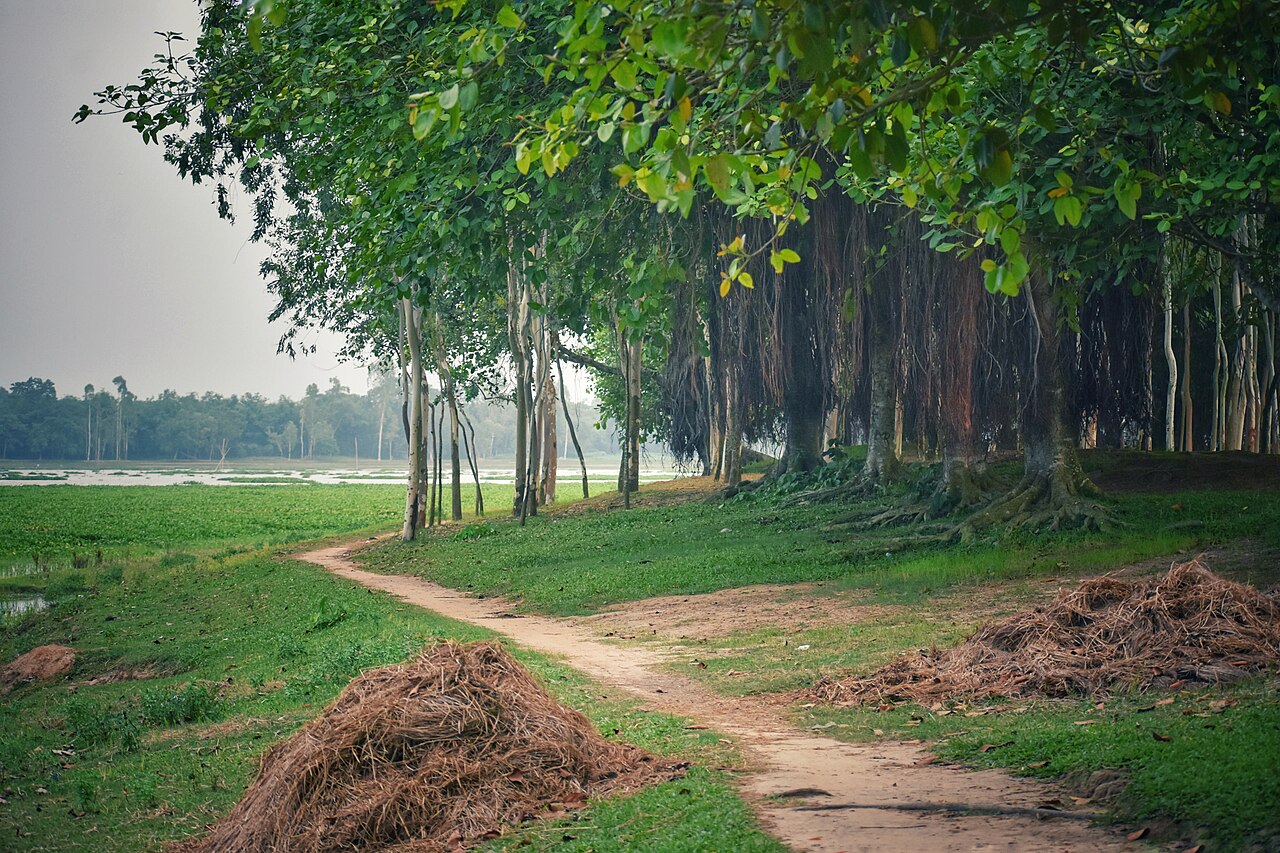
Badsha Mia of Meshta village in Shanerhat union, Pirganj upazila, Rangpur, owns no land of his own. Even so, over the past 20 years he has planted more than 30,000 trees along government roads, in the grounds of mosques and schools, and on fallow land.
Now 65, he has loved planting trees since he was a boy. With no land of his own, he began planting on public and open land as a young man. Along about three kilometres of the Bordargah-Madarganj regional road, from Amtala in Meshta to Bhagabanpur, both sides are now lined with fruit, timber and medicinal trees, many of them bearing fruit.
He does not stop at planting; he buys fertiliser and medicine for the trees with his own money. He even takes saplings as gifts to weddings and aqiqah ceremonies. 'You can live hungry, but not a moment without oxygen. Trees are our true friends,' he said. Asked what he wants for himself, he said that people saying Badsha planted these trees is reward enough.
Local residents Shamim, Imran and Ratan said the trees give walkers shade in the summer heat and many people eat their fruit. Khandaker Ekhlasur Rahman, acting principal of Shanerhat KJ Islam Girls' School and College, called him a true friend of the environment and asked that he be given a government environment award.
Shanerhat union parishad chairman Mesbahur Rahman said that in a time of climate change, such a personal example of greening is one for society to follow. Upazila nirbahi officer Abdullahil Bakiul Bari, who has just joined the upazila, said the upazila parishad would give the support needed for Badsha Mia's planting to continue.
His dream is to see the whole area wrapped in green. His habit of planting fruit trees along roadsides shows how public land in a village can become a source of shade and fruit even for someone with no land.
The report was filed by Samakal's Pirganj (Rangpur) correspondent.
Photo: Greenery in Pirganj, Ashef Emran / Wikimedia Commons (CC BY-SA 4.0)
Source: Samakal


Comments
(0)