
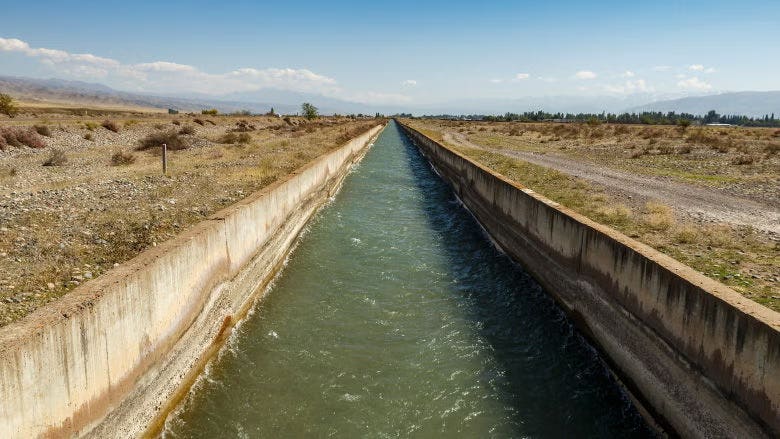
The World Bank's Board of Executive Directors has approved $95.75 million for the Kyrgyz Republic National Irrigation Investment Program, which sets out to improve irrigation services, strengthen water security and support more productive and resilient agriculture.
The Bank's money is not the whole of it. The operation also carries $50 million from the Asian Infrastructure Investment Bank, $20 million from the OPEC Fund and a $6.25 million grant from the Swiss Agency for Development and Cooperation.
Agriculture remains an important source of jobs and income in the Kyrgyz Republic, but the sector is held back by ageing irrigation systems and the water they lose. Rising temperatures and more frequent droughts, floods and sedimentation are adding to the risk faced by farmers and rural communities.
The headline numbers are specific. "The project is expected to benefit more than 450,000 people, improve irrigation services on about 82,000 hectares, and raise water conveyance efficiency from 35 to at least 70 percent," said Odete Duarte Muximpua, World Bank Senior Water Supply and Sanitation Specialist. Doubling the share of water that actually reaches a field is the core of the work.
The programme rests on three pillars. The first modernises irrigation and drainage infrastructure, improves water regulation and storage, strengthens dam safety and installs smart measurement and monitoring. The second strengthens the national institutions that deliver irrigation services. The third supports the farming that follows the water.
"The Kyrgyz Republic has set out a clear vision to modernize irrigation services and make water access more reliable for farmers and rural communities," said Hugh Riddell, World Bank Group Country Manager for the Kyrgyz Republic, adding that bringing public and private financing together is what allows the plan to reach that scale.
This approval is the opening phase of a longer government programme expected to mobilise $540 million over the next decade, modernising irrigation on more than 200,000 hectares and reaching close to a million people.
Source: World Bank

Comments
(0)