
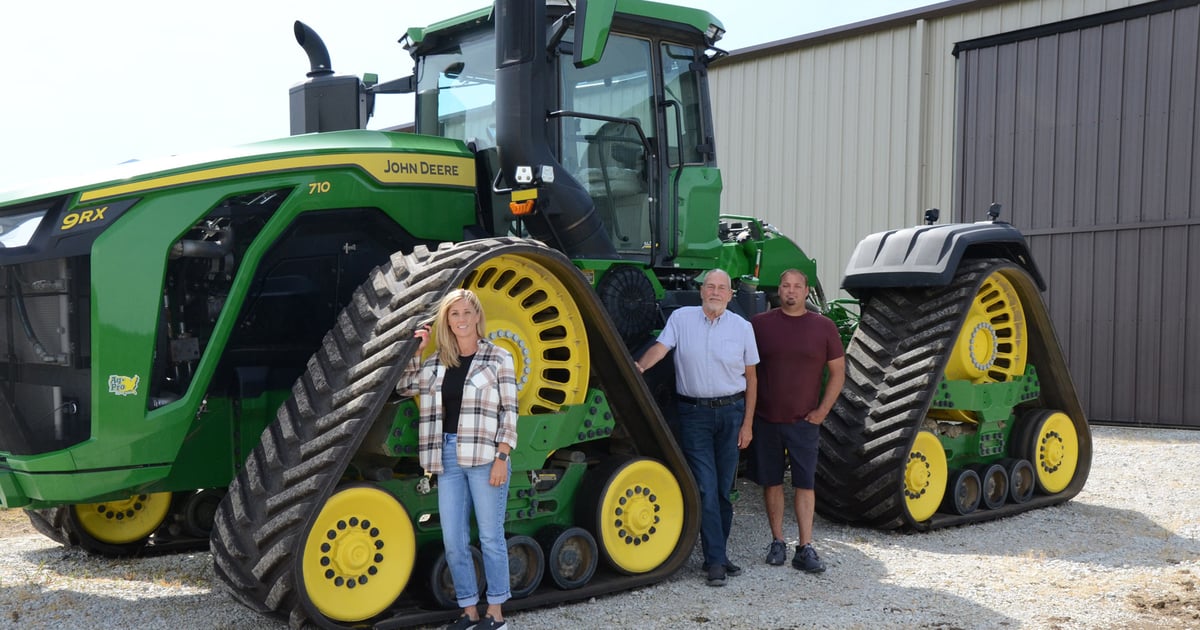
Bill Kellogg noticed gullies forming year after year on the rolling ground of his Hardin County farm and decided there had to be a better way. Decades later the operation he started with 700 acres covers 8,000 acres, 1,800 of them owned, and has been named an Ohio Conservation Farm Family Award recipient, Farm Progress reports.
What began with grass waterways and water and sediment control basins has grown into grid soil testing, no-till and strip-till, precision nutrient management, cover crops where they pay, 60 acres of waterways, buffer strips, subsurface drainage and pollinator habitat. The turn towards precision agriculture came from Bill's son Shane, who pushed for grid sampling in 1999. "We were seeing what we were doing to the soil and how it was reacting," Bill said.
The 2014 Toledo drinking-water crisis on Lake Erie proved the pivot. When Farm Bureau and the Natural Resources Conservation Service asked Bill to join a demonstration-farm project, he hesitated at opening his books to public scrutiny; Shane argued that if farmers did not act they would be regulated on fertiliser. "Nobody in the area was doing strip till when we were," Bill said. "Now there are areas in this county you go, you can't see a field that's not strip till."
Banding nutrients through the strip-till rig instead of broadcasting has given better yields with less product. With phosphate projected to top $900 a ton, Shane is looking again at chicken litter, which the farm used 15 to 20 years ago and which he calls some of the best fertiliser there is. Cover crops go only on the rolling farms where erosion control justifies them, and tillage rarely goes deeper than two inches except for drainage or levelling work.
The family's history includes the 1980 farm crisis, when Bill, who had started farming at 14 on a Farmers Home Administration loan, sold possessions to survive and was pulled through by his uncle's savings and a shrewd trade in payment-in-kind certificates bought at 75% to 80% of value and sold six months later at 130%. His rule for Shane: it is not what you make, it is what you spend.
Since joining the demonstration project and Ohio's H2Ohio programme the Kelloggs have hosted thousands of visitors, including a presidential cabinet member, legislators, students and foreign press. Shane, 45, runs day-to-day operations with three full-time and up to eight part-time staff and about 30 landowners; his sister Jacinta Burd handles the books.
Source: Farm Progress

Comments
(0)