
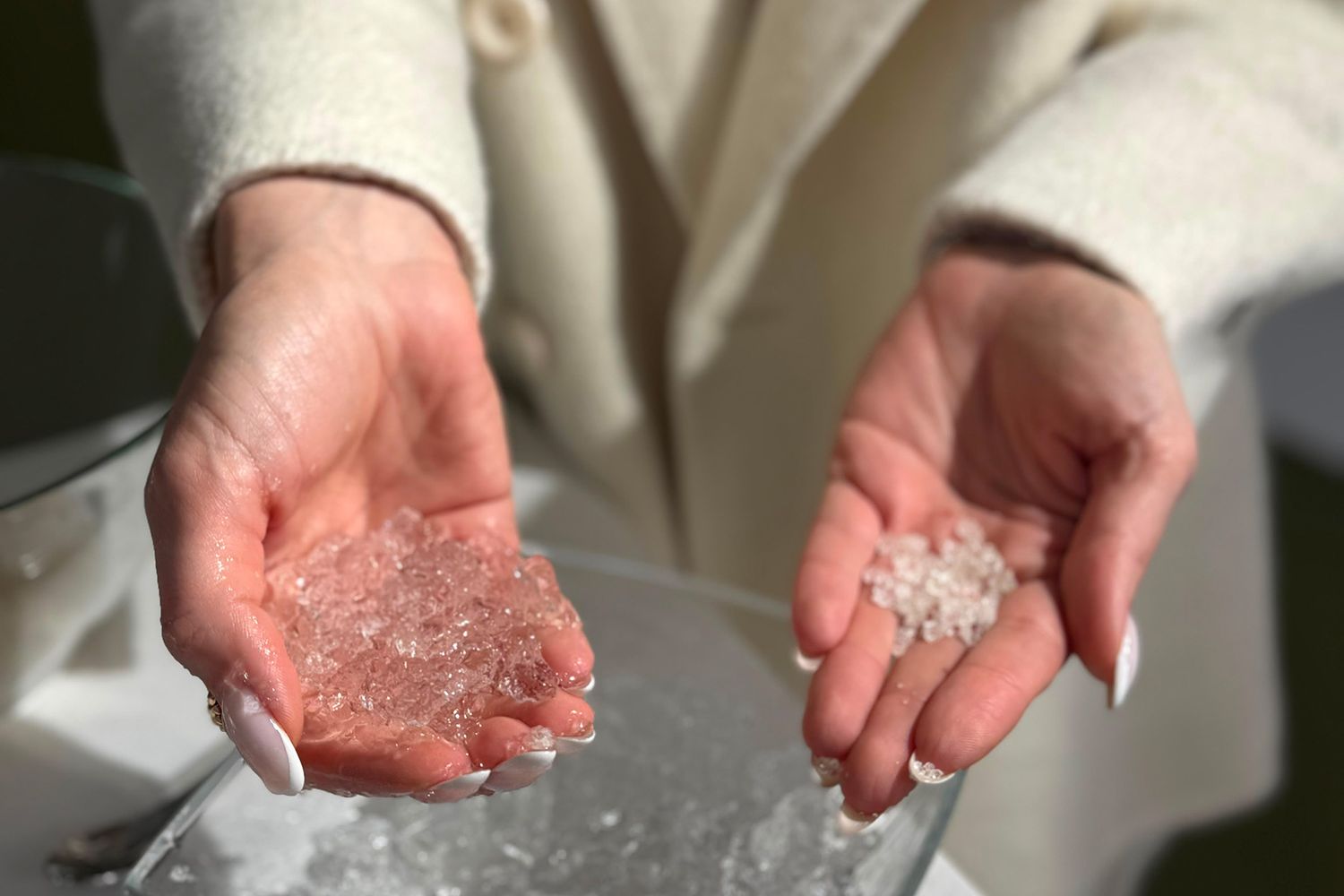
A water-absorbing material of the kind used in nappies is being tested as a way to carry soil moisture from a wet month into a dry one. Green Evolution Technologies (GET) is developing InteliGel, a granular hydrogel placed in the soil beneath the seed, where it absorbs water and nutrients when they are available and releases them as the ground dries.
"Once it's underneath the seed inside the soil, it acts like a sponge," said Zarzand Alaverdyan, GET's co-founder and co-chief executive. The product is being evaluated at Precision Planting's Precision Technology Institute (PTI) research farm in Pontiac, Illinois.
The early results are striking. In the dry 2024 season, soybeans treated with the hydrogel yielded 19.2 bushels an acre more than untreated plots; in the wetter 2025 season the advantage was about 9 bushels. A 2025 comparison of a plot treated that year with one treated only in 2024 gave nearly identical responses of 8.9 and 8.8 bushels, suggesting the material keeps working into a second season.
This year PTI is testing rates from 5 to 20 pounds an acre and asking whether the product could be applied at variable rates, with more on drought-prone parts of a field and less where moisture is usually adequate. A wet June in Pontiac followed by a dry July gives the trial a proper test of the premise. "Wet June, soak it up, hold it, get a dry July, release it. That ought to win," said Jason Webster, PTI's lead commercial agronomist.
Handling is still being worked out. The granules are banded near the seed with a dry application system, but because they take up moisture readily, humidity can make them swell and clump, so PTI and GET are refining the particle size to keep the product flowing through meters and augers. Alaverdyan said it should be kept covered until it goes into the ground.
GET's working recommendations are 10 to 15 pounds an acre for in-furrow or air-drill placement and about 30 pounds for broadcasting, rates that may change as research continues. One-, two- and three-year studies are under way to see how long the residual effect lasts and how the material biodegrades.
Farmers cannot buy it yet. GET expects to build its first full-scale production plant in 2027 and to reach larger-scale sales in 2028. Reporting by Adrienne Held.
Source: Successful Farming

Comments
(0)