
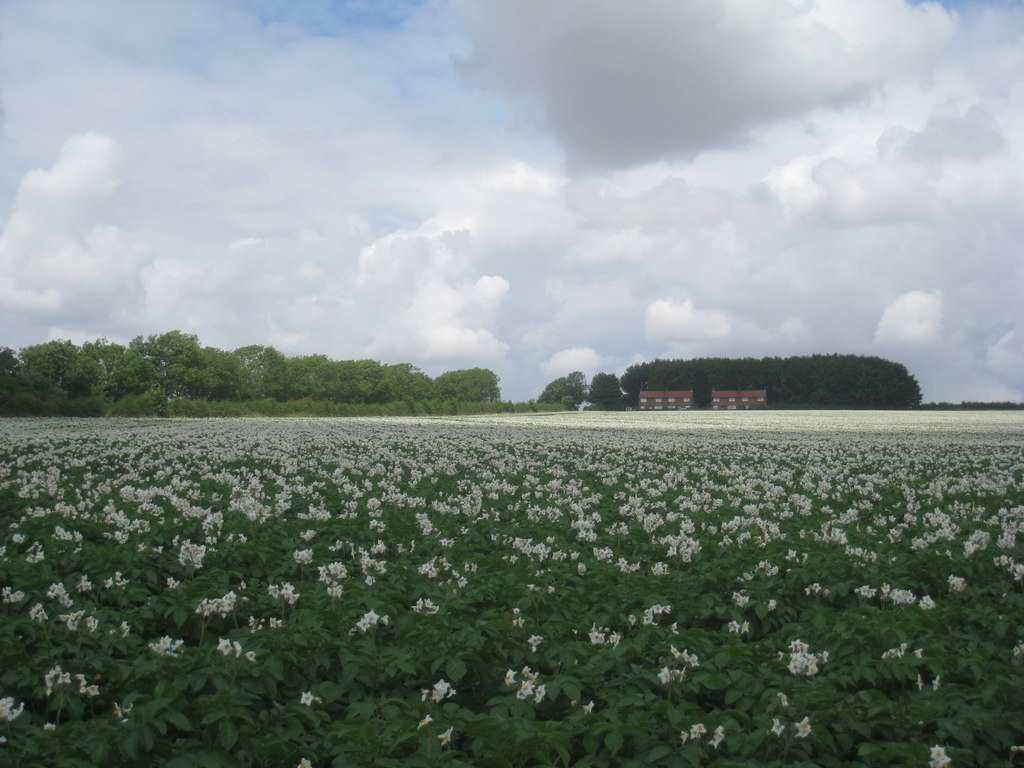
Mycovolt, a British startup founded in 2025, is building a system that listens to the electrical signals plants generate in order to detect crop stress earlier than conventional monitoring, and after field trials on potatoes in the UK it now wants to work with rice growers in Asia, founder Sam Jellard told AgNavigator at the Asia Pacific Agri-Food Summit in Singapore.
"What we're doing is tapping into the electrical signalling language of plants," Jellard said. The system pairs proprietary hardware that records electrical activity from plants with software that analyses the data. The company has secured GBP2.3 million ($3.94 million) in research funding from the UK's Advanced Research and Invention Agency (ARIA) and is moving the technology from the laboratory to the field.
Field trials with commercial farmers in the UK, including Dyson Farming Research, have focused first on drought detection in potatoes, a crop sensitive to water stress. Jellard said soil moisture sensors show that a field is dry but are only a proxy for crop health and cannot say whether the plant itself is under stress. He described Mycovolt's method as "non-invasive" and "biocompatible" but declined to give details because patent applications are pending. Research techniques usually insert electrodes into plant tissue, which works in controlled settings but is hard to scale and limited to crops with thick stems; Mycovolt says its approach is not limited by the crop's shape, so it can be used on cereals and rice.
The company sees a large opportunity in rice and is looking for partners among growers and industry in Asia to learn how electrical signalling data could identify disease and other problems, starting with rice blast, which still causes heavy losses wherever rice is grown. The hardest technical task, Jellard said, is teaching the algorithms to tell one cause of stress from another. Mycovolt has studied drought stress and disease stress, including potato blight, and its next phase will look for the signatures of specific pathogens. "We want to not only detect rice stress, but then ultimately determine if this is rice blast, rice blight, or a different kind of disease," he said.
The long-term aim is targeted crop protection: showing farmers which parts of a field are stressed before symptoms appear, so they can treat only those patches and cut input costs and environmental impact. For rice farmers in Asia, where blast is a recurring threat, an early warning of that kind would matter if it holds up in their fields.
Reporting by Amanda Lim for AgNavigator.
Photo: Jonathan Thacker / Wikimedia Commons (CC BY-SA 2.0)
Source: AgNavigator

Comments
(0)